Get all your news in one place.
100's of premium titles.
One app.
Start reading
The Economic Times
The Economic Times

17-year-old New Jersey high schooler Edward Kang built an AI tool that reads the retina for autism and ADHD screening and won $175,000 for his groundbreaking research

A 17-year-old high school student has developed an artificial intelligence tool that could offer a new way to screen for autism and ADHD by looking at the retina.

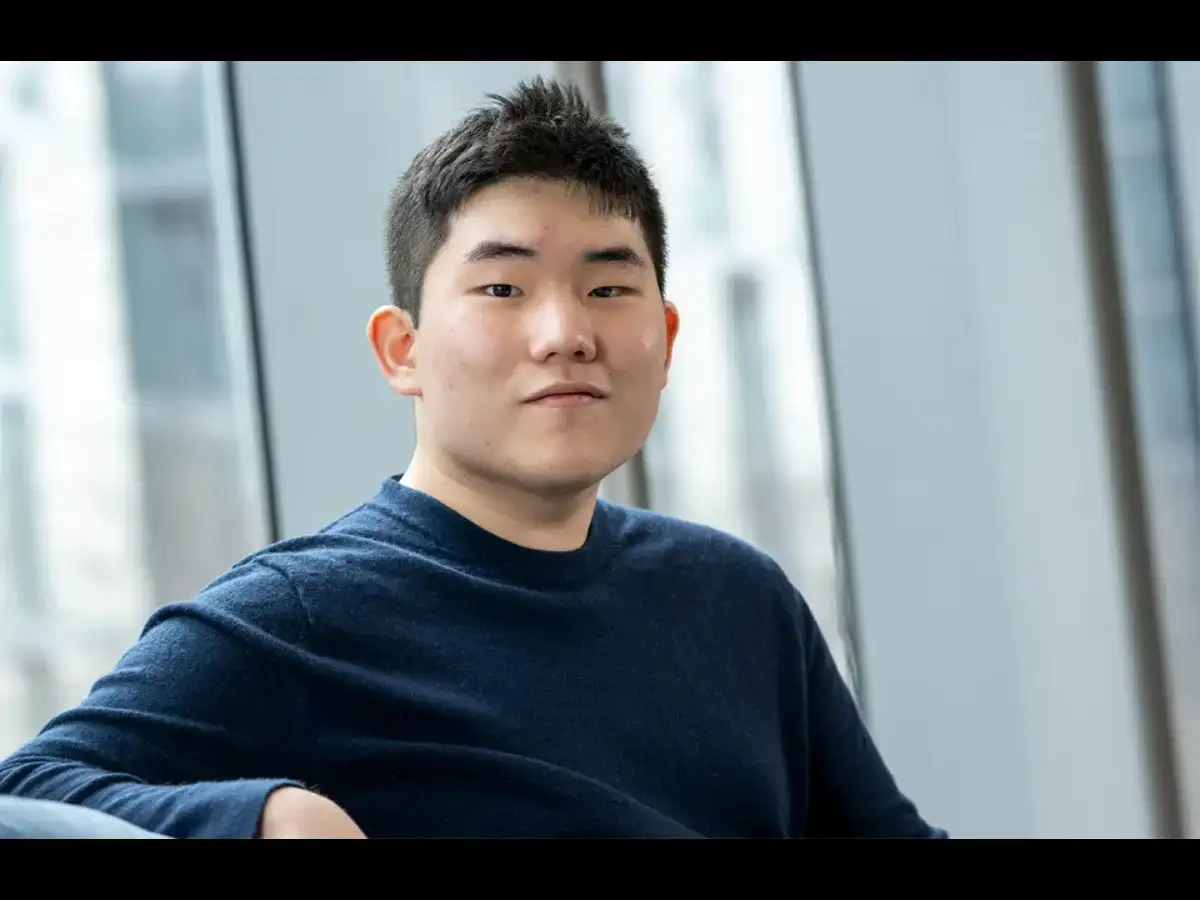
Edward Kang, a senior at Bergen County Academies in Hackensack, New Jersey, created RetinaMind, an AI-based screening prototype that analyzes retinal images for subtle patterns associated with autism spectrum disorder (ASD) and attention-deficit/hyperactivity disorder (ADHD). His project earned him second place and $175,000 at the 2026 Regeneron Science Talent Search.
ALSO READ: Jeff Bezos’ ex-wife MacKenzie Scott, who sold half of her Amazon stake, helped erase $40 billion in medical debt with $100 million in donations

The surprising connection between the eye and brain

Kang became interested in the idea after coming across research suggesting that retinal images could contain clues about autism.

“I thought it was fascinating and really unintuitive that you can use something like the eye to understand what’s happening in the brain,” Kang told Smithsonian magazine.

The idea is based partly on the fact that the retina and brain develop from the same tissues. Previous research has also found differences in retinal structures among people with neurodevelopmental conditions, although those differences can be extremely subtle.

ALSO READ: Europe’s youngest self-made billionaire: James Dacombe dropped out of high school at 17 to build his startup and now his wealth has crossed the $1 billion mark at 25

How Edward Kang’s RetinaMind works

Kang trained AI models using retinal images from a large public dataset. The system looks for patterns that may help distinguish between neurotypical individuals and people with autism or ADHD.

He also used an explainable-AI technique called GradCAM to examine which portions of retinal images influenced the model's predictions.

RetinaMind doesn't simply produce a result. It generates a heat map highlighting areas that contributed to its prediction, offering researchers a way to understand what the AI is seeing. Smithsonian reported that the model achieved an accuracy rate of about 89%.

ALSO READ: 18-year-old California student wins $40,000 in prestigious Regeneron science competition for machine-learning program that could help physicists better understand particle collisions

Kang's project went beyond computer modeling. He also created a retinal cell model to investigate gene changes that could potentially help explain the biological differences associated with neurodevelopmental disorders.

Why the research could matter

Autism and ADHD are currently diagnosed primarily through behavioral and developmental assessments rather than a simple physical test. That can make the diagnostic process lengthy.

Kang hopes his work could eventually help make screening earlier and more accessible.

“My hope is that RetinaMind will enable earlier diagnoses for neurodevelopmental disorders than currently possible, unlocking earlier treatment and, therefore, a higher quality of life for the millions of patients of autism and ADHD around the world,” Kang said.

Importantly, RetinaMind is a research prototype and screening tool, not an established clinical diagnostic test. More research and validation would be needed before technology like this could be used routinely in medical care.

From high school project to national recognition

Kang's achievement places him among America's standout young scientists. The 2026 Regeneron Science Talent Search attracted more than 2,600 applicants, with 40 finalists receiving awards.

He is also set to attend MIT in the fall, where he can continue exploring the intersection of artificial intelligence, neuroscience and medicine.

What started with a teenager wondering whether the eye could reveal something about the brain has now become an award-winning research project with the potential to inspire a very different approach to neurodevelopmental screening.

Sign up to read this article
Read news from 100's of titles, curated specifically for you.
Already a member? Sign in here
Related Stories
Top stories on inkl right now
One subscription that gives you access to news from hundreds of sites
Already a member? Sign in here
Our Picks
Fourteen days free
Download the app
One app. One membership.
100+ trusted global sources.