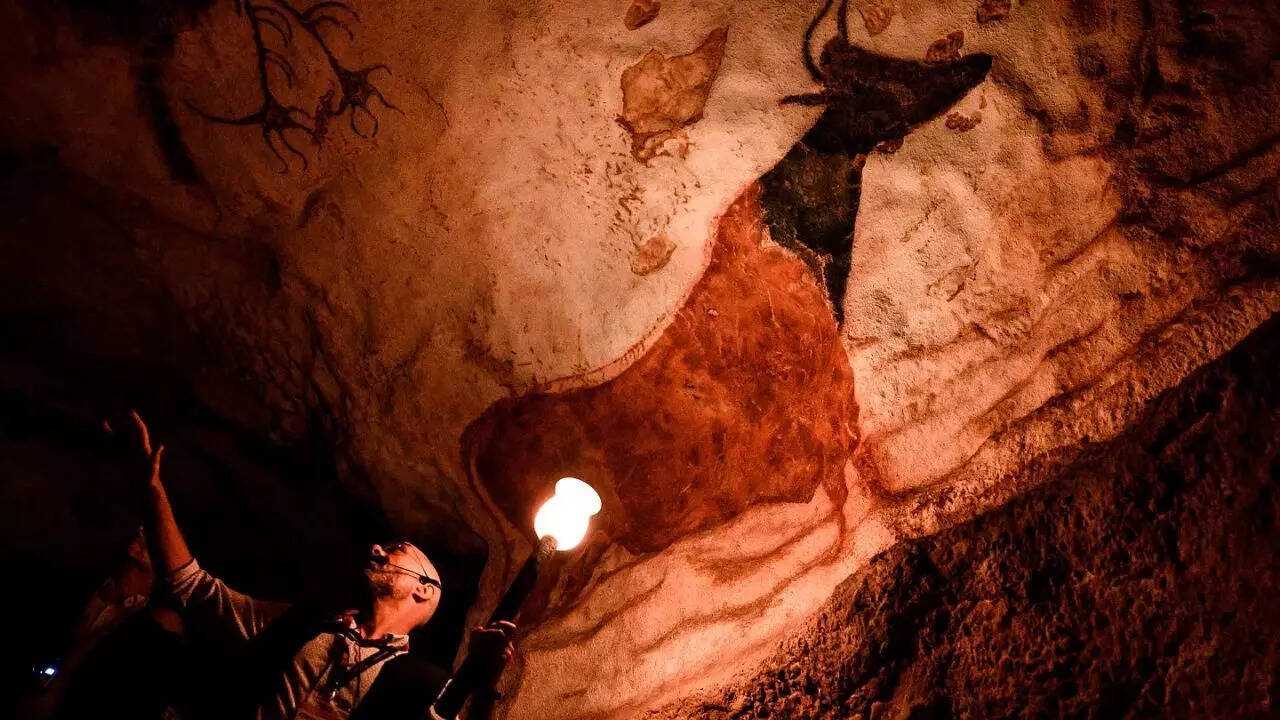
In 1940, Marcel Ravidat, an 18-year-old from Montignac, France, followed his dog, Robot, into a hole near a fallen tree. Inside, he found a cave that had been untouched for thousands of years. The walls were covered in paintings, some over six feet long, depicting animals in motion. This marked one of the most important archaeological finds of the 20th century.
The forested hills above Montignac offer no hint of what lies beneath. The slope is ordinary. The entrance, once hidden by a tree, is barely noticeable. The cave remained sealed for millennia until Marcel and his dog discovered it in 1940. Soon after, experts arrived to study the artwork, identifying vivid depictions of horses, bulls, and deer that revealed remarkable artistic skill and offered rare insight into the lives, beliefs, and creativity of prehistoric humans.