Get all your news in one place.
100's of premium titles.
One app.
Start reading
The Economic Times
The Economic Times
Trending Desk

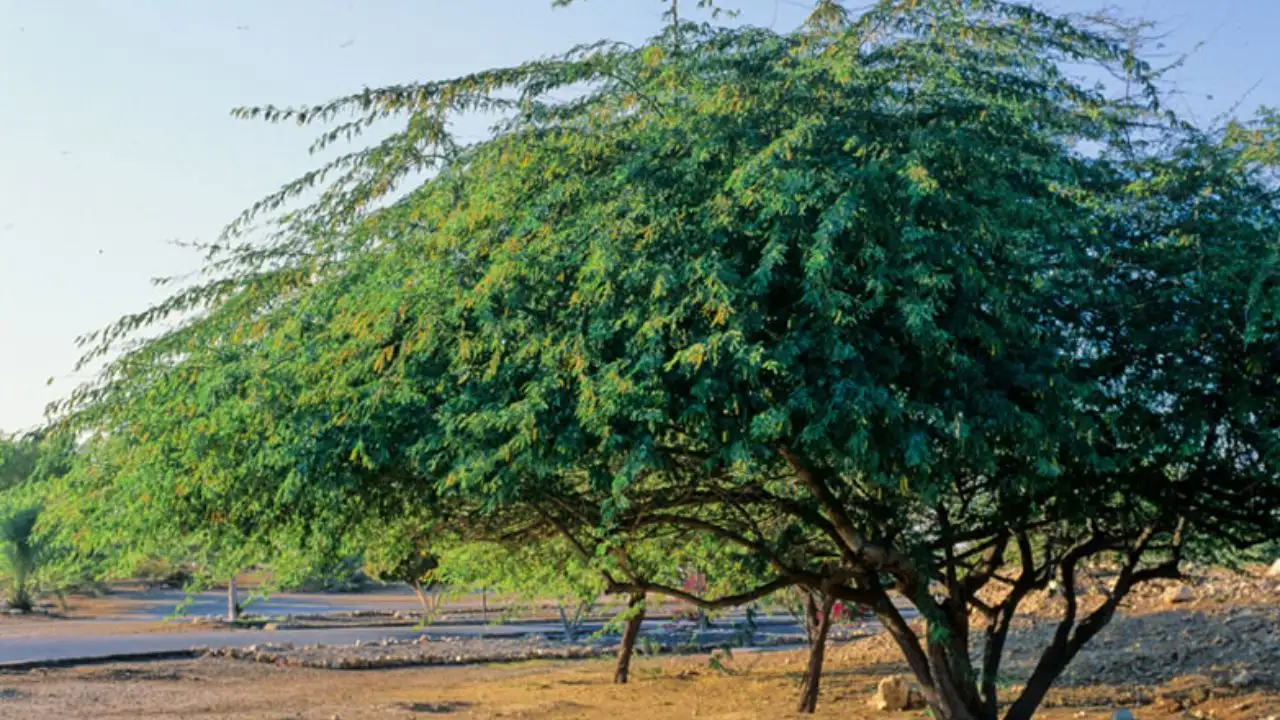
150 years ago, Britishers brought a South American tree to stop desertification in Thar, now it has become a thorny issue in India

Vilayati babul, an invasive thorny tree introduced to India during the colonial era as a response to drought and famine, continues to remain at the centre of a debate among conservationists, researchers and local communities. While the species has provided fuelwood, fodder and livelihoods to many, it is now widely regarded as an ecological threat due to its impact on native vegetation and water resources.

A colonial-era response to drought

Prosopis juliflora, commonly known as vilayati babul, vilayati kikar and seemai karuvelam, was introduced to India in the late 19th century as an attempt to address recurring droughts and famines.

During the severe famines of the 1870s, particularly in Rajasthan, Gujarat and parts of South India, authorities searched for a species that could survive in dry and arid conditions. Prosopis juliflora, a thorny tree native to South America, was selected for its ability to grow with minimal human intervention in harsh environments.

Research highlights its spread across arid regions

Research by S.K. Saxena of the Central Arid Zone Research Institute states that Prosopis juliflora was first introduced to the Indian subcontinent in 1877 in the Sindh region before being planted across arid and semi-arid areas of the country.

The species adapted to rocky, sandy and wasteland areas, including the Thar Desert region. Over time, it became a source of fuelwood for rural communities and was widely used as fencing material in states such as Tamil Nadu, Gujarat, Haryana and Karnataka.

The tree also contributed to desertification control in some areas and provided economic opportunities through fuelwood collection and charcoal production.

Environmental concerns over invasive growth

Despite its benefits, Prosopis juliflora has become a major ecological concern. Conservationists and researchers have raised concerns over its rapid spread and impact on native ecosystems.

The tree has expanded across wastelands, consumed large quantities of groundwater and restricted open grazing areas. Its sharp thorns have also created difficulties for humans and livestock.

A comparative study published in PLOS ONE examined the behaviour of Prosopis juliflora in its native Venezuela and in invaded regions such as India and Hawaii. The study found that while the tree supported surrounding plant growth in its native environment, areas affected by its spread in India showed a significant decline in plant diversity.

Researchers also compared it with Prosopis cineraria, a native Indian species, and found that the native tree had a much weaker impact on surrounding vegetation.

Impact on native grasslands and communities

In regions such as the Banni grasslands of Kutch, Prosopis juliflora has spread extensively and reduced the availability of native grasses that pastoral communities depend on for livestock.

The species, once introduced as a solution to drought challenges, has transformed into a long-standing ecological issue. However, its role as a source of income and livelihood continues to make its removal a complex issue.

More than a century after its introduction, vilayati babul remains a subject of debate, with environmental concerns weighed against its economic importance for many communities.

Sign up to read this article
Read news from 100's of titles, curated specifically for you.
Already a member? Sign in here
Related Stories
Top stories on inkl right now
One subscription that gives you access to news from hundreds of sites
Already a member? Sign in here
Our Picks
Fourteen days free
Download the app
One app. One membership.
100+ trusted global sources.