
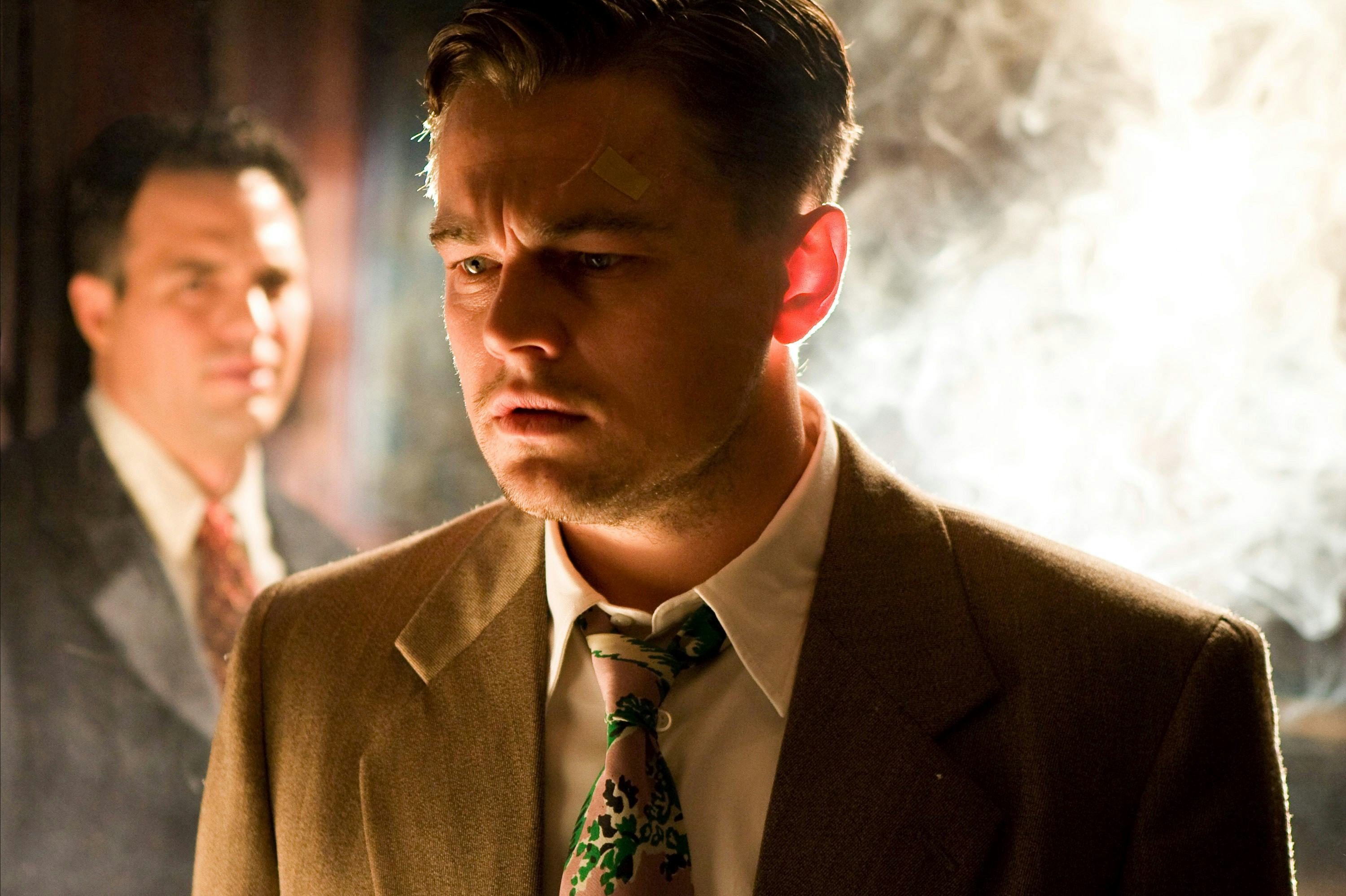
A thick blanket of fog covers the first frames of Shutter Island, an easy metaphor for the case US Marshal Teddy Daniels (Leonardo DiCaprio) thinks he’s investigating: shrouded in secrecy, and impossible to see his way through. By the end, that fog will have cleared, and the truth will have descended on him with a terrible, shattering clarity. The film will be recontextualised, from thriller to tragedy. And a single line of dialogue — a flash of a question that wounds Teddy in the moment — will endure, haunting audiences 15 years after its release.
Like the 2003 Dennis Lehane novel it’s based on, Martin Scorsese’s propulsive adaptation is also set in 1954. Rachel Solando, one of the patients at Ashecliffe — a psychiatric institution for the criminally insane — is reported to have broken out of a locked room and seemingly vanished off the eponymous island. Teddy and his new partner Chuck (Mark Ruffalo) arrive and begin making inquiries, but find that the doctors are uncooperative, access to one ward has been strictly cut off, and the patients appear to be hiding something. Over the film, Teddy becomes increasingly paranoid that the institution is a front for a more sinister experimental facility, while also struggling with hallucinations of his late wife, Dolores (Michelle Williams), and disquieting memories of his role in the liberation of Dachau. It’s gradually revealed that his interest in the case is also personal — he believes that Andrew Laeddis, the man he suspects of having murdered Dolores, is on the island.













