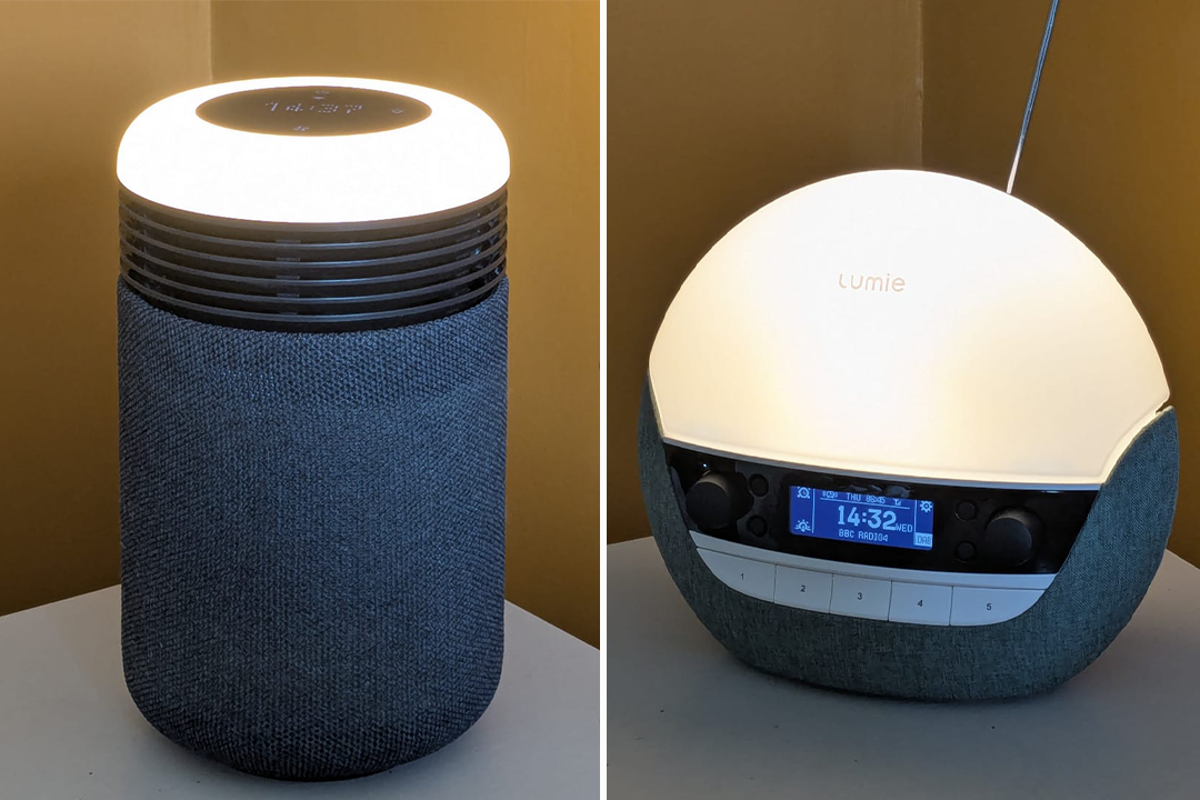
Ensuring you receive the right level of light exposure throughout the day is important for your circadian rhythm. If we do not spend enough time in daylight, it can cause our sleep-wake cycles to become delayed and affect our sleep quality. This is why the best sunrise alarms are often sought after – who doesn’t want better quality sleep?
Russell Foster, head of the Nuffield Laboratory of Ophthalmology and the Sleep and Circadian Rhythm Neuroscience Institute, explained what the research has discovered about dawn-dusk simulation. “A typical approach [of research studies] has been to increase (simulated dawn) or decrease (simulated dusk) the light level by the bedside or in the room,” he said. “Over a period of 15 to 90 minutes light levels change in a smooth progression over a range of less than 1 lux to 300 lux, and this is repeated on a daily basis for multiple weeks. Because study designs have varied, firm conclusions are difficult but the results strongly suggest that, in objective measures, there is improved sleep/wake timing and greater alertness. In subjective measures, better mood and improved quality of life are reported.”