
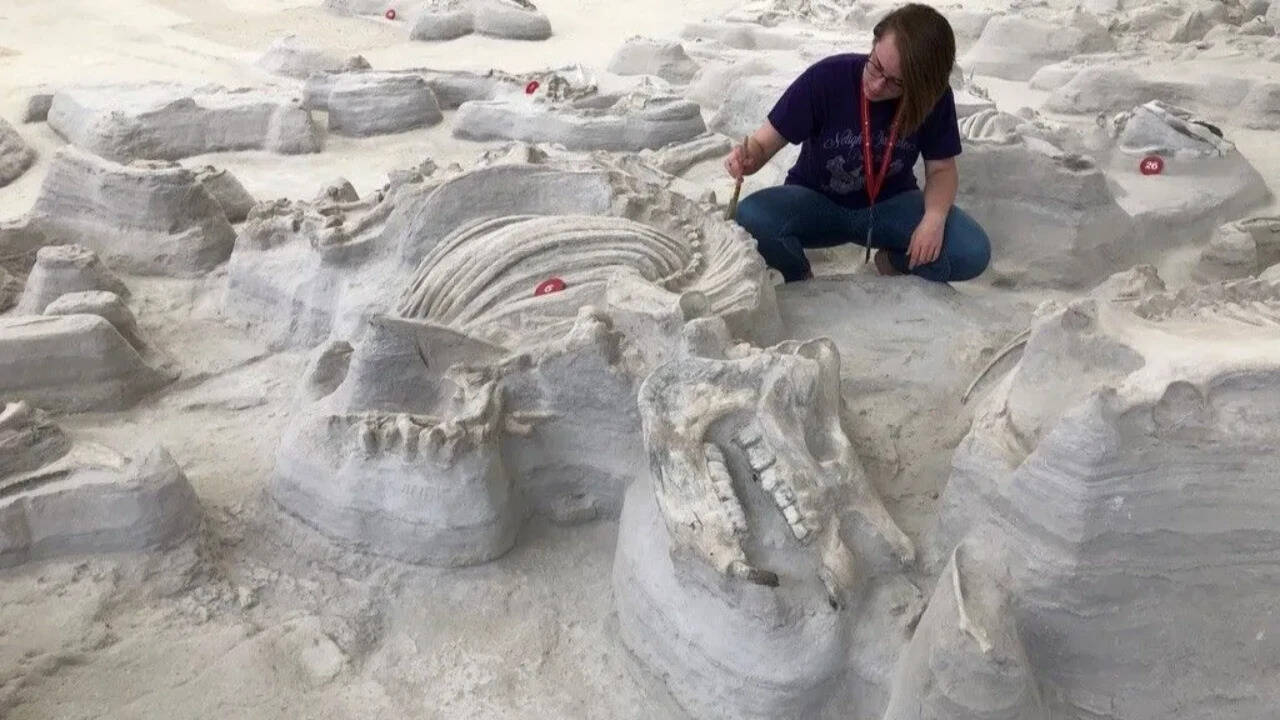
At Ashfall Fossil Beds State Historical Park in northern Nebraska, researchers have spent decades excavating a mass graveyard created when volcanic ash swept across the Great Plains roughly 12 million years ago. The eruption occurred in what is now southwestern Idaho, about 1,000 miles from the Nebraska site, but fine ash traveled across the continent and settled over a shallow watering hole where hundreds of animals had gathered. The site is best known for its remarkably preserved rhinos, horses and camels, many of which were buried where they stood. Now researchers have identified something else moving through the ash before the animals disappeared beneath it: large footprints made by caniform predators, the group that includes the extinct bone-crushing dogs known as borophagines. The tracks provide the first direct evidence that large carnivores were present at Ashfall, even though no skeleton belonging to one has yet been found.
Get breaking news anytime, anywhere. Download the TOI app now!














