Get all your news in one place.
100’s of premium titles.
One app.
Start reading
Budget and the Bees
Budget and the Bees
Latrice Perez

12 Boomer Music Festivals That Make Coachella Look Like Amateur Hour

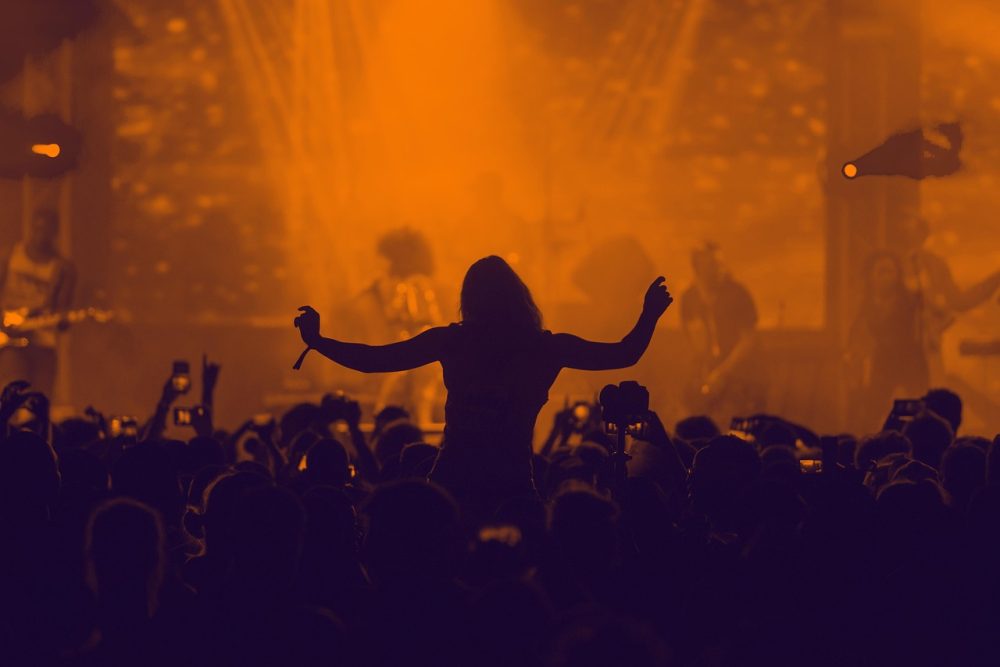
Boomer music festivals
Image source: pixels.com

Modern music festivals are often more about the Instagram photo ops than the actual music. If you look at Coachella, you see carefully curated outfits, VIP glamping tents, and brand activations everywhere. However, the Baby Boomer generation invented the music festival, and they did it with grit. Their gatherings were raw, chaotic, and focused entirely on the cultural revolution happening on stage. These weren’t just concerts; they were seismic shifts in society. Here are twelve Boomer music festivals that make Coachella look like amateur hour.

Woodstock (1969)

This is the gold standard against which all other festivals are measured. Half a million people descended on a dairy farm in upstate New York, crashing fences and overwhelming infrastructure. Despite the mud, lack of food, and rain, the vibe remained peaceful. It defined a generation’s ideals of communal living. Acts like Jimi Hendrix and Janis Joplin gave performances that are still legendary today.

Monterey Pop Festival (1967)

Two years before Woodstock, Monterey Pop introduced the world to the “Summer of Love.” This was the event where Jimi Hendrix famously set his guitar on fire. It was arguably the first major rock festival to bring together diverse genres, from soul to psychedelic rock. The sound quality and lineup curation set the template for every festival that followed.

Isle of Wight (1970)

This UK festival was actually larger than Woodstock, drawing an estimated 600,000 people. It featured a lineup that included The Doors, The Who, and Miles Davis. The crowd was so massive that Parliament eventually passed an act to stop future gatherings of that size on the island. The tension between the “free love” crowd and the commercial organizers was palpable and electric.

Altamont Speedway Free Festival (1969)

If Woodstock was the dream, Altamont was the nightmare. Organized by the Rolling Stones, it is infamous for the violence that erupted when Hells Angels were hired as security. It marked the symbolic end of the 1960s innocence. While tragic, it possesses a dark historical weight that modern, sanitized festivals can never match.

Newport Folk Festival (1965)

This is the site of the most controversial moment in folk history: Bob Dylan going electric. When Dylan plugged in his Stratocaster, the purist crowd booed him, realizing the times were indeed changing. This festival wasn’t just about entertainment; it was a battleground for artistic integrity. It proved that music could challenge an audience, not just please them.

Wattstax (1972)

Often called the “Black Woodstock,” this festival took place at the Los Angeles Memorial Coliseum. It was a celebration of African American culture, music, and pride, featuring Isaac Hayes and The Staple Singers. It wasn’t just a concert; it was a statement of resilience following the Watts riots. The fashion and energy captured in the documentary remain unmatched.

The US Festival (1982/1983)

Funded by Apple co-founder Steve Wozniak, this festival aimed to unite music and technology. It was one of the first to use massive video screens, allowing the huge crowd to actually see the bands. The lineup was insane, featuring The Police, Fleetwood Mac, and Van Halen. Wozniak lost millions, but he threw a party that bridged the gap between the 70s and 80s.

Watkins Glen Summer Jam (1973)

This event holds the Guinness World Record for the largest audience at a pop festival, with 600,000 fans. Amazingly, the lineup featured only three bands: The Allman Brothers Band, The Band, and the Grateful Dead. The fact that three groups could draw a population larger than most cities proves the power of Boomer rock.

Cal Jam (1974)

Broadcast heavily on TV, this festival brought Deep Purple and Black Sabbath to a massive audience in California. It was loud, heavy, and unapologetically commercial in a way that previewed the arena rock era. The sheer volume and spectacle were designed to blow minds.

Festival Express (1970)

This wasn’t a stationary festival; it was a party on a train. Bands like the Grateful Dead and Janis Joplin traveled across Canada by rail, stopping to play shows in major cities. The real magic happened on the train, where the musicians jammed together for days. It was a rolling carnival of talent that has never been replicated.

Live Aid (1985)

While technically a benefit concert, the scale of this dual-venue event defined the 80s. Phil Collins famously flew on a Concorde to play both the London and Philadelphia stages. It proved that music could mobilize the entire planet for a cause. Queen’s performance is widely considered the greatest live set in history.

Pinkpop (1970-Present)

Started in the Netherlands, this is the oldest annual pop festival in the world. In its early Boomer years, it was a haven for progressive rock and experimental acts. It helped establish the European festival circuit as a serious destination for American bands.

Music With Meaning

It wasn’t just about the selfie; it was about the sound. These festivals were messy, poorly managed, and often dangerous, but they had soul. They were driven by a hunger for connection and artistic revolution. In comparison, standing in a VIP line for a $15 water bottle just doesn’t feel quite as rock and roll.

Which of these legendary festivals would you time travel to if you could? Drop your pick in the comments!

What to Read Next…

The post 12 Boomer Music Festivals That Make Coachella Look Like Amateur Hour appeared first on Budget and the Bees.

Sign up to read this article
Read news from 100’s of titles, curated specifically for you.
Already a member? Sign in here
Related Stories
Top stories on inkl right now
One subscription that gives you access to news from hundreds of sites
Already a member? Sign in here
Our Picks
Fourteen days free
Download the app
One app. One membership.
100+ trusted global sources.