
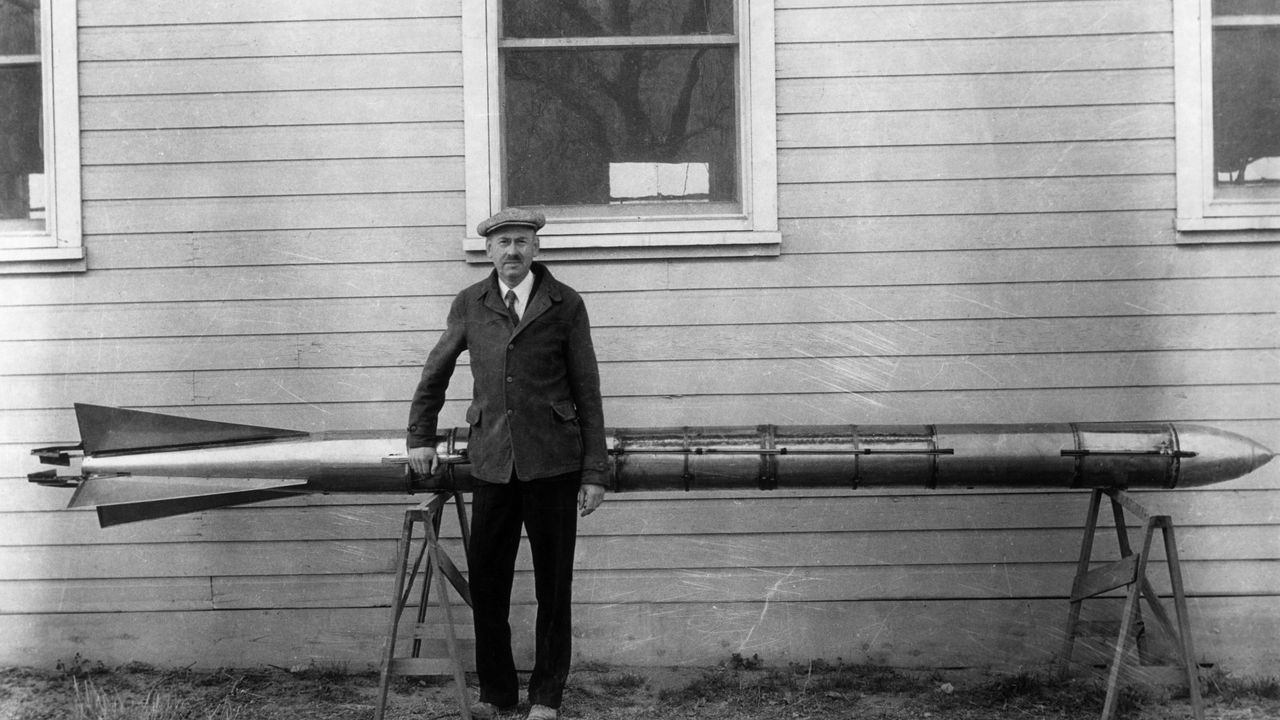
100 years ago, a liquid-fueled rocket flew into the sky for the very first time. The unlikely contraption was designed by Clark University physics professor Robbert Goddard, and launched from a cabbage field in Auburn, Massachusetts on March 16, 1926.
Goddard's design climbed a short 40 feet into the air that day, but launched the world into an era of modern rocketry that would lead to the first moon landing less than 50 years later. After his initial success, Goddard continued developing increasingly sophisticated systems and breakthroughs that paved the way for the technological foundation upon which nearly every major rocket, from early missiles and military vehicles to orbital launch vehicles, has been based. And, within only a few decades, would carry humanity's first satellites and eventually astronauts into space.