Get all your news in one place.
100’s of premium titles.
One app.
Start reading
Budget and the Bees
Budget and the Bees
Latrice Perez

10 Old-Timey Hacks From the 1800s That Still Work Like Magic

old timey hacks
Image source: Gemini

We live in an age of high-tech gadgets and expensive chemical cleaners. In fact, we seem to have a specific spray for every surface in our homes. However, sometimes looking backward is the best way to move forward. Our great-great-grandmothers didn’t have Swiffers or bleach wipes, yet they kept immaculate homes using simple, natural ingredients.

These “old wives’ tales” and Victorian housekeeping secrets aren’t just nostalgia; on the contrary, they are often based on sound science. They are cheaper, non-toxic, and frequently more effective than the $15 bottle of cleaner you just bought. Here are ten old-timey hacks from the 1800s that still work today.

1. Lemon and Salt for Rust

Rust was a constant battle for Victorians, especially with their cutlery and tools. Instead of harsh chemicals, they used a lemon and table salt. Sprinkle salt over the rusted area, squeeze lemon juice over it until it is soaked, and let it sit for two or three hours.

The citric acid in the lemon attacks the rust, while the salt acts as a gentle abrasive to scrub it away. Afterward, use the rind of the lemon to scrub the surface. This method is particularly effective for spotting on kitchen knives or garden shears.

2. Ketchup to Shine Copper

If you have tarnished copper pots or decor, forget the toxic polish that burns your nose. Instead, grab the ketchup bottle. Slather a layer of cheap ketchup over the copper and let it sit for ten to fifteen minutes.

The science behind this is simple but effective. The acetic acid in the vinegar and the citric acid in the tomatoes react with the copper oxide, which is what we call tarnish. Consequently, the grime dissolves instantly. Rinse it off with warm water, and it will shine like a new penny.

3. Olive Oil for Squeaky Hinges

Before WD-40 existed, there was olive oil. If a door hinge is squeaking, use a pipette or a cotton swab to dab a little olive oil directly into the joint. Then, swing the door back and forth to work it in.

It provides instant lubrication without the lingering chemical smell of industrial sprays. Furthermore, because it is food-safe, it is perfect for pantry doors or kitchen appliances. Just be sure to wipe away any drips so they don’t attract dust later.

4. Peppermint Oil as a Mouse Deterrent

Victorians didn’t want mice any more than we do. While cats were the primary defense, many households used peppermint oil as a deterrent to discourage rodents from entering specific areas. Mice rely heavily on their sense of smell, and the strong scent of peppermint can be overwhelming to them.

Soak cotton balls in pure peppermint oil and place them in entry points or corners. While this isn’t a guaranteed way to eliminate an infestation, it serves as a strong, natural discouragement that helps keep them at bay.

5. Stale Bread to Clean Wallpaper

This sounds bizarre, but it works wonders on non-washable wallpaper or textured walls. Take a piece of stale, crust-less white bread and roll it into a ball. Then, rub it gently over the dirt or smudge on the wall.

The gluten in the bread acts like a gummy eraser, lifting the dust and grime out of the paper’s pores without wetting it or causing damage. It is the original “Magic Eraser.” In the past, this method was even used to clean soot off oil paintings.

6. Simmering Citrus and Cloves

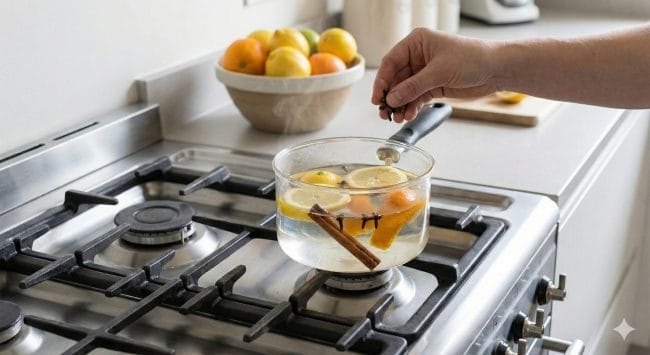
Most modern air fresheners are full of phthalates and artificial chemicals. The old-school way to scent a home was the “simmer pot.” Save your orange and lemon peels, then throw them in a pot of water on the stove with a cinnamon stick and a few cloves.

Let it simmer on low heat, adding water as needed. The steam carries the essential oils through the house, humidifying the dry winter air and removing cooking odors naturally. It smells like a wealthy Williams Sonoma store, but it costs pennies.

7. Ice Water for Wilted Lettuce

Don’t throw away that sad, limp lettuce just yet. The Victorians knew exactly how to revive it. Submerge the wilted greens in a bowl of ice water for 20 minutes before serving.

The cold water shocks the plant cells, causing them to reabsorb moisture through a process called osmosis. This increases turgor pressure, making the leaves firm again. Fortunately, this trick also works on celery, carrots, and radishes.

8. Tea Bags for Glass

Cleaning windows without streaks was an art form in the 19th century. The secret weapon was often black tea. Brew a strong pot of black tea, let it cool completely, and use a cloth to wipe down your mirrors and windows.

The tannic acid in the tea cuts through grease and dirt, leaving a streak-free shine. Afterward, buff it dry for the best results. However, be careful not to use this on white painted frames, as the tea can stain the wood over time.

9. Salt for Red Wine Stains

If you spill red wine on a tablecloth or carpet, you must act fast. Immediately pour a mountain of table salt over the spill. Do not rub it in, as that pushes the wine deeper into the fibers.

The salt acts as a desiccant, pulling the liquid and the red pigment out of the fabric and into the salt crystals. Once the salt turns pink and dries, vacuum it up. Subsequently, treat any remaining spot with cool water.

10. Vinegar and Newspaper for Mirrors

Paper towels leave lint, and cloth rags often leave streaks. The 1800s solution was a mixture of vinegar and newspaper. The ink acts as a very mild abrasive to remove grit, while the paper is lint-free.

Mix equal parts water and vinegar, spray the glass, and wipe with a crumpled page of the news. Your mirrors will be invisible. Note that this works best with traditional newsprint, not glossy magazine pages.

Rediscovering the Art of Simplicity

These hacks have survived for centuries because they work. They serve as a gentle reminder that we don’t always need a high-tech solution for a low-tech problem. By using what we have, we save money, reduce plastic waste, and connect with a lineage of women who managed their homes with ingenuity.

Next time you face a household mess, check your pantry before you run to the store. You likely already have the answer sitting on your shelf.

Do you have a “Grandma hack” that you swear by? Share your secret wisdom in the comments!

What to Read Next…

The post 10 Old-Timey Hacks From the 1800s That Still Work Like Magic appeared first on Budget and the Bees.

Sign up to read this article
Read news from 100’s of titles, curated specifically for you.
Already a member? Sign in here
Related Stories
Top stories on inkl right now
Our Picks
Fourteen days free
Download the app
One app. One membership.
100+ trusted global sources.