Get all your news in one place.
100's of premium titles.
One app.
Start reading
What Hi-Fi?
What Hi-Fi?
Technology
Ioan Hazell

10 of the best Nick Cave songs to test your hi-fi system

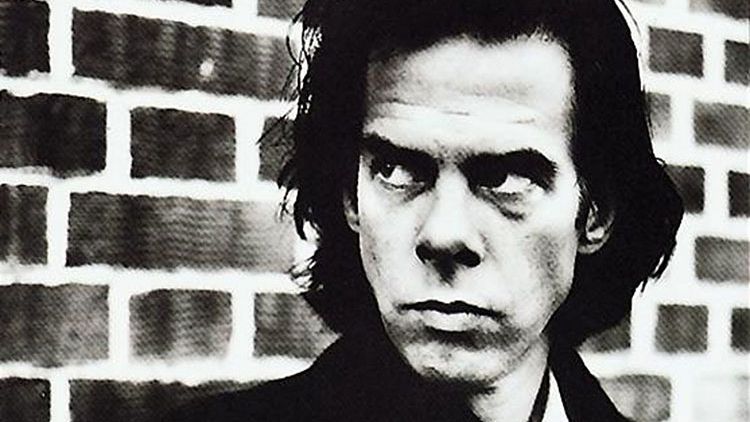
Nick Cave The Boatman's Call album cover .

The Nick Cave of today is, admittedly, a sleeker creature than the rangy, wild-haired vocalist of the Birthday Party, but we all must change with the times. Although Cave has somewhat tidied himself up across the 47 years since his first release – a cover of These Boots Were Made For Walking by The Birthday Party – the singer has never ceased from defining the gothic vogue in his redoubtable, snarling style.

This, perhaps, is what has kept Cave’s music in the limelight for so long, even as his lyrical preoccupations have shifted away from murder ballads and towards religious hope.

Regular readers will know that we often use Nick Cave’s songs to test a variety of hi-fi and audio products, and choosing 10 of our favourite tracks from a discography as vast as Cave’s is no mean feat. As such, what follows are 10 tracks that will put your hi-fi through its paces, with a relatively even spread across Cave’s back catalogue, from the stygian depths of From Her to Eternity to Wild God’s radical optimism.

Cabin Fever! (From Her To Eternity, 1984)

Guttural, driven bass and scratched guitar strings lead the way to Cave’s drunken vocal. A distillation of the first album’s spirit, the song is cantankerous and savagely experimental. The album sees him edging away from the Birthday Party’s sound towards something more his own in an early step towards his later songwriting prowess.

This rabid sea-shanty tale of a sunken ship’s captain showcases Cave’s poetic prowess in lyrics such as, “The captain’s forearm like bunched-up rope,” which are delivered in frenzied, impudent bursts. The band, too, are relentless in their percussive backing, and only briefly does the song relent from its industrial hammering to give way to a warbling, watery bass. An angsty way to kick things off, this song is best played loud.

Up Jumped The Devil (Tender Prey, 1988)

Written during a particularly turbulent period of heavy touring and its associated temptations, Up Jumped The Devil begins with one of the Bad Seeds’ most imposing basslines, which is rivalled in weight only by the sub-loaded thud of Thomas Wydler’s bass drum.

Composed after Einstürzende Neubauten’s Blixa Bargeld had joined the band, the track features Bargeld’s deep, papery backing vocals and twanging guitar. Mick Harvey makes his contributions on xylophone and bass guitar, putting both ends of the frequency spectrum to the test.

The track is ostentatiously gothic and features the ballroom reverb to match, making a great test for any hi-fi set-up’s depth of field.

Red Right Hand (Let Love In, 1994)

Having seen a resurgence in popularity for its inclusion in the Peaky Blinders soundtrack, the ubiquity of this song has made it all too easy to forget its brilliance. With a sly groove in the bass, which is sure to get the subwoofers going, Red Right Hand is a track packed with textural minutiae, which bring its tumbleweed-town setting to life.

The rich harmonics of a bell, struck at the climax of each chorus – not to mention the booming timpani hits that follow – lend this track about as wide a frequency range as rock music has ever managed. Nonetheless, Cave’s resonant baritone cuts through to stand menacingly at the forefront.

It’s a categorically spooky number, with reverb drenched synthesisers emulating howling wind, and with a plot to give most thriller novels a run for their money.

Stagger Lee (Murder Ballads, 1996)

A masterclass in efficient arrangement, Stagger Lee centres around a hypnotically repetitive bassline accompanied by chugging guitars and periodically slammed piano keys. A true testament to Cave’s storytelling, the lyrics follow Stagger Lee, a wandering vagrant, as he proceeds to commit unspeakable crimes after being thrown “out in the ice and the snow” by his partner.

It is one of Cave’s most violent songs (certainly not one for the faint of heart) and in its final section features a solo in the form of sustained, blood-curdling screeches from Blixa Bargeld – tweeters beware.

Stagger Lee finds the Bad Seeds at the height of their chaotic powers. The song is as transportative as it is chill-inducing, taking listeners on a journey to somewhere most would rather not go.

Into My Arms (The Boatman’s Call, 1997)

Beginning with a pillowy piano chord sequence less reminiscent of deep-southern towns and serial murderers than of Sunday school, this heart-rending, religiously concerned love song showcases Cave’s softer side, which establishes itself as an enduring presence throughout The Boatman’s Call.

A lyrical masterpiece, the song explores how falling in love puts us in touch with a sense of the divine. The song’s minimal arrangement, consisting of Cave’s impassioned vocal, warm piano chords and a gentle bass, leaves little left to be desired. In terms of dynamics, the piano leads the way, doing significant work in the very smallest of shifts. It is a track to sink into, one which will come to life on dynamically sensitive systems.

The Lyre Of Orpheus (Abbatoir Blues/The Lyre Of Orpheus, 2004)

A contrarian rewrite of the classic Greek myth of Orpheus and Eurydice, The Lyre Of Orpheus paints the main character’s instrument as a destructive force of nature, portraying art as a self-indulgent vice which so irritates everyone that poor Orpheus is eventually sent to Hell. Ironic, given how pleasurable this song is to listen to on a good sound system.

Warren Ellis’ mandolin part conjures the woody tones of the “garden shed” in which Orpheus builds his lyre during the song’s intro, before it opens up with booming drums and lamenting group vocals wailing, “Oh Mamma”. Throughout the song, Ellis’ parts are a standout feature, especially as they begin to distort, lending this track the sense of something coming gradually apart.

Jubilee Street (Push The Sky Away, 2013)

With a more conventional band set-up than is usual for the Bad Seeds, Jubilee Street is a great track for testing how well your hi-fi handles the basics. Recorded at the prestigious La Fabrique studios in the south of France, the instruments are captured in striking clarity and for most of the song the arrangement is sparse and crystal clear, making it the perfect track for assessing your system’s textural detail.

Later, as orchestral arrangements and even a children’s choir join in for a cacophonous ending, the real power of Jubilee Street makes itself known. Cave’s final vocal, “I’m transforming, I’m vibrating, I’m flying, look at me now!” elevates the song towards its raucous crescendo with glorious distorted noise from Warren Ellis’ violin.

Distant Sky (Skeleton Tree, 2016)

Recorded shortly after the tragic death of Cave’s son, Arthur, Distant Sky is a devastating exploration of collapsed faith in the face of loss. Lyrics such as, “They told us our gods would outlive us, but they lied,” make abundantly clear the magnitude of reckoning that Cave was undergoing during the recording of Skeleton Tree.

Featuring Else Torp’s rich, feather-light soprano furnished by organs, synthesisers and swelling cymbals, the song thrives at moderate volume on a well-rounded system. At times, Cave’s grief-weary vocal approaches a whisper, while Torp’s ghostly but marginally more forthright contributions promise salvation, illuminating the juxtaposed nature of grief.

Despite a focus on tested faith, the presence of organs and slow ascending strings at the song’s end construct an ecclesiastical sound world with allusions that are hard to miss. As Distant Sky fades abruptly away, the ringing lower harmonics of a piano are the song’s final offering, a masterful textural detail that will come to life on technically competent systems.

Waiting For You (Ghosteen, 2019)

Opening with an industrial percussive loop, which reportedly played throughout the song until Coldplay’s Chris Martin suggested its removal, Waiting For You lays the longing of grief bare against a glassy piano and distant, sustained synthesisers.

But in this track, the clarity of Cave’s singing is what steals the show. Reaching for the highest note of the song’s chorus, which climbs as he sings “waiting for you”, faint vocal cracks contribute to a sense of sincerity that will be lost on systems that aren’t up to scratch.

After the final chorus, Cave admits in a rarely heard and impressively tender falsetto that he is waiting for the longed-for party “to return”. A perfectly captured moment of honesty with serious emotional heft.

Frogs (Wild God, 2024)

Frogs might seem to have more in common with U2 or Radiohead on a first listen, with wandering ethereal synths and a high arpeggiated keyboard. But the anthemic qualities of this song – which are becoming an increasing feature of the Bad Seeds’ work – do much to elevate its emotive power.

With a vocal reminiscent of Scott Walker at his most theatrical, and surprisingly modest drums that will shine a light on any system’s high frequency detail, the track sets the scene of a couple walking home from church against biblical stories of good and evil – even featuring a nod to Kris Kristofferson’s Sunday Morning Coming Down – to express a defiant sense of wonderment at the natural world.

Heavily compressed, and laden with enough strings, horns and cymbals to give the Royal Philharmonic a run for their money, this track is perfect for testing how your system copes with dense, bright recordings. Handled well, it is an utterly euphoric listening experience.

MORE

13 best Massive Attack tracks to test your hi-fi system

10 of the best Björk tracks to test your hi-fi system

The ultimate music tracks to test your hi-fi system – all our curated playlists compiled

Sign up to read this article
Read news from 100's of titles, curated specifically for you.
Already a member? Sign in here
Related Stories
Top stories on inkl right now
One subscription that gives you access to news from hundreds of sites
Already a member? Sign in here
Our Picks
Fourteen days free
Download the app
One app. One membership.
100+ trusted global sources.