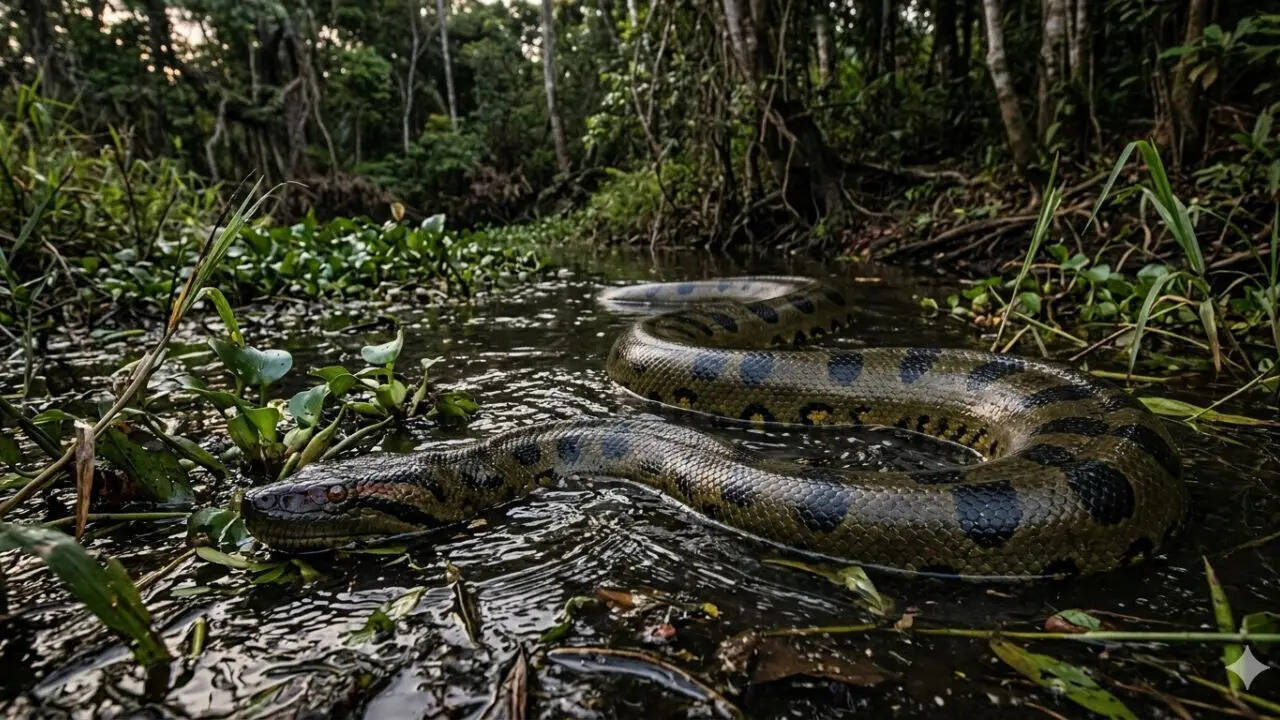
Anacondas rarely appear far from water. Their range follows flooded plains, swamp forests, slow rivers, and heavy tropical wetlands spread across northern and central South America. The snakes are difficult to track properly because they spend long periods hidden beneath muddy water or thick vegetation, so population estimates shift from one report to another. Even in places where they are considered common, sightings are irregular.
Most records are linked to the green anaconda, the largest species in the group. It is closely tied to the Amazon Basin, though smaller populations extend into neighbouring wetland regions as well. Geography plays a larger role than borders here. River systems, seasonal flooding, and marsh conditions tend to decide where the snakes remain active. Researchers and wildlife guides often rely on local observations, fishing communities and occasional field surveys to understand snakes to move through wider areas, while dry periods may concentrate them closer to permanent rivers, lagoons and swamp channels .