Get all your news in one place.
100’s of premium titles.
One app.
Start reading
The Independent UK
The Independent UK
Caroline Preece

5 best SAD lamps to combat the winter blues, tried and tested

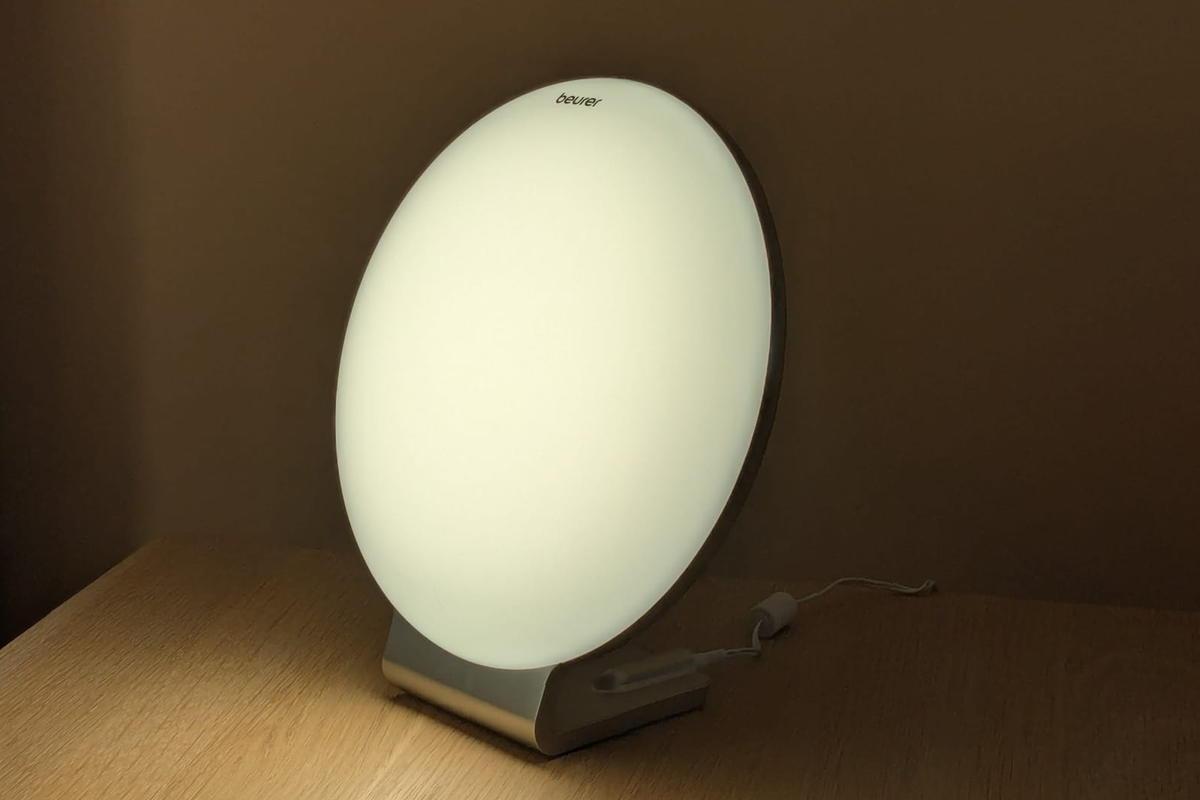
SAD lamps work by reducing melatonin, the hormone responsible for sleep, and increasing your serotonin levels - (Caroline Preece/The Independent)

Winter has a way of quietly creeping into your routine. Darker mornings and shorter days can make it harder to feel awake, focused, or even mildly upbeat, which is why the best SAD lamps become a popular purchase at this time of year. In the UK, daylight drops to less than eight hours on the shortest day, and the impact goes far beyond feeling a bit sluggish.

Dr Hana Patel, NHS GP and sleep expert explains that SAD (seasonal affective disorder) is “closely related to a misalignment of the circadian and sleep cycles,” often linked to “reduced exposure to natural light during the shorter days”.

Often described as “therapy lights”, SAD lamps simulate bright daylight and are typically used in the morning. “A light box or lamp that simulates sunlight should generally provide an exposure to 10,000 lux of light, and produce as little UV light as possible to be safe for your eyes,” says Dr Patel.

Most guidance recommends aiming for approximately 10,000 lux for roughly 30 minutes per day at the manufacturer-specified distance, so you’re receiving a true therapeutic dose rather than merely slightly brighter room light.

For this guide, I tested range of SAD lamps over consecutive winter weeks, focusing on what actually matters when your energy is low. That meant checking how easy each unit is to position at the correct distance, how comfortably it fits into a rushed morning, and whether I’d still use it on a bleak weekday when I’d much rather stay in bed.

Therapist Katie K May stresses that “a multilayered plan to boost mood is best,” which can include light therapy alongside psychotherapy, medication management, and practical coping skills, so it’s worth speaking to a qualified health professional if you’re struggling with lack of light in winter.

Read more: Do SAD lamps work? Experts explain how to beat the winter blues

The best SAD lamps for 2026 are:

  • Best overall – Lumie task light therapy desk lamp: £279, Amazon.co.uk
  • Best budget buy – Lumie mini light-therapy lamp: £59, Boots.com
  • Best for on the go – Luminette glasses 3: £199, Amazon.co.uk

How I tested

A selection of the best SAD lamps I tested for this review (Caroline Preece/The Independent)

I used each SAD lamp at my desk over the course of a few weeks in the winter, following the manufacturer’s guidance on distance and session duration (typically 20-30 minutes in the morning, occasionally around lunchtime).

I kept notes on how long they took to set up, how comfortable they felt over a full session, and how easily each one slotted into a normal working day.

Read more: 9 best weighted blankets to ease stress and anxiety, tried and tested

Lumie task light therapy desk lamp

Rating: 5/5

Best: SAD lamp overall

Max lux level: 10,000 lux at 15cm

Light colour: Cool white

Size: 18cm x 17.5cm x 55cm

Why we love it

  • Also works brilliantly as a desk lamp
  • The touch slider makes brightness changes quick and precise

Take note

  • Expensive compared with panel-style lamps
  • Takes up more space than ultra-compact models

Most SAD lamps are very upfront about what they are: a lightbox you sit in front of for a set period of time. The Lumie task is a bit different, behaving like a “proper” desk lamp that just happens to deliver therapy-grade brightness. In day-to-day life, that makes a big difference to how easy it is to actually use, earning it the top spot as the best SAD lamp.

I see myself using this SAD lamp every winter (Caroline Preece/The Independent)

During testing, I put it where I’d usually keep a task light, just off to the side of my computer screen. Hitting the recommended 10,000 lux at 15cm was straightforward and, crucially, it didn’t mean tearing up my whole workspace to make room for a big rectangular panel.

The adjustable head and neck aren’t just nice extras; they let you angle the beam out of your direct line of sight, while still getting plenty of light. That meant sessions felt less like a chore or interruption and more like a natural part of starting the workday.

The controls deserve a special mention. The brightness slider is built into the base so you can turn it up for a therapy session, then dial it back down and keep using it as a standard desk lamp, no swapping devices or shifting your setup. That one detail did more for my enthusiasm than any app or smart feature.

Buy now £279, Lumie.com

Lumie mini light therapy lamp

Rating: 4.5/5

Best: budget SAD lamp

Max lux level: 10,000 lux at 12cm

Light colour: Cool white

Size: 22.5cm x 16.4cm x 9.4cm

Why we love it

  • Single button – just turn on or off
  • Compact enough for a small, crowded desk

Take note

  • You’ll need to sit close for the full 10,000 lux benefit
  • No timer, dimmer, or angle adjustment

The Lumie mini is my pick for the best budget SAD lamp because it does the basics really well, without making you wrestle with settings or features you’ll never use. There’s a single power button. That’s it. If you want a lamp you can switch on before your first coffee, without accidentally triggering some obscure mode, this is the one.

In everyday use, its footprint mattered just as much as the price. At just over 16cm wide, it fit neatly onto a desk already dominated by a laptop, monitor, and the usual cable sprawl. It also has that rare quality in budget products: it still looks modern and genuinely pleasant to have around. The housing is neat, the base is stable, and nothing rattled or shifted when I moved it from one space to another.

This is a minimal addition to your desk (Caroline Preece/The Independent)

The main compromise is the same one you’ll find with most compact SAD lamps. To reach 10,000 lux, you need to sit about 12cm away, which can feel pretty intense when you’re trying to type or read. I could manage it at the start of a session, but I often nudged it back as the morning went on. At arm’s length (around 50cm), Lumie reports 2,500 lux, which is still helpful for many people and feels more realistic for multitasking.

The feature set is deliberately simple. There’s no dimmer to turn it into a regular desk lamp, no timer (so you’ll need to keep an eye on the clock) and no adjustable stand. Next to the Lumie task, it’s clearly a single‑purpose tool. But that’s also the appeal: the mini is what you buy when you want credible, medical‑grade light therapy in the simplest, most compact, and most affordable package possible.

Buy now £59, Lumie.com

Luminette glasses 3

Rating: 4/5

Best: wearable SAD lamp

Max lux level: 500-1,500 lux at eye level

Light colour: Blue‑enriched white LED light

Size: 6.1 x 23 x 15.9cm

Why we love it

  • Wearable design
  • Clear session guidance at 500, 1,000 and 1,500 lux
  • Sits over prescription glasses
  • Easy USB‑C charging

Take note

  • Feels slightly front‑heavy during longer stints
  • Wearable lux values are lower than box lights

If you struggle to sit still in front of a light box, the Luminette 3 wearable therapy glasses solve the problem by letting you move around while you get your dose. I wore the glasses while working at my laptop, usually on the medium setting for about 30 minutes.

I tested this SAD wearable (Caroline Preece/The Independent)

The light sits just above your eyeline and reflects into your eyes via a hologram, so your field of view stays clear for everyday tasks like making coffee or reading. The LEDs emit blue‑enriched white light (shown to help with symptoms of SAD) and there are three intensities that correspond to simple session lengths: 500 lux for 60 minutes, 1,000 lux for 30 minutes, or 1,500 lux for 20 minutes.

The brand points to clinical evidence suggesting this delivers benefits similar to those of a 10,000‑lux light box, which helps explain how the lower lux figures you see for wearables can still stack up against traditional panels.

In testing, I found the integrated timer and auto shut‑off made it easy to keep sessions consistent, and the frames sat comfortably over my prescription glasses. They do feel a touch front‑heavy after about 20 minutes, though, and can seem a bit stark in a very dim room. Even so, the trade‑off for true portability feels worth it if a static light box tends to sit in a corner gathering dust.

Buy now £199, Amazon.co.uk

Lumie dash

Rating: 4.5/5

Best: SAD lamp for portability

Max lux level: 10,000 lux at 15cm

Light colour: Cool white

Size: 18.7cm x 18.1cm x 9cm

Why we love it

  • Ultra-portable at 590g, without sacrificing therapeutic intensity
  • Adjustable colour temperatures
  • Easy to get up and running

Take note

  • Fixed 65-degree angle limits flexibility with some desk setups

The Lumie dash, my best SAD lamp for portability, was the lamp I kept reaching for when I wanted my desk to look tidy, even after the testing period ended. At 590g, it’s light enough that you don’t think twice about throwing it in a bag, and it doesn’t demand a dedicated “lamp zone” on your desk. Of course, that portability wouldn’t count for much if it were fiddly to use, so I paid close attention to how quickly I could get it up and running in a new spot.

This boasts great portability (Caroline Preece/The Independent)

The fixed 65-degree angle is the dash’s defining feature. Instead of giving you a hinge to endlessly tweak, it assumes you’ll place it on a desk and sit in front of it. In my testing, that assumption held up for the most part. At standard desk heights, the lamp naturally aimed toward eye level without requiring propping on books, and it took seconds to start a session.

You do lose some flexibility though. If you’re tall, use a standing desk, or tend to perch on a sofa rather than sit at a desk, the fixed angle can make the beam feel less precisely targeted than with an adjustable lamp, like the Lumie task. The dash also isn’t a desk lamp replacement in the way the task is, so it’s better to think of it purely as a purpose‑built therapy light.

Still, if you want a certified therapy lamp that travels well, slots neatly into different spaces, and doesn’t punish you with complicated setup, the Lumie dash comes very close to ideal.

Buy now £179, Amazon.co.uk

Lumie vitamin L

Rating: 4/5

Best: SAD lamp for ease of use

Max lux level: 10,000 lux at 20cm

Light colour: Cool white

Size: 28cm x 20cm x 8cm

Why we love it

  • Detachable stand allows portrait or landscape orientation
  • Straightforward plug‑and‑play operation with zero setup fuss

Take note

  • No dimming, colour adjustment, or extra features
  • Needs to sit closer than other Lumie SAD lamps

The Lumie vitamin L earns its award as the best SAD lamp for ease of use because, rather than trying to be a smart light, a desk lamp, and a therapy tool all at once, it’s simply an excellent light therapy panel you can slot into your morning with as little friction as possible.

This slotted easily behind my monitor while working (Caroline Preece/The Independent)

In testing, the portrait and landscape options made a bigger difference than I expected. On an office desk, the landscape orientation lets you tuck it beside a monitor without blocking your workspace. At home, portrait mode fit neatly on a narrow surface while I made breakfast. The ability to adapt to the space you actually have is a fantastic perk, even if the controls themselves are basic.

Operation is straightforward, but the vitamin L isn’t quite as “set and forget” as it looks. I could manage to keep it close to me while reading, but when typing, I often nudged it slightly farther away for comfort as the flat panel felt a bit claustrophobic when it was too close.

There are no brightness levels, no warmth adjustments, and no built‑in timer. Some people will see that as a downside, and it is if you want one lamp to do several jobs. I also found that once a session was over, I tended to turn it off and switch back to my usual lighting rather than leaving it on as a working lamp. Compared with the Lumie task, it makes it less useful outside dedicated therapy time.

If you want something uncomplicated, well-designed, and easy to fit into multiple spaces, the vitamin L is a strong choice. It’s not the most feature‑rich option available, but that’s precisely why it’s so straightforward to use effectively.

Buy now £99, Amazon.co.uk

Your questions answered on SAD lamps

What are the best SAD lamps?

The best SAD lamp is the one you’ll actually switch on during a dark Tuesday morning while the coffee brews. For me, that’s the Lumie task light therapy desk lamp. It doesn’t look like a clinical lightbox and, once your session is done, it doubles as a desk lamp with a touch slider that makes you look genuinely good on video calls.

If you’d rather spend less, the Lumie mini is the sensible choice. It’s compact, has a single, simple power button, and is small enough to fit on a cramped desk without taking up space. If you split your time between home and the office, a portable lamp is typically easiest to integrate into your routine.

As Dr Patel advises, “Buying from a trusted brand ensures that you get a safe and effective product,” so it’s worth checking that your lamp delivers a true 10,000 lux at the recommended distance and has minimal UV output.

How I tested SAD lamps

In order to ensure a fair test of the SAD lamps on offer, I used the same review criteria on each. Here are the specific characteristics I looked out for:

How do SAD lamps work?

SAD lamps provide a strong “morning signal” even when it’s gloomy outside. “The light produced by these lamps works to mimic sunlight that’s missing during the winter months, encouraging the brain to increase the production of serotonin,” says Dr Patel. Used shortly after waking, bright light also helps suppress melatonin, which may lift mood and improve daytime alertness for some people.

Therapist Katie K May notes, “I’ve had many clients share that light therapy within the first hour of waking up while they are getting ready for the day is effective to positively impact their mood.” Most expert guidance suggests targeting about 10,000 lux for around 30 minutes at the specified distance, to ensure you’re getting a truly therapeutic dose.

Some people notice a difference within a week, but results vary, and light therapy isn’t right for everyone. If you have health concerns, a history of eye problems, or take certain medications, speak to your GP before you start.

How to use a SAD lamp

Why you can trust IndyBest reviews

Caroline Preece is an expert product tester and journalist who specialises in home and lifestyle topics, including kitchen appliances and even more sleep products like the best cooling pillows, the best memory foam pillows, and the best sunrise alarm clocks. When it comes to products to make your home a more calming space, Caroline knows what she’s talking about.

For more ways to brighten your days, read our review of the best sunrise alarm clocks

Sign up to read this article
Read news from 100’s of titles, curated specifically for you.
Already a member? Sign in here
Related Stories
Top stories on inkl right now
One subscription that gives you access to news from hundreds of sites
Already a member? Sign in here
Our Picks
Fourteen days free
Download the app
One app. One membership.
100+ trusted global sources.