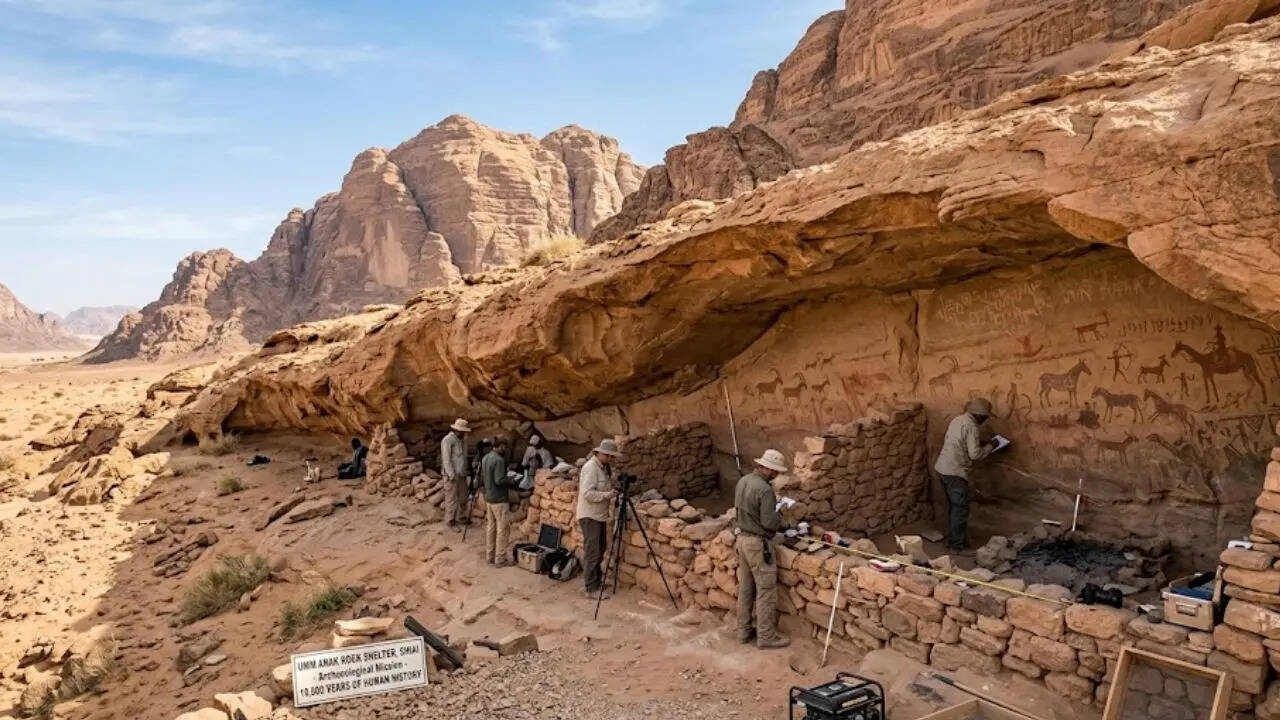
A significant archaeological discovery in Egypt's Sinai Peninsula has uncovered a vast rock shelter measuring 100 metres long that served as a continual record of humankind's activities for the past 10,000 years. It is located in proximity to the ancient mining centres of Serabit el-Khadim, where researchers were able to establish an incredible chronology of rock art; from the work of Epipaleolithic hunter-gatherers (approximately early Holocene), through medieval travellers, all the way to today. The archaeological team from Egypt’s Supreme Council of Antiquities discovered many different styles of artwork that were created by these various groups, including iconography depicting animals painted with red pigment and hunting scenes carved into the rock using the technique known as sunken relief.
The archaeological shelter also provides evidence of human habitation in the form of structures (such as stone living units, hearths and pottery) that have been dated back to both the Middle Kingdom and Roman times. The significance of this archaeological site is that it provides an unparalleled and uninterrupted window into the adaptive behaviours that multiple cultures have developed within the same geographical location over the span of ten millennia. This enduring desert archive bridges ten millennia, offering profound insights into how diverse civilizations evolved their artistic and architectural signatures while sharing the same rugged terrain throughout Egypt's transformative history.