
Until recently, most of the research on strokes has been done by men, on men. Yet, much like heart attacks in women, we are more at risk after menopause, thanks to declining hormone levels and the rise of other conditions that increase the risk of a stroke, like high blood pressure.
Researchers at the City of Hope published their study examining 105,614 women over two decades. The research was some of the first of its kind, specifically looking at women and the relationship between diet and types of stroke.

According to the Stroke Association, women account for nearly half of stroke cases in the UK. It's the leading cause of disability and works out to be the fourth biggest killer in the UK, with over-60s most likely to have one. However, the risk doubles every 10 years after age 55, and up to 15% of cases occur in people under 50. So, it's worth knowing how to lower your risk, whatever your age.
The research, published in Neurology Open Access, found that women who followed the Mediterranean diet saw 25% lower risk of hemorrhagic stroke, which is the most severe type and is caused by bleeding in the brain. They also saw a 18% lower risk of any stroke and a 16% lower risk of ischemic stroke, which is caused by blood vessel blockage.
After menopause, declining oestrogen levels leave the brain vulnerable to inflammation and damage, so while this study doesn't prove that following the Mediterranean diet lowers stroke risk, it shows a positive association.
"Stroke is a leading cause of death and disability, so it's exciting to think that improving our diets could lessen our risk for this devastating disease. Further studies are needed to confirm these findings and to help us understand the mechanisms behind them so we could identify new ways to prevent stroke," said Sophia S. Wang, PhD, study author of City of Hope Comprehensive Cancer Center in Duarte, California.
“We were especially interested to see that this finding applies to hemorrhagic stroke, as few large studies have looked at this type of stroke.”
The women in the study had an average age of 53 at the start and no history of stroke. Each was given a score of zero to nine, based on how closely they followed the Mediterranean diet, receiving points for consuming more than the population average in certain categories. The categories were: wholegrain cereals, fruits, vegetables, legumes, olive oil, and fish. The amount of red meat, dairy products, and alcohol consumed was also monitored.
30% of participants scored between six and nine, the highest group. 13% scored the lowest, between zero and two.
After adjusting for other factors influencing stroke risk, like smoking, exercise levels, and high blood pressure, those who stuck to the Mediterranean diet were 18% less likely to have any stroke than those who did not stick to the diet as closely.
What is the Mediterranean diet?
The Mediterranean diet is one of the most popular ways to 'eat healthily', given that ingredients are found in every supermarket and it has limited 'rules' to follow.
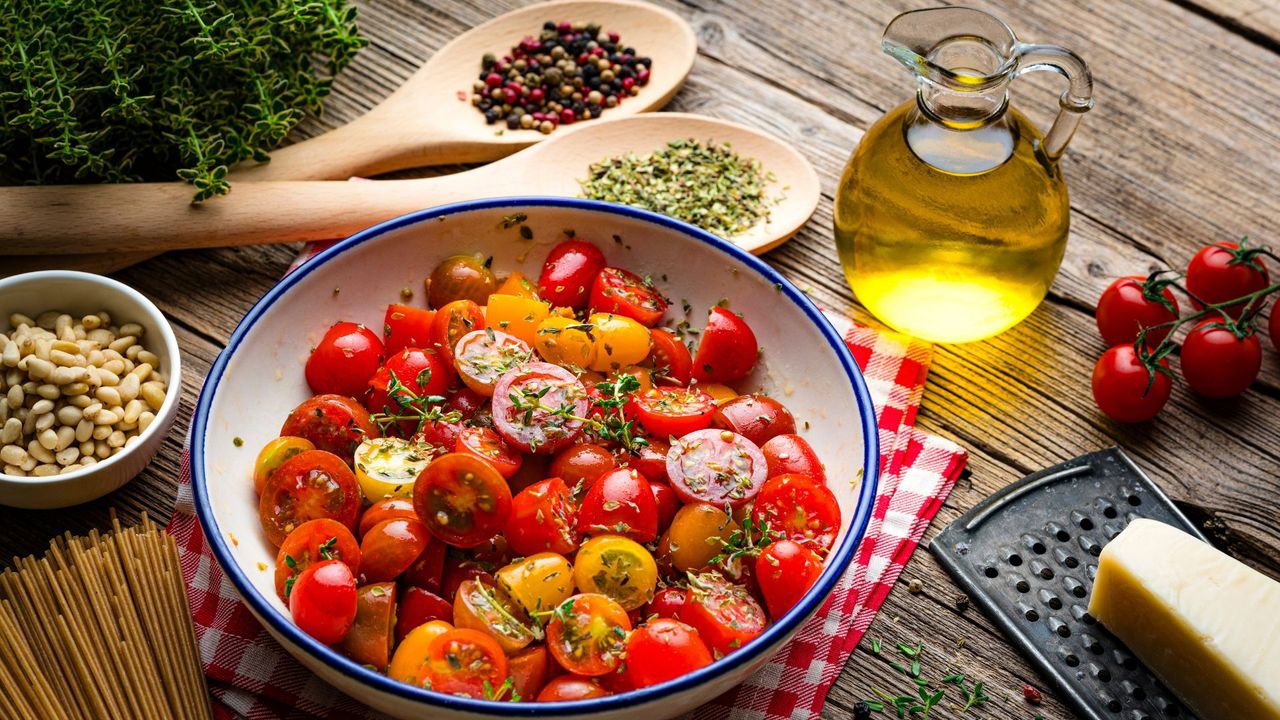
The traditional Mediterranean diet, as found in countries like Italy and Spain, is based around:
- Plant foods, especially leafy greens, berries
- Whole grains
- Legumes
- Nuts and seeds
- Olive oil
- Limited meat and dairy products
- Moderate fish and seafood
- Very few processed foods, refined sugars, butter, or saturated fats
How does the Mediterranean diet lower risk of stroke in women?
The Mediterranean diet is rich in omega-3 fatty acids, plant compounds called polyphenols, and antioxidants. All of these may help protect our brains from inflammation, which oestrogen would help protect against before menopause.
This style of eating may also help prevent other conditions that increase the risk of stroke, such as high blood pressure and high cholesterol levels.