
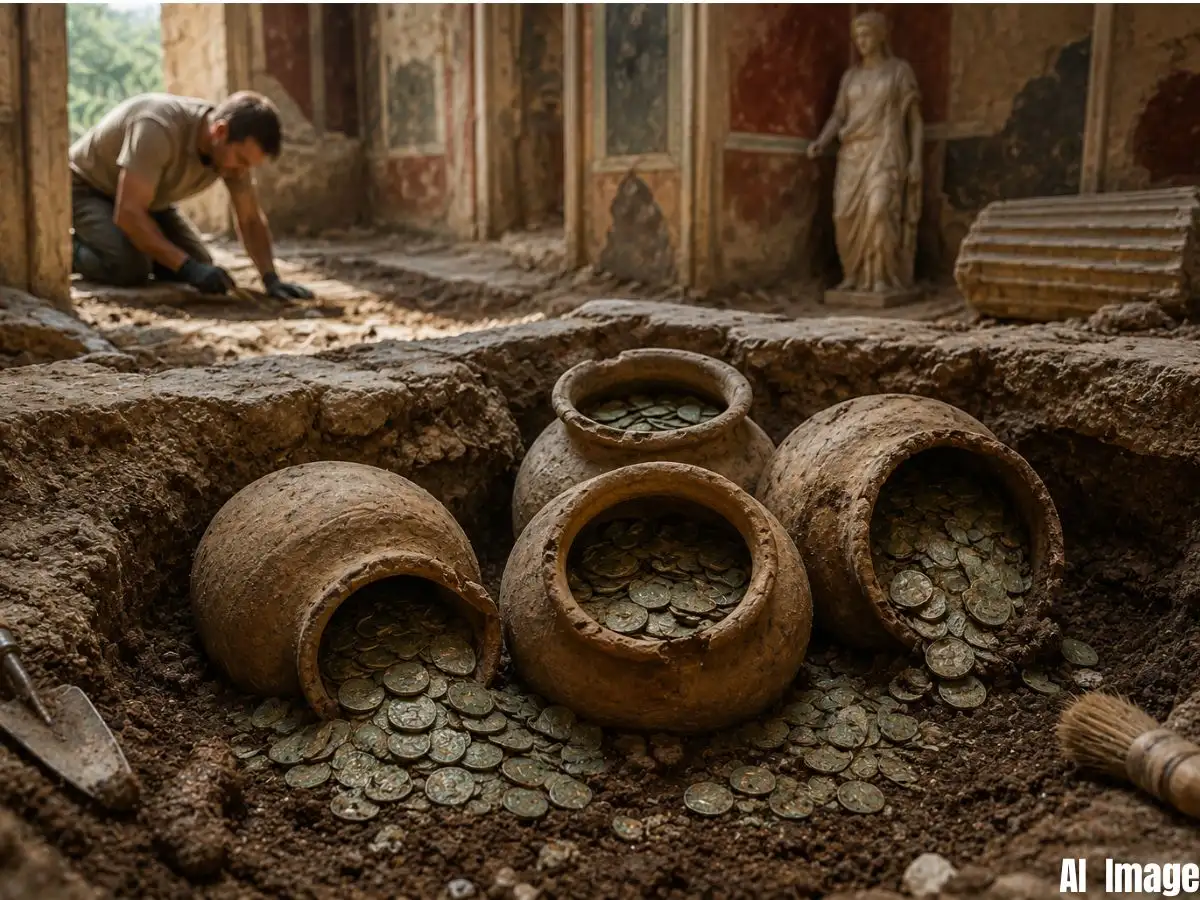
Picture this. You're renovating your house, digging up the floor to add a new room, and your spade hits something that shouldn't be there. Not a pipe. Not a rock. A clay pot. And inside it, thousands upon thousands of coins nobody has touched in nearly two millennia.
That's exactly what happened in the quiet French village of Senon, tucked away in the Meuse region near the German border. Only, the people doing the digging weren't ordinary homeowners, they were archaeologists from INRAP, France's national institute for preventive archaeology, called in ahead of a routine home extension project. What started as a standard pre-construction survey turned into one of the more fascinating money mysteries archaeology has thrown up in recent years.












