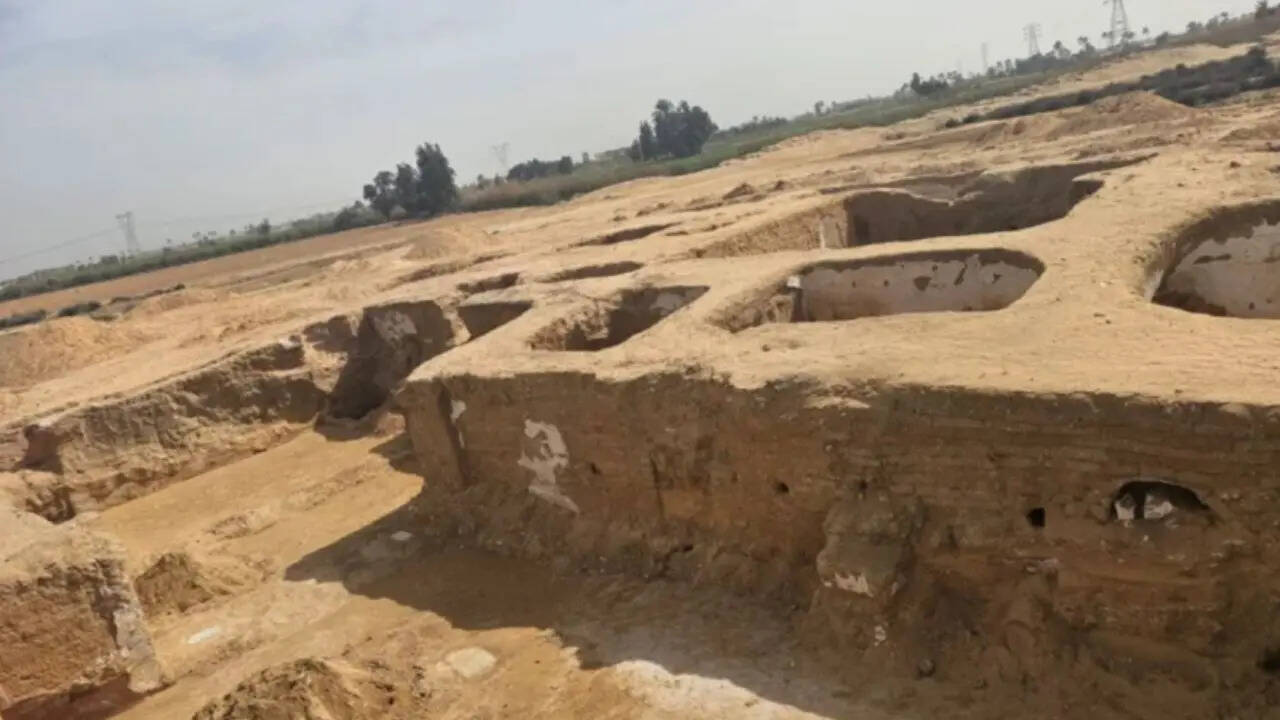
Egypt has once again drawn attention from the archaeological world after researchers uncovered a large monastic complex believed to be around 1,500 years old. The site sits in the Nile Delta, a region already known for layers of ancient settlement and religious history. Officials from Egypt’s Ministry of Tourism and Antiquities announced the discovery after years of ongoing excavation work. The remains appear to offer a rare glimpse into how early Christian monastic communities lived, organised themselves, and adapted their spaces over time.
It is not just a single building, but a structured complex with multiple rooms, communal areas, and symbolic elements. Experts say the find could help fill gaps in understanding the early development of organised monastic life in Egypt. There is also a sense that the site reflects a transition in religious living patterns. From isolation to community. Quietly preserved beneath layers of soil for centuries.