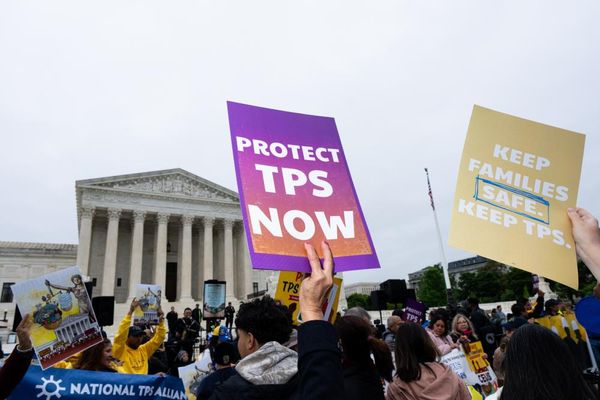
The US supreme court on Thursday ruled in favor of the Trump administration’s bid to strip temporary protected status (TPS) from hundreds of thousands of Haitians and Syrians, who were legally in the US and protected from deportation.
In another boost to Donald Trump’s unprecedented hardline crackdown on immigrants, including many of whom have lived legally in the US for years, the court issued a 6-3 ruling. That was powered by its conservative-leaning majority, overturning decisions by federal judges in New York and Washington DC that had halted the administration’s actions terminating TPS for more than 350,000 people from Haiti and 6,100 from Syria.
The court’s three liberal-leaning justices disagreed with the opinion. It leaves Haitians and Syrians in the US on TPS vulnerable to deportation even if they have applications for other forms of immigration status in progress.
The state department currently warns against traveling to either Haiti or Syria, citing widespread violence, crime, terrorism and kidnapping.
All countries with a designation allowing TPS in the US are now considered under threat as the ruling will embolden the US president to strip other places of their status, no matter how risky it would be for immigrants to return there.
People with TPS are given permission to live and work in the US because the Department of Homeland Security (DHS) deems their home countries to be unsafe due to war, political instability or natural disasters. In the past year, Trump officials have attempted to cut the program for various countries, opening the door to the removal of hundreds of thousands of protected immigrants in the US.
During arguments in late April, the supreme court – controlled by a supermajority of conservative justices – appeared sympathetic to the administration’s move to strip the protected status of Haitians and Syrians.
The US federal government argued the executive branch’s decision to terminate TPS for Syria and Haiti could not be reviewed by the judicial branch of the US government, due to the way the TPS legislation was originally written.
Attorneys who sued the administration last year, attempting to preserve TPS status for Haitians and Syrians, argued that DHS did not follow the proper process to terminate TPS. They also argued Haiti and Syria were not safe enough for people to return.
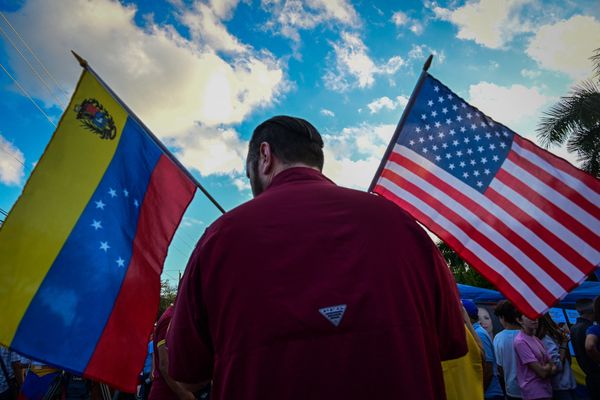
Last year, the supreme court allowed the Trump administration to strip TPS from more than 300,000 Venezuelans under the court’s emergency docket.
The decision was highly anticipated, as analysts feared a decision in favor of the administration could open the door for it to terminate TPS for all countries in what would be the biggest de-documentation move in US history. Nearly 1.3m people were TPS holders in the US when Donald Trump returned to office in January 2025.
The US first provided TPS to Haitians after a major earthquake in 2010 and to Syrians after their country descended into civil war in 2012.
On Thursday morning the conservative Justice Samuel Alito, who authored the ruling, wrote that courts cannot review the administration’s decisions concerning TPS, a development that could doom legal challenges on revocation of this status for any country. The law governing TPS “plainly bars” such judicial review, Alito wrote.
He added that the Haitian TPS holders who sued the administration were unlikely to succeed in their argument that the administration’s actions were racially biased and therefore violate the US constitution’s fifth amendment promise of equal protection under the law.
Justice Elena Kagan wrote in a dissent joined by fellow liberal justices Sonia Sotomayor and Ketanji Brown Jackson that the statute allows for judicial review of whether the DHS secretary “adhered to the procedures it mandates – which is what the plaintiffs dispute here”.
Kagan said evidence that race played a role in the Haiti decision “is there, plain to see, in the president’s statements, which the majority (and for that matter, his own lawyers) cannot even bear to repeat”. Trump has called Haiti a “shithole” and a “hellhole” of a country. While running for re-election in 2024, he vowed to revoke TPS for Haitian immigrants in the US after he and his running mate, now vice-president JD Vance, made false and derogatory claims that Haitians in Ohio were eating household pets in Springfield.
Viles Dorsainvil, a Haitian TPS holder and co-founder of the Haitian Support Center in Springfield, said the ruling places thousands of families in immediate fear.
“Haiti is not safe, and everyone knows it. The court’s ruling does not change the reality on the ground or the contributions we make here in the United States,” Dorsainvil said.
Lawyers for the Haitian immigrants, Geoff Pipoly and Andy Tauber, said in a statement that “immigrants are one of America’s greatest strengths. The responsibility to save these lives is now with Congress.”
Ahilan Arulanantham, a lawyer for the Syrian plaintiffs in the case, was appalled.
“Today the supreme court allowed the government to ignore a bedrock humanitarian protection that Congress, in bipartisan fashion, established three decades ago to ensure that vulnerable refugees would not be subject to partisan whims,” he said.
The court backed Trump in a second immigration-related decision on Thursday, also written by Alito and also decided 6-3 with the liberals dissenting. It also sided with the Trump administration, supporting its defense of the government’s authority to turn away asylum seekers when officials deem US-Mexico border crossings too overburdened to handle additional claims. The administration has said it may seek to revive the policy, known as metering, after it was dropped by Trump’s predecessor, Joe Biden.
The legal fight over TPS presented another test of Trump’s executive power and the supreme court’s deference to presidents on matters of immigration, national security and foreign policy. Trump has been intent on rolling back immigration since returning to office in January 2025. The supreme court last year let the administration end TPS for hundreds of thousands of Venezuelans.
David Bier, director of immigration studies at the libertarian Cato Institute, said the ruling undermined the economic benefits that immigrants provide.
“It will be harder for the US to compete on the global stage or keep up with a growing fiscal crisis if policymakers continue down a path that targets legal immigration pathways,” Bier said.
Reuters contributed reporting