Get all your news in one place.
100's of premium titles.
One app.
Start reading
The Economic Times
The Economic Times
Shreya Biswas

Psychology behind retail therapy: Study reveals why some people can't stop buying and how shopping turns addictive

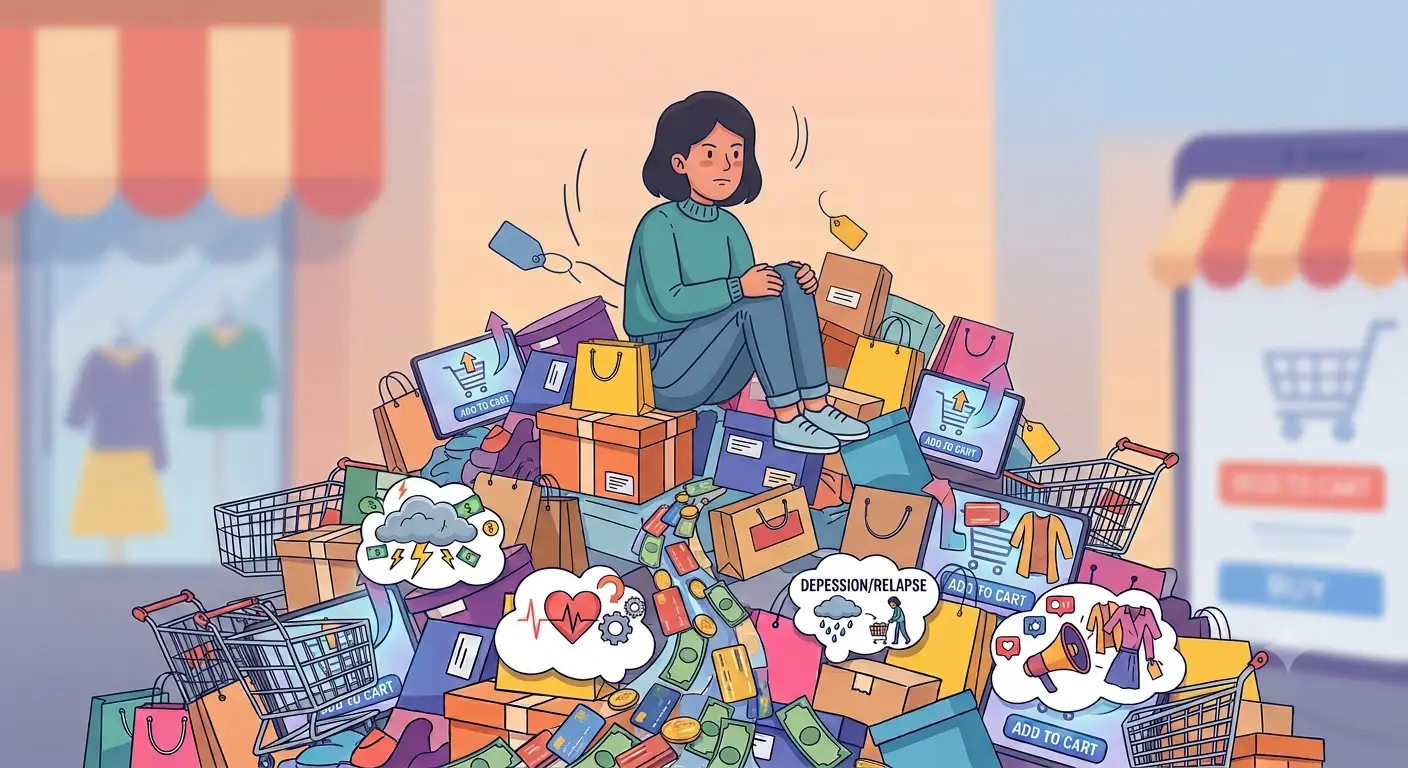
Psychology of retail therapy and shopping addiction : For many people, shopping is more than just buying things. A new dress, a gadget, or a few items added to an online cart can provide a momentary sense of excitement and relief after a stressful or difficult day. But for some individuals, that temporary emotional boost may gradually become something much harder to control.

What Is Shopping Addiction? Researchers Explain the Psychology Behind Retail Therapy

A study, titled 'Psychological correlates of shopping addiction', published in the Industrial Psychiatry Journal, has shed light on the psychology behind shopping addiction, revealing how emotions, impulsive tendencies, and personality traits may contribute to problematic shopping behavior.

According to the research, shopping addiction is characterized by an excessive and unnecessary urge to shop in order to experience pleasure or escape negative emotions. Although individuals may feel psychologically rewarded while shopping, these feelings are often followed by guilt, remorse, and distress.

READ ALSO: Five cows abandoned on a remote island for 130 years survived against the odds, and their DNA revealed why

Study Finds Nearly Half of Participants Showed Signs of Shopping Addiction

Researchers conducted the study to understand the prevalence of shopping addiction and examine its relationship with psychopathology, self-esteem, impulsivity, and personality traits. The study, also available in PubMed through the United States National Library of Medicine, involved 250 employed adults aged between 25 and 50 years.

Using the Bergen Shopping Addiction Scale (BSAS), the researchers, Dr Anwesha Mondal (Department of Clinical Psychology, Institute of Psychiatry-A Centre of Excellence) and Dr Manish Kumar (Department of Psychiatry, Deben Mahata Government Medical College and Hospital), found that 122 participants scored above the cutoff for shopping addiction, indicating that nearly half of the sample showed signs of addictive shopping behavior.

How Negative Emotions Can Trigger Excessive Shopping

The study, which is approved by the Institutional Ethics Committee of IPGME and R Research Oversight Committee, noted that many people with shopping addiction use shopping as a way to calm anxiety, grief, or stressful feelings. However, this coping mechanism can come at a cost. Individuals may hide purchases, lie about how much money they have spent, experience guilt after shopping sprees, or face conflicts in personal relationships because of their spending habits. Excessive shopping can also lead to significant debt.

Mondal and Kumar found that among the various dimensions of shopping addiction, "tolerance" scored the highest, as per the study. This suggests that individuals increasingly need to spend more time shopping or buy more items over time to achieve the same level of happiness or emotional relief.

READ ALSO: Life performs better in heat, but what happens next surprised scientists

Depression and Anxiety May Increase the Risk of Shopping Addiction

The findings also revealed important links between shopping addiction and mental health. A positive relationship was found between depression and relapse, indicating that depressive symptoms may trigger a return to excessive shopping even after an individual attempts to cut back or stop, as per the research paper.

Why Shopping Provides Temporary Relief but Often Leads to Guilt

Anxiety was positively associated with the conflict dimension of shopping addiction. The researchers explained that feelings of guilt, financial difficulties, and family conflicts resulting from excessive shopping may contribute to anxiety among affected individuals.

The Role of Impulsivity in Compulsive Buying Behavior

Impulsivity also appeared to play a significant role. The study found that motor impulsivity, described as acting without prior reflection, was positively related to both tolerance and relapse. Nonplanning impulsivity, or acting without considering future consequences, was also linked to relapse in shopping addiction.

READ ALSO: One of the world’s most famous artists' painting just reappeared in a surprising police operation near Paris

How Personality Traits Such as Extraversion Influence Shopping Habits

Personality traits may further influence shopping behavior. The researchers found a positive relationship between extraversion and both tolerance and relapse. According to the study, extroverted individuals may use shopping to maintain social attractiveness or social status, such as purchasing new outfits and accessories for different occasions, which can increase shopping behavior over time.

Can Retail Therapy Become Addictive? Here's What the Study Found

Multiple regression analysis further suggested that motor impulsivity, nonplanning impulsivity, and extraversion contributed to increases in shopping addiction.

The researchers concluded that, "Shopping addiction is a growing concern which needs to be explored more for treatment planning. The findings of the current research indicate a need for a detailed understanding of shopping addiction which will definitely be helpful in establishing clear diagnostic criteria to create a comprehensive treatment plan including relapse prevention which will pave the way for the recovery of the individual with shopping addiction," as quoted in the Industrial Psychiatry Journal.

READ ALSO: Quote of the day by J. D. Salinger: 'What I like best is a book that's at least funny once in a while. What really knocks me out is...' - The Catcher in the Rye and Nine Stories author's life lesson on power of reading and why great books feel like a close friend

FAQs

Why do some people shop when they feel stressed or sad?

The study found that many people use shopping to calm anxiety, grief, or stressful feelings.

What are common signs of shopping addiction?

Signs include unnecessary purchases, guilt after shopping, hiding purchases, and spending beyond one's means.

Sign up to read this article
Read news from 100's of titles, curated specifically for you.
Already a member? Sign in here
Related Stories
Top stories on inkl right now
One subscription that gives you access to news from hundreds of sites
Already a member? Sign in here
Our Picks
Fourteen days free
Download the app
One app. One membership.
100+ trusted global sources.