The man who prosecutors say received Tyler Robinson's alleged confession took center stage Thursday as a Utah court heard emotional recordings from Lance Twiggs, Robinson's former roommate and romantic partner, in the murder case surrounding conservative activist Charlie Kirk.
Twiggs told investigators Robinson returned to their St. George townhouse the morning after Kirk was fatally shot and admitted the killing before breaking down in tears.
"I just asked him in person if what he said was true the night before, and he said it was," Twiggs told prosecutors in an interview played in court. "He started crying a little bit and said he wishes he hadn't done it."
The recordings were played after Judge Tony Graf rejected the defense's efforts to keep them from being aired publicly, though portions were redacted over concerns that they could prejudice a future jury.
Robinson, 23, is charged with aggravated murder and six other offenses in the Sept. 10, 2025, shooting death of Kirk at Utah Valley University. Prosecutors are seeking the death penalty. Robinson has not entered a plea.
According to prosecutors, Robinson also sent Twiggs text messages after the shooting admitting he was responsible. In one message shown in court, prosecutors allege Robinson said he targeted Kirk because he "had enough of his hatred."
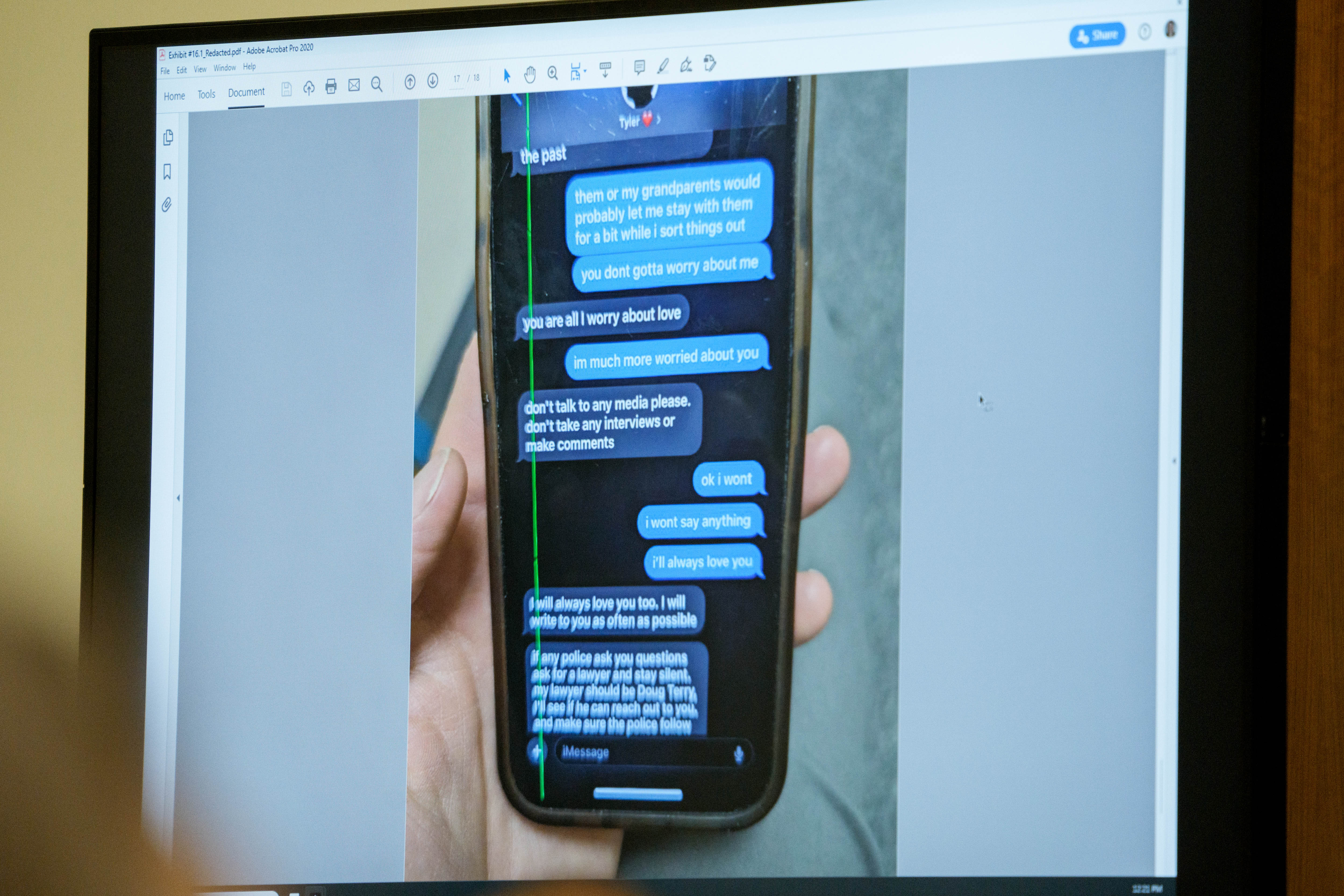
The defense disputes prosecutors' characterization of the messages and has sought to limit evidence they say could unfairly suggest a political motive.
Twiggs told investigators Robinson rarely discussed politics and had never mentioned Kirk before the shooting. He said the first time Kirk's name came up was after the attack.
Prosecutors also presented Discord messages they say Robinson posted about an hour before surrendering to police, including one that allegedly read, "It was me at UVU yesterday."
The recordings are among the most significant pieces of evidence made public during Robinson's weeklong preliminary hearing, where prosecutors are trying to convince Judge Graf there is enough evidence to send the case to trial.
The defense spent much of the hearing challenging the government's forensic case, questioning DNA and ballistics evidence linking Robinson to the alleged murder weapon. An ATF firearms examiner acknowledged testing on a bullet fragment recovered from Kirk's body was inconclusive.
Judge Graf is not expected to rule immediately. He has scheduled oral arguments for Sept. 1 before deciding whether the case will proceed to trial.