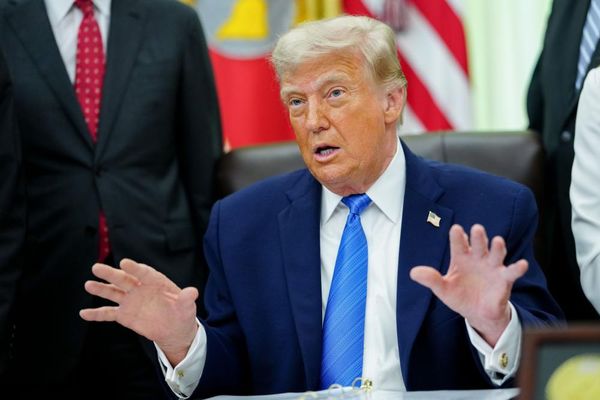
Donald Trump has claimed that the US and Iran are on the verge of signing a peace agreement and announced that he will cancel fresh missile strikes in a new bout of public diplomacy by social media, which was not immediately confirmed by the Iranian leadership.
While the White House has sought a peace agreement with Iran and it would mark a major achievement for this administration, Trump has claimed dozens of times to be close to an agreement and has previously said the Iranian leadership had agreed peace terms when they had not.
“Based on the fact that discussions with the Islamic Republic of Iran have been brought to the highest level of Iranian leadership and approved, I have, as President of the United States of America, cancelled the scheduled strikes and bombings against Iran this evening,” Trump wrote on Truth Social, the social network he owns.
He claimed the negotiations had been approved by other parties to the conflict, including Israel, which has been publicly skeptical about any deal with Iran. Others included the Gulf states of Qatar, Saudi Arabia and the United Arab Emirates, as well as regional powers Turkey and Pakistan.
“The Naval Blockade will remain in full force and effect until this Transaction is finalized — Time and place of the signing to be announced shortly,” Trump added.
Tasnim, the semi-official Iranian news agency, wrote that “until a potential understanding is announced by Iran, any news from Trump on this matter should be dismissed”.
Just hours earlier, Trump had said the US would take control of Iran’s oil and gas infrastructure and launch further strikes on Iran on Thursday night as the countries exchanged fire for the second consecutive day despite a nominal ceasefire being in place.
In a post on Truth Social, Trump had said the US would hit Iran “VERY HARD, TONIGHT”, claiming that most of Iran’s offensive capacity had been destroyed. He also said the US would seize Kharg, an island in the Gulf that handles about 90% of Iran’s oil exports and hosts vast storage facilities.
Trump said: “At some point in the not too distant future, we will be taking Kharg Island and other oil infrastructure points, and assume total control of their oil and gas markets, much like we have with Venezuela, which is working out brilliantly for both Venezuela and the United States of America.”
He later appeared to walk back his threats to seize Kharg, telling Fox News that though his preference had always been to take the island, he did not know if “America has the stomach for it”. He also said he would rather avoid hitting Iranian bridges and power plants despite having threatened to do so earlier in the week.
The UN secretary-general, António Guterres, on Thursday called on the US and Iran to return to a full implementation of the ceasefire negotiated in April and to avoid further violence that could “trigger a full resumption of the conflict, with unpredictable consequences for the region and the world”.
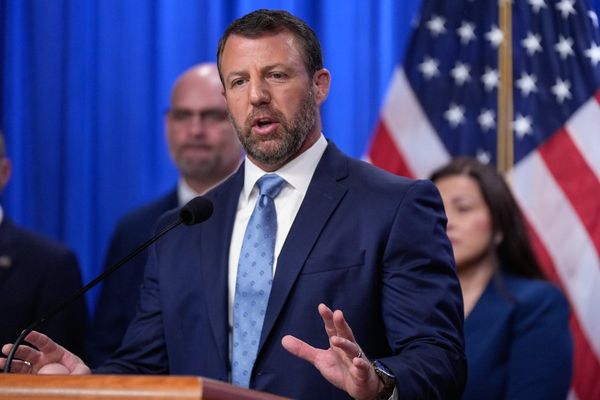
Analysts have said that taking Kharg Island would require the US to put boots on the ground, exposing US soldiers to Iranian attacks. Ruben Gallego, a Democratic senator and former US marine, said of Trump’s threats to take Kharg Island: “I think he’s putting our men and women in very harsh danger … Kharg Island is a very small, dense place, it’s not that hard to target [our] military formations.”
Responding to Trump’s threats, the head of the Iranian parliament’s national security commission, Ebrahim Azizi, said the US president would receive a stronger and more painful response if he made any “uncalculated” moves.
Iran and the US have traded strikes for two consecutive days, triggered by the downing of a US helicopter above the strait of Hormuz.
The ceasefire, established in early April, has been undermined by sporadic retaliatory strikes, with both sides accusing the other of violating the temporary truce.
Trump said Thursday’s assault was prompted by Iran stalling in negotiations aimed at turning the temporary ceasefire into a permanent peace.
The most intense strikes yet took place on Thursday morning, with the US launching a wide-ranging salvo against what it described as “military surveillance capabilities, communication systems and air-defence sites across Iran”.
The US military said it also struck an oil tanker near the strait of Hormuz that it claimed was attempting to breach a blockade of Iranian ports, firing Hellfire missiles at the vessel.
An Indian official said a US strike had killed three Indian crew members on a ship, though it was unclear whether it was the same one referenced by the US military.
Iran launched missiles and drones at Kuwait, Bahrain and Jordan on Thursday, as it had the previous morning. Bahrain’s interior ministry said an 11-year-old girl had been injured, while homes and vehicles had been damaged by falling debris from interceptions.
Despite the strikes, Iranian officials told Reuters that talks on a preliminary deal had intensified. They said the US and Iran were exchanging messages on a memorandum of understanding, although significant obstacles remained, including how to unfreeze billions of dollars in Iranian assets.
“This war, from a military standpoint, is a dead end,” one Iranian source told Reuters. “The Americans could not achieve their goals by attacking Iran. There has been progress in negotiations.”
The mechanism for releasing frozen Iranian funds remains a significant sticking point. Iran wants the money to be released all at once directly to Tehran, while the US favours a phased approach focused on funding humanitarian goods.
Unfreezing the funds and creating broader economic relief was the priority, according to the Iranian source, rather than an all-encompassing settlement.
Other unresolved issues include the conflict in Lebanon, which Iran insists must be included in any ceasefire framework. Israeli strikes there have reportedly killed more than 3,600 people, while Hezbollah attacks have killed at least 30 Israeli soldiers in Lebanon and Israeli civilians.
Trump wants Iran to end its restrictions on shipping through the strait of Hormuz and guarantee that it will not develop a nuclear weapon – something Tehran has long denied pursuing.
Iran tightened its control over the strait of Hormuz after Wednesday’s attacks, warning that ships transiting the waterway must be patient. The strait is a chokepoint for about 20% of the world’s oil supply and its closure has sent prices of energy and inflation soaring.
The US military denied that the strait had been closed or that its ships had been attacked, despite Iranian claims to the contrary, insisting that vessels were continuing to move through the strait.
Trump is seeking a deal with Iran at a time when the conflict is becoming increasingly unpopular in the US. The president faces midterm elections, rising inflation and plummeting approval ratings.
Gallego said: “It’s never that easy and we certainly shouldn’t be telegraphing our moves or intentions. I think [Trump] is being just way too cavalier about how he’s talking about this.”