As President Donald Trump’s second administration rushes to wall off the Texas border, landowners along the Rio Grande are being pushed to let construction begin on their property before the federal government purchases or condemns it.
Owners of real estate on the border are receiving letters from U.S. Customs and Border Protection (CBP) offering a signing bonus of up to $5,000 to let government contractors survey their property and begin wall construction. In copies of the letters obtained by the Texas Observer, CBP promises to negotiate with landowners to purchase their real estate at a later date. They include a warning that if property owners don’t agree to the signing bonus or quickly sell, the government will file a lawsuit to condemn their property.
It’s a new tactic. Past administrations, including Trump’s first, simply sought to survey land as the initial step, according to documents reviewed by the Observer and multiple attorneys, with the government taking landowners to court who refused access. Property owners often received only $100 at this step. Negotiations over and possible condemnation of the land itself, using eminent domain, would come later and take place before construction began. In property condemnation proceedings, construction may still begin partway through the process thanks to the feds’ “quick take” power, but a court ultimately decides appropriate compensation.
The letters being sent to landowners this year are “very different” than before, said Carlos E. Flores, a Laredo attorney who has represented landowners facing condemnation lawsuits for the border wall.
“These actually give permission by the landowner to allow for construction operations on the property,” he said. “Theoretically if a person were to sign one of these [agreements], the government could come in, do measurements and build the wall.”
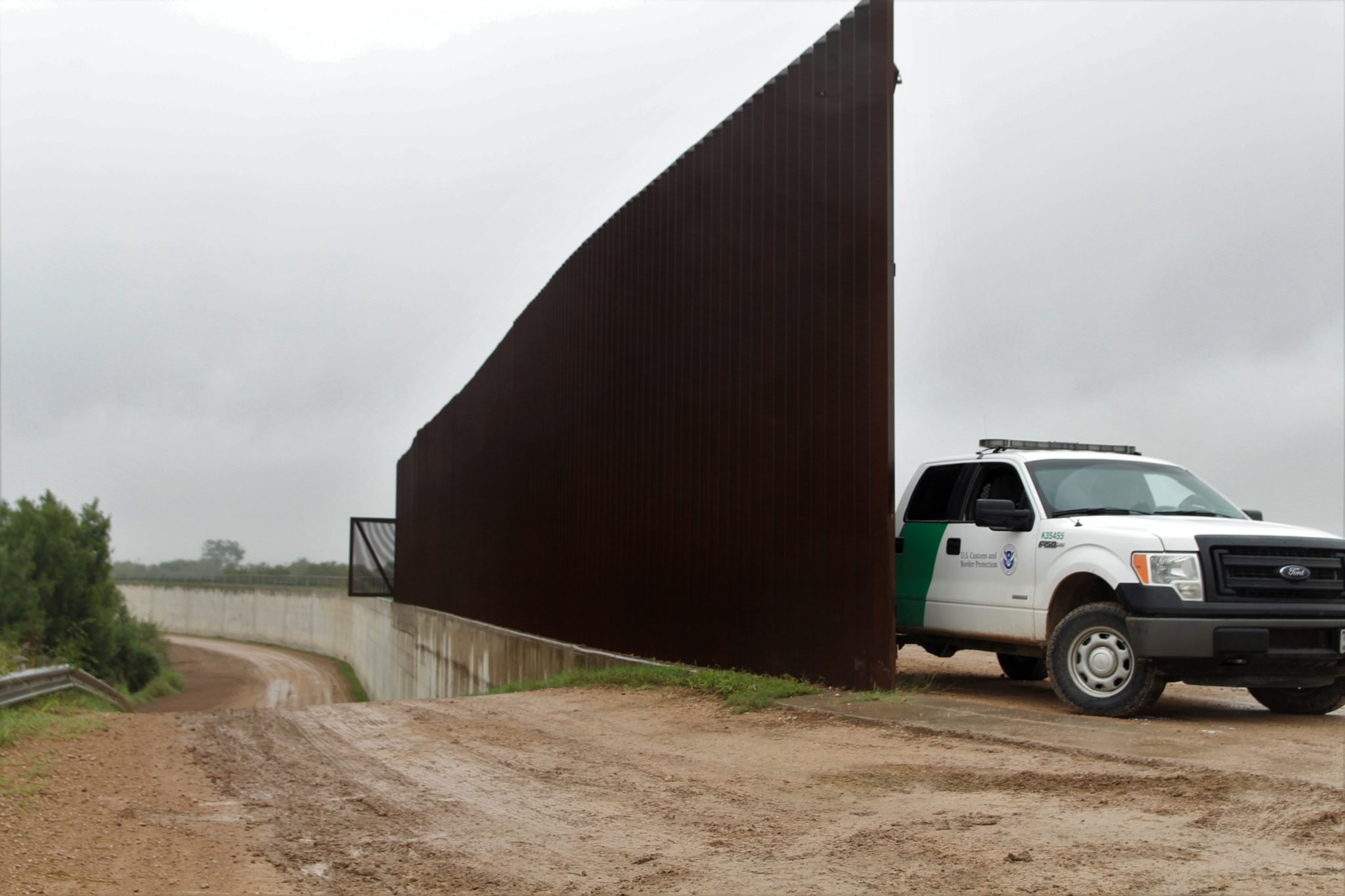
The famed Big Bend national and state parks aside, nearly all the land along the Texas-Mexico border is privately owned. This has slowed down past presidential administrations’ wall-building efforts in the state, and most of the Texas border remains unfenced—though the Rio Grande Valley in deep South Texas hosts significant wall stretches and could soon see itself entirely divorced from its river.
Last year, Congress appropriated an unprecedented $46.5 billion for border barrier construction, including both 30-foot-tall steel fencing and river buoys, and the Trump administration has already awarded contracts for wall construction in Texas, despite having purchased very little property. Lawyers and border wall opponents say allowing construction before condemnation proceedings begin is risky. CBP is likely rushing to get construction underway before a Democratic Congress can claw back border wall funds or a new president puts a stop to the project, like former President Joe Biden partially did after Trump’s first term, said Martin Castro, the watershed science director for the Rio Grande International Study Center, a Laredo-based organization that has advocated against the border wall.
“Landowners are quite scared when they receive these [letters],” Castro said. CBP is moving with “a level of urgency that is probably being done to threaten landowners into submission.”
Generations of informal inheritance in communities along the Texas border has delayed condemnation suits in the past, as the federal government struggled to satisfy courts that they had identified the owners of property where wall construction was planned.
“I think South Texas poses that kind of challenge to them,” Flores said. “So maybe they’re looking for a way to create a shortcut, which is to have people sign this type of right of entry which permits them to start construction at the outset.”
The right-of-entry letters reviewed by the Observer offer three options: Landowners can make an “agreement … wherein CBP can access the property, complete surveys, appraise the property, and complete construction.” Or they can “negotiate a purchase or easement agreement … quickly enough that CBP’s construction timelines are not impacted.” If the landowner doesn’t meet the timeline, the letters say, there will be a “referral to the U.S. Department of Justice to initiate the eminent domain/condemnation process.”
The letters, which are signed by CBP Infrastructure Portfolio Director Paul Enriquez, describe the first option as the agency’s “preferred and ideal route” as this allows it to “complete construction as quickly as possible.”
The agreements being sent to landowners along the Rio Grande are unusual not just for border wall construction, but for eminent domain in general, said Roy Brandys, an Austin-based attorney who represents clients facing eminent domain.
For example, when the State of Texas wants to begin construction on land it plans to condemn for a new highway, it will offer property owners 75 to 100 percent of what officials think their real estate is worth along with a signing bonus, Brandys said. The $1,000 to $5,000 his clients along the border have been offered amounts to a much smaller percentage of the value. And the state’s agreements usually require the government to file a condemnation lawsuit in court if an agreement on the property’s final value can’t be reached. The letters CBP is sending out have no such requirement, making it unclear what will happen if a landowner allows the government to start construction but the parties are later unable to agree on a price, Brandys said.
Brandys said he isn’t advising his clients to sign the agreements.
“[CBP] might be very well intentioned; however, there’s no obligation on the part of the government to ultimately file the eminent domain case,” Brandys said. “You could have the situation whereby the landowner grants the right of entry for construction, they build the wall on the property, but then never get around to filing the condemnation case, or they take a very long time before filing the condemnation case, and in that situation the landowner would be stuck with the wall on their property without being paid adequate compensation, without a lawsuit even being filed.”
Yolanda Alvarado, whose family lives and ranches cattle on the Rio Grande in Far West Texas, said the process has been confusing. “It seems like a rush job. And these guys don’t really know what they’re doing,” said Alvarado, 38.
She said many landowners feel pressured to sign the agreements.
“It’s basically like: Either work with them, or they’re going to do it anyway. I know a lot of landowners down here don’t really have the means to fight back in court, or the means to get legal representation, or even know that process.”
The letters’ language threatening to refer landowners to the Justice Department is also potentially confusing, said Brandys, the Austin attorney. Landowners may believe that’s the worst outcome for them, but it’s common for infrastructure projects to result in land condemnation proceedings. As loathed as they are, eminent domain lawsuits offer certain protections, including requiring the government to deposit what it thinks is the fair market value for the property with the court, money that the landowner can withdraw while the proceedings are ongoing. Landowners may also be entitled to a jury trial. The right of entry agreements CBP is asking property owners to sign don’t offer those same protections.
If no price agreement is reached and the Justice Department does fail to condemn, it may fall to the landowners to seek redress in the Court of Federal Claims in Washington. “I just don’t think that is a very good option for any landowner in this situation,” Brandys said.
CBP did not respond to requests for comment for this article.