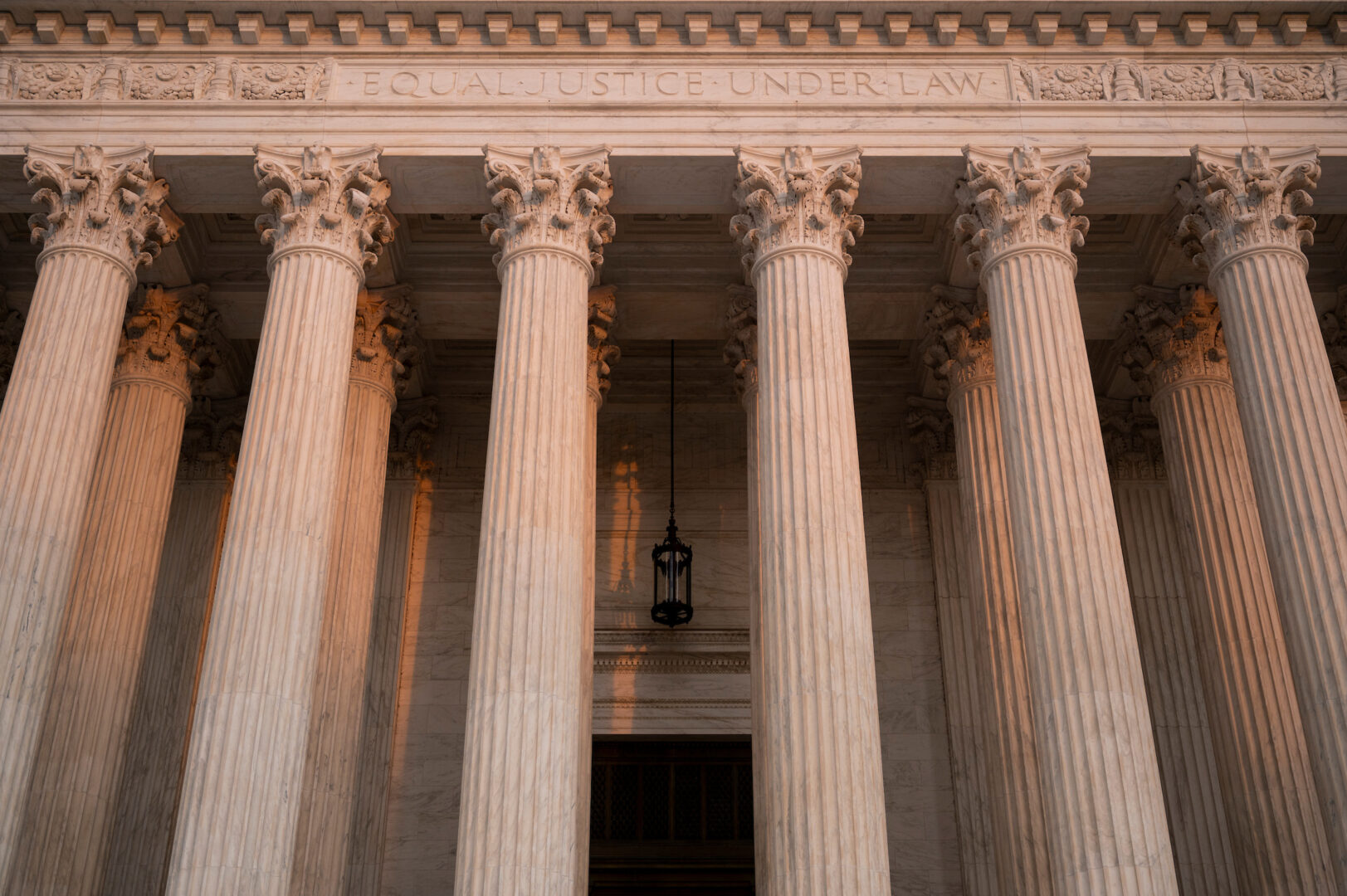
The Supreme Court invalidated a Hawaii law Thursday that barred the possession of guns on private property without the owner’s consent, the latest in a series of rulings that expanded federal gun rights.
The 6-3 decision from the justices follows a high court ruling from four years ago that expanded federal gun rights outside the home. The majority opinion, written by Justice Samuel A. Alito Jr., found the state law infringed on the Second Amendment rights of gun owners.
The Supreme Court found that colonial-era laws prohibiting unauthorized hunting on private land could not justify the “vastly different” modern law that by default banned gun possession on most private property.
“The gap between the State’s anti-poaching analogues and its new rule is just too wide,” the decision said.
The gun owners who challenged the state law argued that it effectively made publicly carrying firearms unlawful in most of the state.
The case is the latest in a series of cases the justices have taken up since expanding gun rights in the 2022 decision of New York State Rifle & Pistol Association Inc. v. Bruen, where the justices ruled that restrictions on gun rights had to be rooted in the “history and tradition” of the nations’ founding era.
Justice Ketanji Brown Jackson, in a dissenting opinion joined by Justice Sonia Sotomayor, wrote that the majority decision trampled on states’ ability to regulate gun ownership and property law. Jackson also criticized the loose interpretation of the Bruen decision to restrict other statutes.
“With this decision, the Court has manipulated Bruen into a free-for-all that lets the Judiciary thwart the will of legislatures by privileging access to firearms above all else,” Jackson wrote.
Justice Elena Kagan wrote a separate dissent from the decision, arguing that the state’s use of trespassing statutes should have been enough to uphold the law.
“The ‘why’ is sufficiently close,” Kagan wrote. “Both sets of laws respond to the dangers and harms that someone with a gun can cause on another person’s property.”
Justice Amy Coney Barrett, in part of a concurring opinion, pushed back on the assertion that the state law primarily dealt with property rights.
“It is irrelevant, for purposes of the Amendment’s plain text, that a property owner has the right to exclude anyone who wishes to enter her property with firearms,” Barrett wrote.
Last week the justices ruled unanimously that a federal law that bans gun possession for users of illegal drugs was unconstitutional when applied to a man prosecuted for being found with a gun and admitting to regular use of marijuana.
The case is Jason Wolford, et al. v. Anne E. Lopez, attorney general of Hawaii.