A Republican candidate for lieutenant governor in Massachusetts has been thrown off the primary ballot after a state commission found that more than 1,200 of her nomination signatures were invalid, many of them allegedly forged.
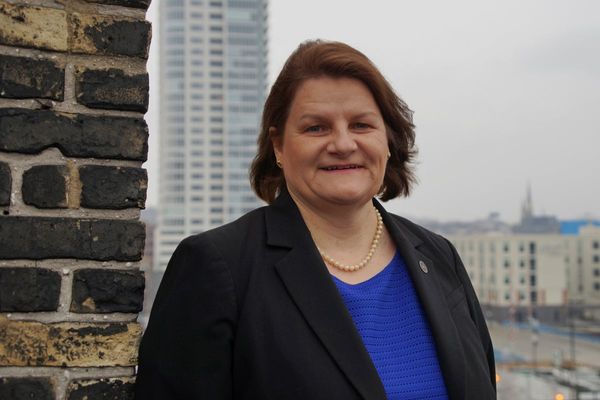
Anne Manning Martin, a long-serving Peabody city councillor and corrections officer, was ruled ineligible for the 1 September Republican primary by the State Ballot Law Commission.
The commission concluded she fell short of the 10,000 certified signatures required after it struck 1,279 of her 10,692 submitted signatures, some allegedly copied from a voter list and others attributed to people who had died. Manning Martin denies any wrongdoing, has called the ruling 'manifestly unjust,' and is fighting it in court.
The Signature-Gatherer at the Centre of the Case
The allegations focus not on Manning Martin herself, but on a contractor she hired to collect signatures. According to the commission's ruling and testimony, Joe Bronske, a Weymouth Republican town committee chair, allegedly obtained a list of voters from a database managed by the state Republican Party and used those names to forge signatures on nomination papers.
The same contractor had worked for two other campaigns, which is how the problem surfaced. Anne Brensley, a rival Republican lieutenant governor hopeful who also hired Bronske and failed to qualify, testified that she spotted names of people who had died before their signatures were supposedly collected. 'Somebody died in 2023, their name and signature is on the signature sheet. How is that possible?' she asked during the hearing.
Expert testimony sharpened the picture. Harold Hubschman, president of the signature-collecting firm SignatureDrive.com, told the commission that 657 signatures appeared in identical order signatures appeared in identical order on the nomination papers of both Manning Martin and attorney general candidate Michael Walsh, who had also hired Bronske. 'It is not possible for that to happen naturally,' he said.
A Commission Ruling and a Silent Witness
The commission consolidated two complaints, one from Democratic Party executive director Adam Roof and one from Manning Martin's primary rival Shawn Oliver, and heard them as a single case. It ruled that the objectors had met their burden of proof and sustained challenges to 1,279 of her 10,677 submitted signatures, leaving her below the legal threshold. It found that 657 of her certified Weymouth signatures appeared in the exact same order as they did on Walsh's papers and on the voter list.
A pivotal moment came when Bronske was deposed. He invoked his Fifth Amendment right against self-incrimination in response to every question about whether he had forged signatures or copied from a Republican voter list.
Because he was believed to have collected the disputed signatures, the commission said it would draw an 'adverse inference' from his refusal to answer, a legal step that allowed it to weigh his silence against the campaigns.
Oliver's attorney, Dan Winslow, a former judge and Republican state representative, described the matter in stark terms. 'This case was one of the largest, if not the largest, cases of voter fraud in Massachusetts history,' he told the News Service. Roof was similarly blunt, saying it was not a 'paperwork error' but a 'deliberate attempt to game the system'.
Manning Martin's Appeal and the Partisan Fallout
Manning Martin has mounted a vigorous defence and taken her fight to the Essex County Superior Court. In her appeal, her sister and attorney, Mary Ellen Manning, called the commission's decision 'arbitrary and capricious' and the product of 'intentional legal errors designed specifically to prevent' her from reaching the ballot. She argues her client actually cleared the 10,000-signature bar by 50 to 100 signatures even after the challenges.
Her legal team also attacked the quality of the evidence. Manning contended that the voter list at the heart of the case was never properly entered into evidence and could have been edited by multiple people, and she argued the objections should have been dismissed because no voters whose signatures were questioned testified in person. During the hearing, she accused Brensley of having 'cooked up' the list, an accusation that was struck from the record after an objection.
The disqualification has reverberated through the state Republican Party. The Massachusetts Democratic Party seized on the ruling, with chair Stephen Kerrigan casting it in a party press release as proof of what fraud 'actually looks like' from a party that has long championed election integrity.
Gubernatorial candidate Brian Shortsleeve, whose running mate, Oliver, brought one of the complaints, accused party insiders of knowing the signatures were fraudulent and doing nothing, while 20 Republican state committee members circulated documents alleging the Oliver campaign had colluded with Democrats to remove a fellow Republican from the ballot.