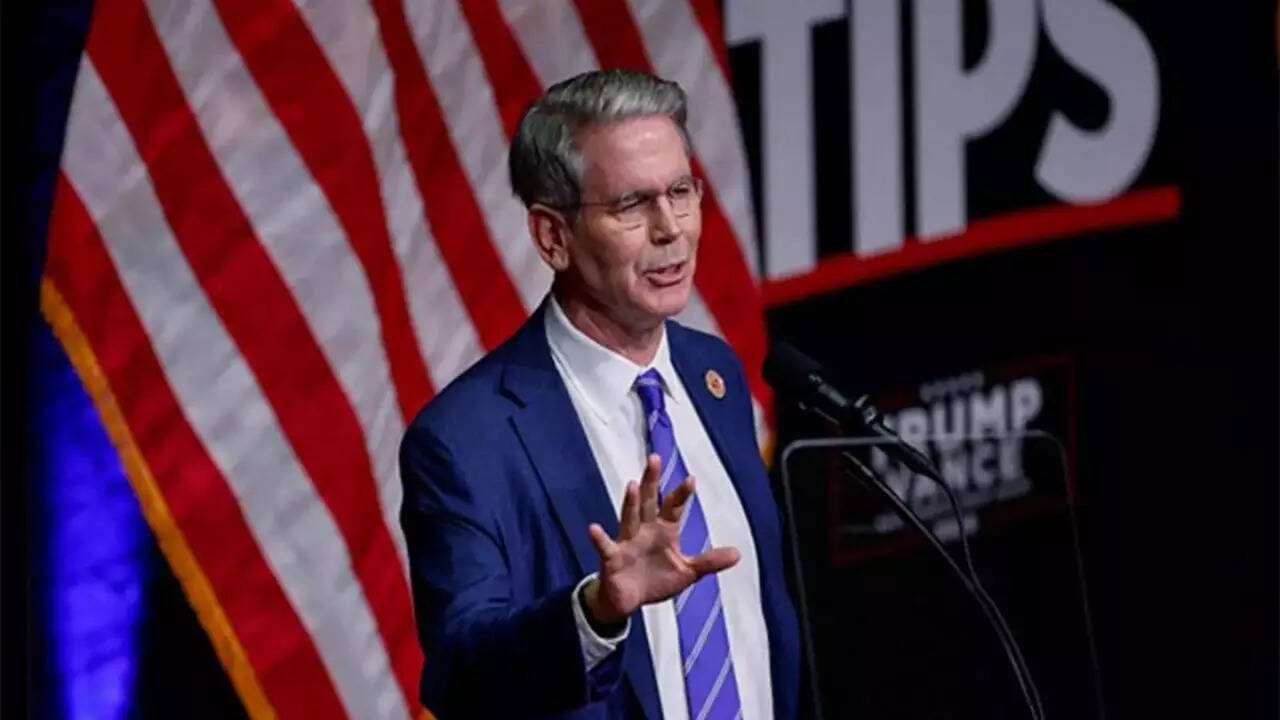
US treasury secretary Scott Bessent on Sunday said the United States has "plenty of money to fund" its war against Iran, asserting that President Donald Trump is keeping "all options on the table" amid the ongoing Middle East conflict.
Speaking to NBC News, Bessent defended the administration’s actions, saying Trump acted within his legal authority.
"President Trump was within his authority under the War Powers Act to initiate this action, and we actually now have plenty of money to fund this war. What we are doing is supplemental," he said.
"President Trump has built up the military as he did in his first term, as he is now doing in his second term, and he wants to make sure that the military is well supplied going forward," he added.
Earlier, Trump indicated that his administration may seek around $200 billion in additional Pentagon funding amid the war, calling it a "small price to pay" to maintain US military readiness. Speaking from the Oval Office, he said the funds would help ensure military superiority and denied any shortages of weapons.
"We're asking for a lot of reasons, beyond even what we're talking about in Iran...Munitions in particular - at the high end, we have a lot, but we're preserving it," Trump had said.
US Secretary of War Pete Hegseth also confirmed that the Pentagon plans to request additional funding from Congress to support ongoing operations and replenish stockpiles.
"As far as USD 200 billion, I think that number could move, obviously. It takes money to kill bad guys," Hegseth said, referring to operations under "Operation Epic Fury" against Tehran.
Bessent stressed that the administration would maintain strategic ambiguity. "He is not going to give away what we are going to do. As President Trump always does, he is leaving all options on the table," he added.
The remarks come amid an escalating conflict that began on February 28 following joint US-Israeli strikes on Iran, triggering retaliatory attacks by Tehran on Israel and US-linked targets across the region, disrupting key shipping routes and impacting global energy markets.