
Get all your news in one place.
100's of premium titles.
One app.
Start reading
Ideal Home
Ideal Home
Jenny McFarlane

I accidentally used hugelkultur to fill my deep planter – and it's saved me a small fortune on soil and my plants are thriving too

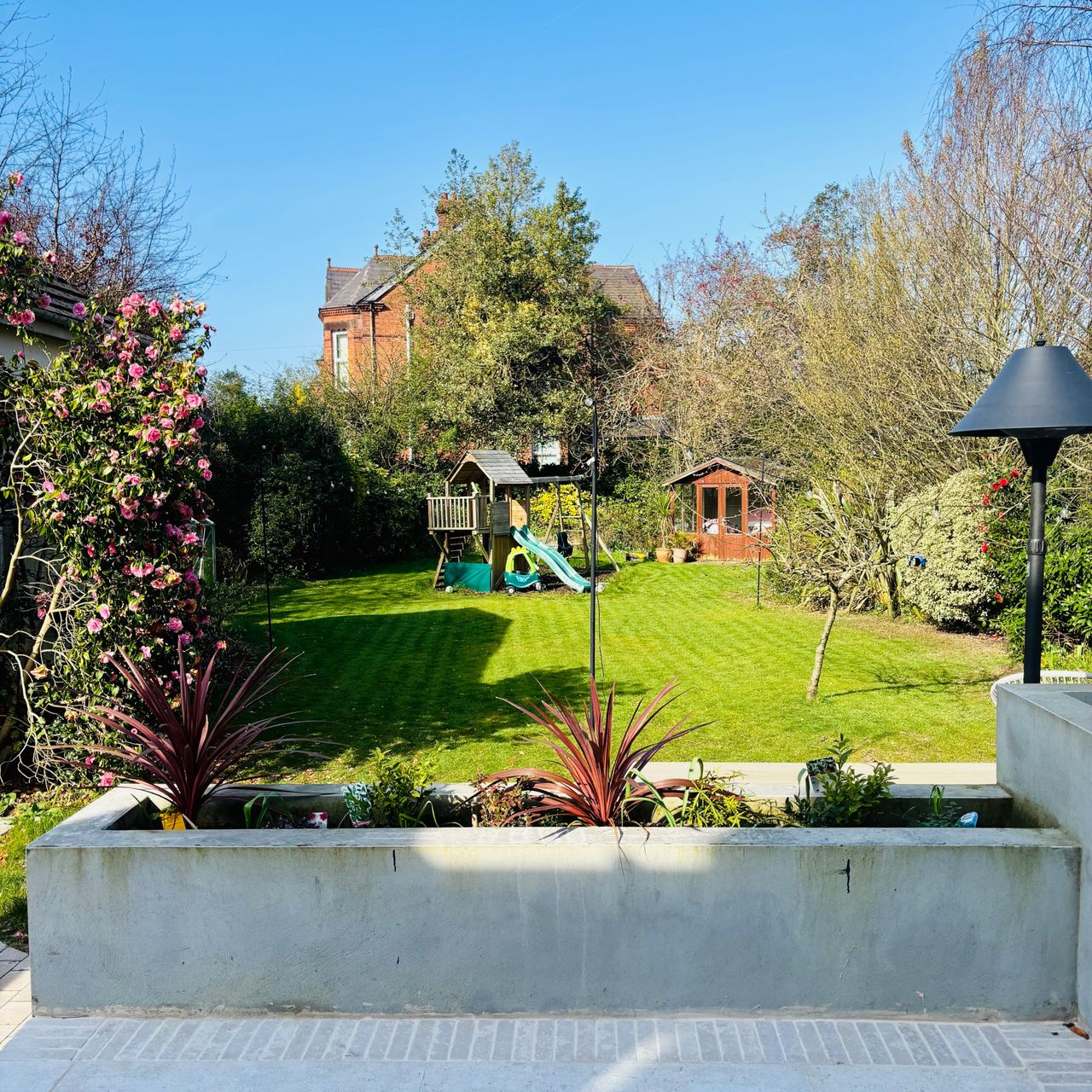
Planter on a patio in garden.

Ever heard of hugelkultur? Neither had I until we accidentally included it while filling our rather large planter on our new patio last year. We designed our patio to include a large built-in planter, as I'd been dreaming about one for forever.

However, when it was built, it ended up sitting at the same height as the steps down to the garden... which meant it was incredibly deep. Some might argue it was a slight patio idea flaw, but I'll say no more about it. At first, I didn't think much of it, but then I started calculating how much soil and compost I'd need to fill it. Turns out, I needed a lot and came to a hefty total.

With so much happening in the garden at the time and a few trees and plants sadly being dug up in the process, we had to think on our feet. I needed to figure out ways to fill the bottom of this large planter without blowing the budget entirely. So instead of ordering bags upon bags of compost and topsoil, we decided to make use of what we had around, like branches, cuttings and general garden debris from the landscaping, which we figured would end up would degrade over time anyway, to make our own compost.

And it turns out, what we had done (without realising it at the time) is loosely what's known as hugelkultur. Now, I must admit, I didn't follow the rulebook to the letter, but if you're looking to fill a large planter or raised bed more cost-effectively, I spoke to garden experts to understand how to do it properly, what to avoid filling them with and why it's actually brilliant for your plants to boot.

Our deep planter looking out to the garden (Image credit: Future/Jenny McFarlane)

What is hugelkultur?

Liam Clearly, gardening expert at Old Railway Line Garden Centre says that Hugelkultur is an easy way to make raised beds that are both productive and budget-friendly.

'It works by layering organic materials, typically logs, branches and twigs with compostable matter such as leaves, grass clippings or even kitchen scraps.

This sits at the base of a bed or planter before topping it with soil and compost. Liam adds that ' over time, this mix breaks down, slowly releasing nutrients and holding water much better than a standard raised bed.'

Richard Barker, horticulture expert at LBS Horticulture, adds that 'Hugelkultur is a great way of creating nutrient-rich garden beds that require less watering over time.'

'This is because, as the wood decomposes, it releases water and nutrients into the soil, and the organisms that help to break down the wood can also aid in aerating the soil. The rotting wood acts like a sponge, which can reduce the need for watering and is especially helpful in particularly dry climates,' he explains.

My large planter from the deepest angle (Image credit: Future/Jenny McFarlane)

Not only does it help your soil and plants, but like we found, it's also a budget-friendly garden idea, because it's a great way to recycle garden waste, many of the materials can often be found for free, like fallen branches, logs from local tree services or even shredded cardboard, like egg cartons or toilet rolls, or even leaves you've scooped up when tidying your garden after winter.

Liam explains that 'it works just as well in smaller planters if you use smaller logs and build up the layers of organic matter. The beds need less extra soil and fertiliser, and they usually hold water better, so you won’t need to water as often.'

'Once the garden bed is established, it will require minimal maintenance, and the decomposition process will generate heat that can raise the soil temperature and extend the planting season,' adds Richard.

(Image credit: Future PLC/Ian Mansfield)

How to do hugelkultur properly

What you'll need

Looking back, my approach did very loosely follow the basic principles of hugelkultur. We used a mix of thick branches, smaller twigs, prunings and plant waste like leaves and then topped it off with a decent amount of compost and topsoil.

However, because my version was very much improvised, I asked the experts for their tips on doing it the proper way so you can get the technique just right.

(Image credit: Getty Images)

1. Build a sturdy base

Liam advises placing the largest logs at the bottom for structure and slow decomposition.

'Choose the type of wood that you will use to build the bed carefully, as certain woods, such as cedar or treated wood, may not break down fast enough for the process to work, ' explains Richard. 'It is best to use wood that is already decaying to speed up the process, as even though you can use fresh wood, it will take longer to break down.'

Richard adds that although the bed retains water and can reduce the need for watering as often, you may need to water it more during the first year while the wood begins to rot.

2. Include nitrogen-rich material

Then, you can layer on top smaller branches, twigs and green waste, like 'grass clippings, vegetable scraps, or other compostables, to balance the carbon-heavy wood,' explains Liam.

Allowing airflow is also essential when you are adding the green waste, so it's important to keep it all fairly spread, advises Liam. 'Avoid compacting the layers too tightly to prevent soggy conditions.'

3. Top with soil

Next, finish with a thick top layer of good-quality compost or soil, like Miracle-Gro All Purpose Enriched Compost, £11.10 for 40L from Amazon.

'A layer of soil or compost ensures plants have nutrients from the start,' explains Liam.

'The bed will begin to settle after a few years, so you should add more compost or other organic matter to the top layer each season,' adds Richard. Any gaps between larger pieces of wood should be filled with small branches or soil. This prevents the bed from settling too much and drying out.'

4. Choose your plants wisely

Then it's time for planting up!

'When planting in the bed, it is best to choose plants that do not have high nitrogen requirements in the first year,' advises Richard. 'This is because new beds may be low in available nitrogen as it is consumed by the rotting wood.'

Mediterranean herbs like lavender, rosemary, thyme, sage and oregano will work well, as will hardy annuals, root vegetables, perennials, and shrubs. My cordylines are holding up just fine, too, but not all tropical plants will hack it, so it's worth doing a bit more research.

Adding a little bit of quality mulch like RocketGro's Magic Mulch, £18.99 from Amazon, or fertiliser like envii Seaweed Xtra, £13.95 at Amazon, to the topsoil won't do any harm, though.


So, it turns out that what started as a bit of a budget workaround has actually been one of the most useful (accidental) gardening techniques I've used in my own space.

So, if you're looking to fill a deep planter or build up a raised bed, hugelkultur is so much more than a clever way to save money. It actually sets your plants up for healthier, more resilient growth, too, while using up a load of garden waste you'd otherwise have to take to the tip. What's not to love?

Sign up to read this article
Read news from 100's of titles, curated specifically for you.
Already a member? Sign in here
Related Stories
Top stories on inkl right now
One subscription that gives you access to news from hundreds of sites
Already a member? Sign in here
Our Picks
Fourteen days free
Download the app
One app. One membership.
100+ trusted global sources.