
Get all your news in one place.
100's of premium titles.
One app.
Start reading
Tom’s Hardware
Tom’s Hardware
Technology
Etiido Uko

Zuckerberg's Meta will beam sunlight from space to power AI data centers, solar-collecting satellites will orbit 22,000 miles above Earth — firm reserves 1 Gigawatt of orbital solar energy and 100 Gigawatt-hours of long-duration storage

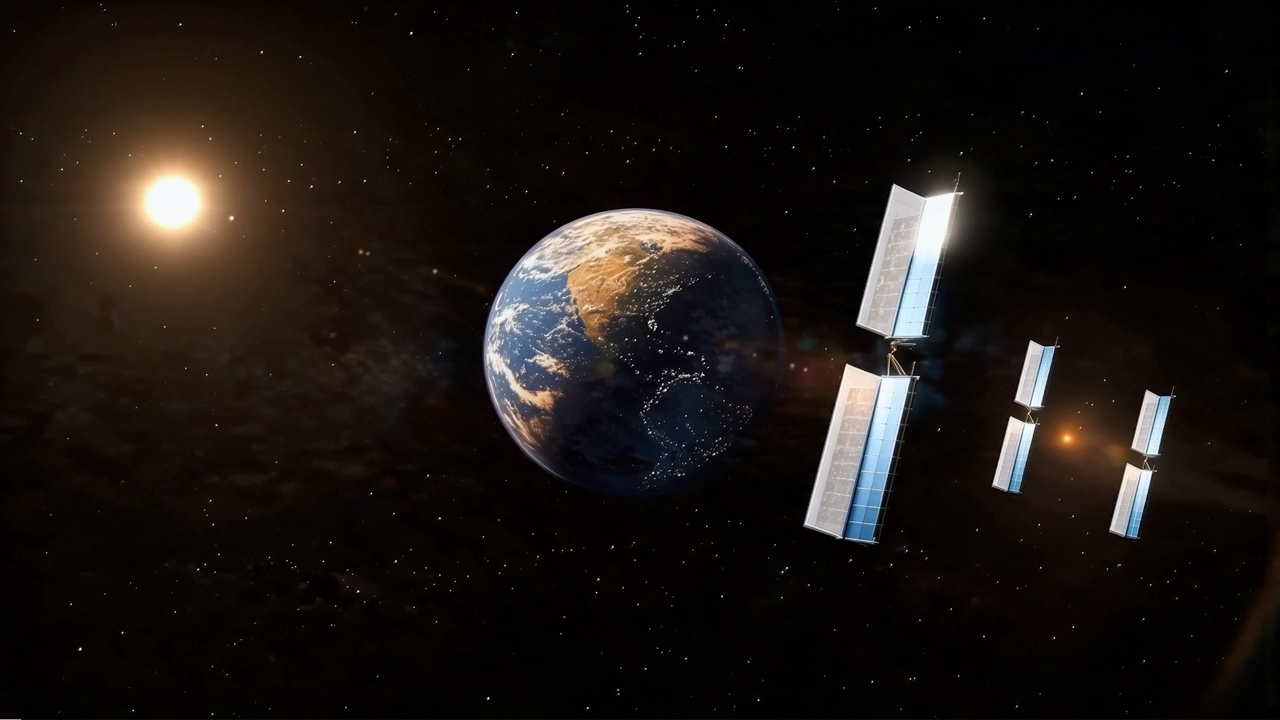
Satellite beams down sunlight from space.

Meta announced in a press release on Monday that it had begun plans to power its AI data centers with sunlight beamed from space. The company plans to place solar-collecting satellites in geosynchronous orbit roughly 22,000 miles above Earth to beam the sunlight to collectors on the Earth's surface. The plan is part of two new partnerships aimed at solving the rising energy demands of the company’s rapidly expanding AI infrastructure.

The company said it has reserved up to 1 Gigawatt of capacity from space solar startup Overview Energy, alongside another deal with energy storage firm Noon Energy for up to 1 GW / 100 Ggigawatt-hour of ultra-long-duration energy storage.

The announcement highlights the increasingly urgent power problem facing the AI industry, with Industry analysts warning that AI infrastructure growth is beginning to place significant strain on electrical grids.

We reported earlier this year that tech giants, including Meta, Microsoft, and Google, are aggressively investing in solar, wind, geothermal, and even nuclear energy projects to offset the massive energy demands of AI systems. But renewable energy still faces a major problem: intermittency.

Solar farms only generate electricity when sunlight is available, while wind generation depends heavily on weather conditions. Even with battery systems, maintaining stable 24/7 clean power remains difficult and expensive at large scales.

Meta’s partnership with Overview Energy attempts to solve that problem by moving solar collection into space — where the sun never sets.

The company plans to place solar-collecting satellites in geosynchronous orbit roughly 22,000 miles above Earth, where sunlight is nearly constant. Those satellites would harvest solar energy in space and beam it down to Earth-based solar farms using low-intensity near-infrared light. The receiving facilities would convert that light into electricity and feed it into the grid using existing infrastructure.

That integration with existing infrastructure is one of the more notable aspects of the proposal. By using existing solar facilities and grid connections, Overview Energy claims the technology could scale faster if it proves commercially viable. The idea is that solar farms, which normally sit idle at night, could theoretically continue producing electricity around the clock.

The concept of space-based solar power has existed for decades, but commercial deployment has never been achieved at scale, making the upcoming demonstration a major test for the technology.

Meta says it plans to deploy up to 1 GW of this “orbit-to-grid” energy system to support its data center operations. The first orbital demonstration is currently planned for 2028, with commercial delivery potentially beginning around 2030 if the technology works as intended.

(Image credit: Meta)

The company’s second partnership focuses on another major weakness in renewable energy systems: storage.

While lithium-ion battery systems are effective for short-duration storage, they are generally not designed for sustained power delivery over multiple days. Meta says Noon Energy’s technology can provide more than 100 hours of energy storage using reversible solid oxide fuel cells and carbon-based storage systems. Under the agreement, Meta has reserved up to 1 GW / 100 GWh of storage capacity, with an initial 25 MW / 2.5 GWh pilot project expected in 2028.

Long-duration storage systems like these are becoming increasingly important as grids absorb larger amounts of renewable energy. Extended storage could allow excess renewable energy generated during peak production periods to remain available through prolonged low-generation periods, helping stabilize power availability for continuously operating AI infrastructure.

Meta says both partnerships are a part of its broader strategy to secure long-term energy supplies for future AI expansion. The company says it has already contracted more than 30 GW of clean, renewable energy and has also backed geothermal and nuclear energy projects, including agreements involving 7.7 GW of nuclear capacity.

Sign up to read this article
Read news from 100's of titles, curated specifically for you.
Already a member? Sign in here
Related Stories
Top stories on inkl right now
One subscription that gives you access to news from hundreds of sites
Already a member? Sign in here
Our Picks
Fourteen days free
Download the app
One app. One membership.
100+ trusted global sources.