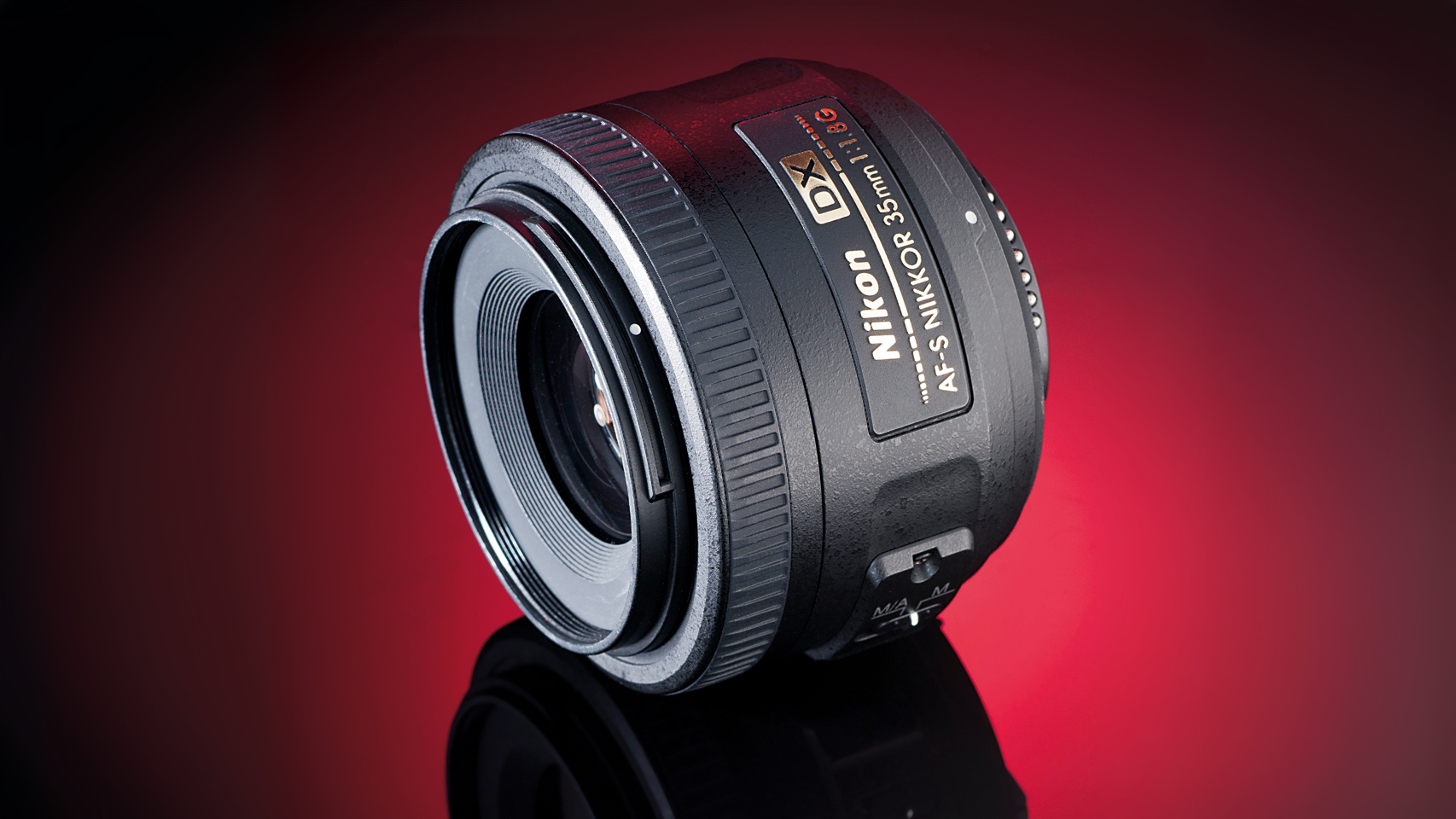
If you're serious about learning the visual language of photography, here's one simple piece of advice: start with a prime lens – or at least lock your zoom lens at one focal length. (For this, use a zoom lock mechanism or a low-cost DIY solution like a rubber band.)
Most entry-level cameras come bundled with a kit lens, which is usually a zoom. Zoom lenses are undeniably versatile, making it easy to frame a shot with a quick twist of the ring – but if you want to learn photography in a meaningful way, flexibility can actually get in your way.
So, prime optics with a fixed focal length are, in my opinion, much better for training your skills.
Why a prime will teach you far more, far faster
When you can't zoom, you have to move your feet. This limitation forces you to understand the physical relationship between the subject, background and composition.
You will become intentional about every frame – how you compose, where you stand and what elements you include or leave out. So, instead of relying on zoom to "fix" your shot, you're learning to see the shot – and you'll begin to understand photographic composition.
Here's a little exercise I've learned a lot from: spend 30 minutes photographing a single scene from multiple angles. Yes, 30 minutes with a fixed focal length is a long time for one subject – but you'll be surprised how many unique compositions you discover. This kind of creative limitation is what helps develop a photographer's eye.
Of course, this approach won't work for every genre. If you're into sports or wildlife photography, locking your focal length isn't always safe or practical. (Seriously, please don't wander onto a racetrack or into a bear's habitat in the name of art!) But for most styles – street, portrait, landscape, or travel photography – this method is not only safe but effective.
Here's a little overview of focal lengths and common subjects, so you can easily decide on the focal length you want to train your eye with.
Focal length |
Field of view |
Subject |
|---|---|---|
|
Full frame: APS-C: Micro Four Thirds: |
Utra-wide (barrel distortion; straight lines can appear to bulge outwards) |
Landscapes, cityscapes, travel, astrophotography |
|
Full frame: APS-C: Micro Four Thirds: |
Wide (barrel distortion) |
A classic option for street or travel photography |
|
Full-frame: APS-C: Micro Four Thirds: |
Natural (close to the human eye) |
Also called 'nifty fifty', known for its natural feel, often used for portraits or street photography |
|
Full-frame: APS-C: Micro Four Thirds: |
Narrow (compressed perspective, brings subjects optically closer together) |
Popular for portraits as it has a flattering effect on your subject. Also used to shoot events like weddings, as this focal length isolates subjects with a shallow depth of field |
|
Full-frame: APS-C: Micro Four Thirds: |
Extremely narrow (compressed perspective) |
Commonly used in action, sports and wildlife photography to isolate details and to get significantly closer details |
Why rules are just starting points
When you're out and about, working on improving your photographer's eye, it's time to explore composition rules like the rule of thirds or the golden ratio. But don't let them confine your creativity.
Great photography is often found beyond the textbook – in odd angles, through foreground elements or from a unique perspective. So, don't let those concepts box you in.
You might like...
If you want to learn more about photography, be sure to check out our beginner-friendly tutorials and guides – designed to help you understand photography quickly and easily:
- What is a "fast lens"?
- What is a "workhorse lens"?
- How to find your perfect telephoto lens
- Avoiding overexposure using filters
- How to think in black and white
- When to use Noise Reduction