Closing summary
… and on that note, it’s a wrap!
The EU’s foreign policy chief, Kaja Kallas, has said she fears talks between the Russian president, Vladimir Putin, and Donald Trump’s special envoy, Steve Witkoff, will pile pressure on Ukraine to make concessions with the two men expected to meet on Tuesday (14:47, 14:52).
Her comments came as Emmanuel Macron’s held talks with Ukraine’s Volodymyr Zelenskyy in Paris (11:05, 16:33, 17:22), with the pair insisting that no decisions about Ukraine can be made without Ukraine and Europe at the table, and calls to put more pressure on Moscow instead (16:41, 16:45, 16:55, 17:07).
The talks were followed by a series of phone calls with European leaders and Witkoff to coordinate before tomorrow’s talks (15:14, 15:16, 15:26).
The Netherlands has announced plans to make an additional contribution of €250m to the Prioritised Ukraine Requirements List, or PURL, programme of Nato purchases of US weapons for Ukraine (18:45).
These developments come as the Russian army made its biggest advance in Ukraine for a year in November, an AFP analysis of data from the US-based Institute for the Study of War (ISW) showed (14:20).
In other news,
Polish prime minister Donald Tusk and German chancellor Friedrich Merz sought to stress the close relationship between the two countries despite their difficult past (15:24, 15:51), but the unresolved questions around the memory and the compensation for the second world war still dominated their press conference after high-level talks in Berlin (15:55, 16:13, 16:27, 16:36).
Lithuania has complained of “unacceptable” disruptions in it airspace after Vilnius airport once again had to temporarily close down due to smugglers balloons from Belarus, causing widespread travel disruption (10:43), with calls to impose further sanctions on Minsk in retaliation (17:57).
And that’s all from me, Jakub Krupa, for today.
If you have any tips, comments or suggestions, email me at jakub.krupa@theguardian.com.
I am also on Bluesky at @jakubkrupa.bsky.social and on X at @jakubkrupa.
The Netherlands to spend further €250m on Ukraine's military needs through PURL scheme
Back to Ukraine, it’s worth noting that the Netherlands has announced plans to make an additional contribution of €250m to the Prioritised Ukraine Requirements List, or PURL, programme of Nato purchases of US weapons for Ukraine.
Announcing the move, defence minister Ruben Brekelmans said it was the Netherlands’ “substantial contribution” to help Ukraine defend itself over the winter as it faces growing pressure from the US to agree to a peace deal.
Frozen-in tenor: Italian mayor apologises over Pavarotti statue stuck in ice rink
in Rome
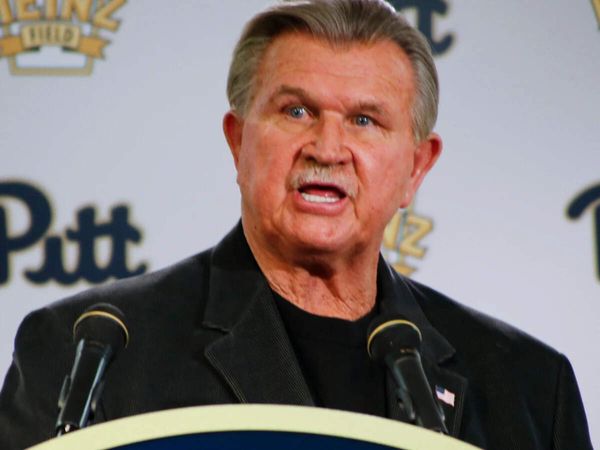
And now for something a bit lighter, we go to Italy, where a local mayor has apologised to the family of Luciano Pavarotti after a Christmas ice rink entrapped a statue of the legendary opera singer – and skaters were invited to “give [him] a high five”.
The lifesize bronze, featuring Pavarotti wearing a tuxedo with his arms outstretched and holding a handkerchief in one hand, was unveiled to much fanfare last year in a square in the centre of Pesaro, a coastal city in the Marche region.
The statue was intended as a tribute to the late tenor, who had a home and honorary citizenship in Pesaro, also the birthplace of the Italian composer Gioachino Rossini.
But instead, surrounding Pavarotti with “a very ugly” ice rink had “ridiculed” his memory, Nicoletta Mantovani, the tenor’s widow, said after images of the statue “trapped” up to its knees were circulated online.
Mantovani told the local newspaper Il Resto del Carlino that she was “disappointed, angry and upset”.
Describing the scene, Il Resto del Carlino said the tribute to Pavarotti, who died in 2007, aged 71, has “ended up stuck between the guardrails and Christmas lights, like a stage character who fell into the wrong place and now finds himself directing the traffic of skaters”.
Updated
EU to consider further sanctions on Belarus over 'hybrid attacks' on Lithuania
Meanwhile, European Commission president Ursula von der Leyen has spoken with Lithuania’s president Gitanas Nausėda over the phone about the latest balloon incidents over the Baltic country (10:43).
She said that “the situation at the border with Belarus is worsening, with the growing incursions of smuggling balloons into Lithuania’s airspace.”
She added:
“Such hybrid attack by the Lukashenka regime is completely unacceptable. Lithuania continues to have our full solidarity. We are preparing further measures under our sanctions regime.”
And they end the talks just as they started this morning (11:11), with a friendly embrace between the leaders, a clear sign of solidarity with Ukraine from Paris.
In his comments, Macron also notes that Ukraine has been open to various proposals on ceasefire and ending the war throughout 2025, with Russia repeatedly blocking them from progressing.
He welcomes the American efforts, and says that Russia’s response will show whether it’s serious about peace.
Similarly, Zelenskyy says he will get a full debrief on the latest talks with Russia, and this will inform his next steps.
Responding to a question from a Ukrainian journalist, he also says he is still continuing his search for Yermak’s replacement as the head of his office, but insists there are capable candidates.
And that ends the press conference.
Macron lauds Europe's effort to put more pressure on Russia, backs use of frozen assets
Asked about Europe’s pressure on Russia, Macron says that the latest round of sanctions, including on oil and gas sectors as well as the shadow fleet, has put most pressure on Russia “since the start of the war,” and could be “a gamechanger.”
“ I really believe that in the weeks to come, come, the pressure on the Russian economy and the capacity of Russia to finance the war efforts will drastically change,” he says.
He also gets asked the use of frozen Russian assets to fund Ukraine and Belgium’s continuing opposition to the EU’s proposed reparations loan, insisting he is confident “we will find an option that technically addresses all the legitimate questions being raised.”
Responding to a question about the corruption investigations in Ukraine, including Zelenskyy’s former senior aide, Andriy Yermak, Macron says the EU followed these issues very closely, but – toeing the EU line – insists the fact that the probe was progressing showed the authorities were working freely.
He says it’s right to demand accountability and scrutiny from Ukraine, but notes that the key issue is how the state responds to any allegations, through independent authorities and judiciary.
He also points out that the developments in Ukraine come in stark contrast to how such allegations are handled in Russia.
Zelenskyy sets out Ukraine's red lines, hints at possible Trump call
In his comments, Ukraine’s Zelenskyy says that Ukraine’s priorities remain focused on security guarantees, maintaining sovereignty and territory, as he insists that Russia must not get rewards for its aggression on Ukraine.
He also plays down the Kremlin’s claims of Russian advances, saying they are exaggerated.
He says he hopes to have talks with US president Donald Trump to discuss next steps once Steve Witkoff is back from his talks in Russia this week.
More talks on peace, security guarantees expected in coming days, Macron says
Macron says that “the coming days will see further essential discussions between the US and the Coalition of the Willing to clarify American participation” in any future security guarantees for Ukraine.
Similarly, when it comes to the broader issue of peace negotiations, he says there will be “greater clarity” once US and Russian representatives talk in the coming days, with the key question of whether Russia is prepared to move from its demands.
“For our part, we will continue to support all peace efforts in the meantime, and we will continue to support Ukraine’s resistance efforts,” he says.
Russia has shown no sign of ending aggression, Zelenskyy says, as he insists no decisions on Ukraine without Ukraine
Opening the press conference with Zelenskyy in Paris, Macron stressed France’s “full support” for Ukraine ahead of what he says is “a moment that could be a turning point” in talks about ending the war.
Straight away, he notes that “at a time when we are talking about peace, Russia continues to kill and destroy.”
He commends the US efforts to end the war, and says the key objective is to stop the killing, but adds that “when we talk about peace, everyone has a role to play.”
“Russia must stop the aggression. It has given no signal, no proof to that effect,” he says.
He adds that only Ukraine can make decisions about its territory, and insists that security guarantees must not be discussed without both Ukrainians and the Europeans – and more broadly, the Coalition of the Willing – as “they are the guarantors” and would be affected by anything that changes the security of Europe.
Updated
Before we fully turn to Paris, a final note on Berlin with an unexpected hard ball from Tusk towards Berlin, among all the niceties of this press conference.
Asked about the need to provide further support for the living victims of the second world war, Merz says “we are discussing further possibilities” for what he calls “a humanitarian gesture towards the Polish people,” but declines to speculate on timelines or amounts – even as he says he is “very aware” of the historical responsibility.
But Tusk is not happy with that and says that if Germany doesn’t move by their next meeting in 2026, Poland may unilaterally start paying money to survivors.
“When I talked about this with chancellor Scholz [last year], it was a little over 60,000 [people]. Today, it is 50,000. Hurry up if you really want to make such a gesture,” he says.
Macron, Zelenskyy about to speak after Paris talks
After a very, VERY lengthy delay, France’s Emmanuel Macron and Ukraine’s Volodymyr Zelenskyy are about to address the media after their talks at the Élysée Palace in Paris.
You can watch it on our live stream below, and I will bring you all the key lines here.
'Not everyone in Washington and no one in Moscow' wants Poland involved in Ukraine talks, Tusk says
Pressed by journalists on Poland’s role in Ukraine talks – and some sentiment that Poland is not always adequately involved by its western partners in the key discussions – Tusk talks about his close relationship with other EU leaders and on-going consultations, also confirmed by Merz.
But curiously he then takes a swipe at unnamed leaders in Washington as he adds:
“I don’t want to stir up unnecessary emotions here, but let’s say that not everyone in Washington and certainly no one in Moscow wants Poland to be present always and everywhere.
I take this as a compliment to me, and as a compliment to Poland.
And I’ll leave it here before I say too much.”
The issue of reparations is clearly still dividing the two leaders, with Merz saying that the position of the German government – this and previous governments – is known, and that the issue is essentially closed.
But he talks about the need to continue the dialogue on remembrance and notes Germany’s “responsibility” in this area, as he notes the concern on the Polish side, both on history, and on contemporary perception of both countries (as mentioned in – you guessed it – my analysis earlier).
But he somewhat deflects from the broader question as he instead heaps praise on contemporary Poland, its economy, and how it’s evolved over the years, as one of Europe’s most productive countries.
But Tusk – a historian by training, and facing domestic pressure on this issue – is not letting it go, as he repeats his earlier points about the need to know history, and stresses that it continues to shape the Polish thinking about Germany today.
He acknowledges the existence of “radicals, on both sides of the border,” who try to stoke anti-German (15:55) and anti-Polish sentiments (AfD’s co-leader Tino Chrupalla recently said “Poland could also be a threat to us” in the context of a discussion on Russia), but insists “they will not succeed.”
Updated
If you’re wondering what’s happening in Paris: yes, we are still waiting for Macron and Zelenskyy.
But don’t worry, I’m keeping an eye on this for you.
Tusk welcomes close Polish-German relations on defence, but notes disagreements over past, WW2 reparations
Responding to Merz’s comments, Tusk welcomes a “good and honest” discussion between the leaders, also noting their chats with Macron, Zelenskyy and other leaders on Ukraine as he says “there is no escaping from this great tension caused by Russia’s attack on Ukraine.”
But he pointedly welcomes the step change in Polish-German relations and the extent of joint work on defence issues, particularly on Nato’s eastern flank.
He says this change is particularly important in the context of past disagreements on strategically important issues, including Europe’s policy towards Russia and energy (think, Nord Stream 2).
“When we spoke about the threats resulting, for instance, from investments like Nord Stream, related to Europe’s gas dependence on Russia, I often felt isolated in Europe,” he says, but welcomes the shift in tone on these issues in recent years.
Tusk also pointedly acknowledges major differences of views on reparation and compensation for the second world war.
“I won’t say that the past is more important or the future is more important. In the life of each of us, the future is more important, but there is no good future without an awareness of what the past was and what is incumbent upon us in connection with that past.”
He says the Polish position “has not changed” as “in Poland virtually everyone without exception believes that Poland has not received compensation for the losses and the crimes from the second world war.”
But he also acknowledges and expresses gratitude for the 73 returned items, talking about his emotional response to some of the items dating back centuries.
Updated
But if you want to get a sense of how deeply, deeply dividing the issue of Poland’s relations with Germany is, the conservative-nationalist Law and Justice-aligned Polish broadcaster Republika, one of the most popular news channels in Poland, is carrying the Merz-Tusk press conference under the (obviously false and misleading) headline of “Tusk is receiving his instructions in Berlin.”
If you want to understand what’s that about, more on this in my analysis below.
Updated
Merz hails German-Polish relations, says there can be no 'dictated peace' on Ukraine
Speaking in Berlin, Merz says it’s in Germany’s interest to have a close and “equal” political relationship with Poland facing the threat posed by a “revisionist” regime in Russia, as he says that “especially in these times, when European unity is under such pressure, we must not allow ourselves to be divided.”
Standing by Poland’s Tusk, he also talks about closer defence and security cooperation, including on defending the eastern flank of Nato with German fighter jets stationed in Poland and joint work on drones, with a plan to sign a new defence deal in 2026.
He also talks about the modernisation of cross-border train links between the two countries, and other transport initiatives.
Touching upon the key memory issues that so often complicated the relationship between the country, Merz says he wants to address this question in a way that could bring the two countries together.
He talks about the new political momentum for the much-awaited memorial to the Polish victims of Nazis in Berlin, and says Germany has today returned 73 items looted during the second world war.
Merz also talks about Ukraine, and the need for closer coordination on this issue during the peace talks.
He confirms the pair spoke with Macron and Zelenskyy, and stresses the importance of the upcoming days for Ukraine as he says “we are doing everything in our power to stand by Kyiv against the Russian aggressor.”
He says the European partners need to keep helping Ukraine defend itself, maintain transatlantic unity by working with the US, and remember about the broader European defence focus, pointedly mentioning the issue of frozen Russian assets.
He stresses that no decisions on Ukraine can be made without Ukraine, and “no dictated peace over the heads of Ukraine.”
Updated
We understand that other European leaders that Macron and Zelenskyy spoke with include their partners from Germany, Poland, Italy, Norway, Finland, Denmark, and the Netherlands, plus the leaders of the EU and Nato.
Germany's Merz and Poland's Tusk due to brief media after political talks in Berlin
Separately, German chancellor Friedrich Merz and Poland’s prime minister Donald Tusk are about to give a press conference after their high-level political talks in Berlin today. I will keep an eye on key lines coming out of their meeting.
But as I explained in my analysis published earlier today,
Amid growing US pressure for a peace deal with Russia, Warsaw and Berlin will want to send a signal of support for Kyiv and of unity between central Europe’s largest – and militarily strongest – countries.
But below the surface, the bilateral relationship is increasingly tricky. Poland, long considered the junior partner, no longer sees itself in an inferior role. This is not only because of its economic success since the fall of communism in 1989, but because it has avoided German policies that it sees as missteps, namely on migration and relations with Russia.
“Poles have become more self-assured, especially in relation to Germany as it has always been a reference point,” says Dr Agnieszka Łada-Konefał, vice-director of the German Institute of Polish Affairs, who co-leads a study of Polish-German relations.
This year the study, which has tracked mutual sentiment for the past 25 years, showed a near record level of aversion on the Polish side, with only slightly more Poles having a positive view of Germans than negative. It is in sharp contrast to how Germans view Poles, with the study recording its lowest ever percentage of people expressing negative views of their eastern neighbours.
Updated
Zelenskyy also confirms the talks with Witkoff and Umerov, saying in a post on Telegram that Britain’s prime minister Keir Starmer was also involved.
He also appears to suggest a plan to meet in person in some format.
“Important briefing. Agreed to discuss more details personally – the teams will coordinate schedules for possible future contacts,” he says.
Macron, Zelenskyy spoke with European leaders, Witkoff, Élysée says
We are getting a bit more detail on their lengthy talks, with the Élysée Palace, quoted by Reuters, now saying that Macron and Zelenskyy used the time together to speak with several European leaders, US peace envoy Steve Witkoff, and Ukrainian secretary of the National Security and Defence Council Rustem Umerov.
They will no doubt offer more detail in their statements that we are still waiting for.
Ukraine peace must be 'durable,' Zelenskyy says after talks with Macron
We are still waiting for Macron and Zelenskyy to come out of their meeting and address the media.
But it seems the Ukrainian president has got his phone back, with his first thoughts already out through his social media channels.
He has particularly stressed the need for a “durable” peace in Ukraine, and insisted the role of all other leaders in advancing negotiations – suggesting he and Macron “will be speaking with other leaders today.” (Could it potentially include one Donald J. Trump, too?)
Here’s what he said:
“During our several-hour talks, @EmmanuelMacron and I assessed a great many details. The main focus was on negotiations to end the war and on security guarantees.
Peace must become truly durable. The war must end as soon as possible. Much now depends on the involvement of every leader.
We will also be speaking with other leaders today. Thank you!”
EU foreign policy chief worried pressure will be put on Ukraine to make concessions
Kallas also speaks about the tricky discussions on the EU’s proposed reparation loans for Ukraine, backed by frozen Russian assets and the current state of peace talks more broadly.
She says that its adoption would “strengthen European position vis a vis Moscow.”
“This is clear that Russia owes reparations for the damages that they have caused to Ukraine, and the reparations loan based on the frozen assets, of frozen sovereign assets of Russia, is actually the right basis for it,” she says.
She says the EU needs to work on addressing the legal concerns of the Belgian government to “mitigate all the risks and to shoulder the burden.”
She also says that she’s worried that most pressure will be put on Ukraine, the victim of the Russian aggression, pushing it to make concessions, which she says would not be in the EU’s interest.
“We shouldn’t lose focus that it’s actually Russia who has started this war, and is continuing this war,” she says.
“I am afraid that all the pressure will be put on the weaker side, because that is the easier way to stop this war when Ukraine surrenders. But this is not in anybody’s interest: not in the interest of Ukraine, not in the interest of European Union, also not in the interest of the global overall security, because it’s the United Nations Charter that says that you can’t change for borders by force. If this pays off, we will see this elsewhere,” she warns.
She answers a few more questions on other issues, and wraps up her press conference.
Updated
Kallas also pointedly addresses last Friday’s search of Zelenskyy’s close aide Andriy Yermak’s flat, and his subsequent resignation, backing Ukraine’s anti-corruption institutions.
She says that “especially during wartime, trust matters,” and “Ukraine’s fight for freedom and its path towards Europe should not be tainted”.
But she says that “the fact that investigations take place show that anti corruption bodies in Ukraine work,” as she notes “very, very strong” public reaction against various corruption allegations.
'Our job is to support victim, not reward aggressor,' EU foreign policy chief says
Briefing the media after today’s EU ministerial on defence, the bloc’s foreign policy chief Kaja Kallas says “our job is to do all we can to support the victim and not reward the aggressor.”
Repeating some of her earlier lines, she says “this could be a pivotal work week for diplomacy,” as “intense talks on ending Russia’s war continue.”
Everyone welcomes the push for peace, except Russia.
She continues:
“Over the weekend, Russia launched again another massive aerial assault on Ukraine. In this war, there is one aggressor and one victim. Our job is to do all we can to support the victim and not reward the aggression.
The goal is to have a just and durable peace, not a deal that lays ground for next war.”
Kallas also says the EU faces increasingly urgent need to address Ukraine’s funding needs, and that this month’s European Council “will be crucial in this regard.”
Russia made 'biggest advance in year' in November, study says
The Russian army made its biggest advance in Ukraine for a year in November, an AFP analysis of data from the US-based Institute for the Study of War (ISW) showed.
Over the month, Russia captured 701 square kilometres (270 square miles), the second-largest territorial advance of the war after that of November 2024 – not taking into account the initial months of the invasion when the frontline was highly mobile.
By the end of November, the Russian army controlled, fully or partially, 19.3 percent of Ukrainian territory, according to the analysis of data from ISW, which works with the Critical Threats Project.
As we are waiting for Zelenskyy and Macron’s press statements, expected at the top of the hour, it’s worth noting that the Ukrainian president will fly to Dublin next to pay his first visit to Ireland.
RTÉ reported that he will meet with the taoiseach Micheál Martin and the recently sworn in president, Catherine Connolly.
He is also expected to address a sitting of the joint Houses of the Oireachtas, the Irish parliament.
Some 120,000 Ukrainians are thought to have sought refuge in Ireland since the Russian aggression on their homeland.
On the margins of the main meeting in Paris, Ukraine’s foreign minister Andrii Sybiha met with his French counterpart Jean-Noël Barrot also discussing the peace efforts, and the Ukrainian-French defence cooperation.
Sybiha said in a social media post that they also talked about the use of the EU’s SAFE mechanism for projects involving Ukraine.
In turn, Barrot noted the anniversary of the Ukrainian independence in 1991, stressing that the established borders included “the Donbas and Crimea regions.”
“Ukraine belongs to Ukrainians and to them alone,” he stressed.
The European Commission’s chief spokesperson Paula Pinho was just asked about the EU’s role in the on-going peace negotiations on Ukraine.
The question specifically asked about the EU’s engagement with the US, and what specific actions the EU was taking to influence the negotiations.
Given Kallas’s earlier comments about Ukrainians being effectively alone in the talks with the US and Russia (10:12), it’s worth quoting Pinho’s (pretty revealing) response in full.
“Over the weekend, several conversations took place at various levels on the topic of the peace negotiations regarding Ukraine.
And you may have also seen that there was a call between President von der Leyen and President Zelenskyy where they discussed, notably, next steps in terms of the ongoing peace negotiations and in particular, those aspects which are of direct concern to the EU; notably, next steps in terms of the ongoing peace negotiations, and in particular those aspects which are of direct concern to the EU.
So indeed, talks are ongoing at different levels, and we are making sure that what are also EU interests and Ukraine’s interests linked to the EU are conveyed to our counterparts in these many talks that are taking place.”
Updated
We 'must confront reality' that Brexit 'significantly hurt' our economy, UK prime minister says
UK prime minister Keir Starmer is delivering a major economy speech this morning.
You can follow all the key lines on our UK live blog with my colleague Andrew Sparrow, but there’s a particular line of argument that will no doubt reasonate in Europe, too.
The UK must “confront the reality” that the Brexit deal “significantly hurt our economy”, the prime minister has said in quotes reported by the PA Media news agency.
Starmer said:
“Let me be crystal clear, there is no credible economic vision for Britain that does not position us as an open, trading economy.
So we must all now confront the reality that the Brexit deal we have significantly hurt our economy and so for economic renewal, we have to keep reducing frictions.
We have to keep moving towards a closer relationship with the EU, and we have to be grown up about that, to accept that this will require trade-offs.
That applies to our trading relations right across the world, and as you’ve seen already with this Government, there are deals to be done if you’re committed to building relationships.
That’s what we’ve done with the US, it’s what we’ve done with India, and it’s what we’ve done with the EU and we will keep going.
We will continue to reject drift, to confront reality and take control of our future.”
Overnight Russian attack on Dnipro kills three, injures dozen
Meanwhile, an overnight Russian strike on Dnipro in central Ukraine has killed at least three people and wounded at least a dozen, the local governon said, as reported by AFP.
“All emergency services are working at the site of the missile attack in Dnipro. Currently, three people are reported killed,” the Dnipropetrovsk regional governor Vladyslav Gaivanenko said on Telegram.
Are we closer to a peace deal on Ukraine? – video explainer
Over the past week, there has been a flurry of diplomatic activity to end Russia’s war in Ukraine.
As Kyiv battles to minimise Vladimir Putin’s maximalist demands, including the cessation of territories in the east, the Guardian’s Russian affairs reporter, Pjotr Sauer, explains why despite some advances, the agreement to a peace deal still appears unlikely.
Here’s the hug!
Zelenskyy arrives at Élysée for talks with Macron
Ukraine’s Volodymyr Zelenskyy has just arrived at the Élysée Palace, welcomed by Macron with a big, big hug.
The timings have changed a bit, with the pair now expected to give press statement in the early afternoon.
I will keep a close eye on this and bring you the latest.
Putin set to welcome US Witkoff for Ukraine talks on Tuesday, Kremlin says
Russian affairs reporter
Vladimir Putin is set to meet US special envoy Steve Witkoff on Tuesday afternoon, the Kremlin announced on Monday morning.
Jared Kushner, Donald Trump’s son-in-law, and Witkoff are expected to fly to Russia on Monday to continue peace talks aimed at ending Moscow’s war in Ukraine.
Putin’s spokesperson did not specify whether Kushner – who played an active role in negotiations over the Gaza peace deal – would also attend the meeting.
The two trusted Trump envoys met on Sunday with a senior Ukrainian delegation in what US officials described as a “productive” meeting, though no breakthrough appears to have been reached.
Witkoff’s visit to Moscow will be his sixth face-to-face meeting with the Russian leader and is likely to heighten anxiety in Kyiv and across European capitals over the property developer’s past comments perceived as sympathetic to the Kremlin.
Last week, Bloomberg published transcripts of a leaked phone call between Witkoff and a senior Kremlin aide in which Witkoff appeared to coach the Kremlin on how best to win favour with Trump.
Vilnius sees more flights disruptions caused by contraband balloons in its airspace
Meanwhile, Vilnius airport had to temporarily suspend its operations last night once again over suspected balloons in its airspace, a recurring problem in recent weeks.
During the 11 hours of closure, as many as 57 balloons were reported, according to the Lithuanian media. More than 50 flights were affected, disrupting the journey of over 7,000 passengers.
Lithuania has repeatedly blamed Belarus for allowing smugglers to use balloons, primarily for transporting contraband cigarettes, and briefly closed both crossing points to neighbouring country in retaliation.
Arriving for today’s Brussels talks, deputy defence minister Karolis Aleksa said the problem “in this intensive, active, phase [has been going on] for a couple of months,” stressing it was “a hybrid activity against Lithuania.”
He said it was not acceptable, and Lithuania was looking to take “national measures on how to deal with this situation,” including “trying to confront” the balloons.
But he also said that the Baltic country would be pushing for “political pressure” in response.
'A pivotal week for diplomacy' on Ukraine, EU foreign policy chief says
Arriving at the ministerial meeting in Brussels, EU foreign policy chief Kaja Kallas said this week could be “pivotal” for diplomacy on Ukraine.
“It is clear that Russia does not want peace, and therefore we need to make Ukraine as strong as possible in order to them to be ready to stand up for themselves in this very, very difficult time,” she said.
Kallas added that “we heard yesterday that the talks in America were difficult but productive,” and she wanted to discuss the latest with EU and Ukrainian ministers.
She appeared frustrated by Europe’s exclusion from the key talks – conceding that “the Ukrainian are there alone” – but insisted the EU should continue pushing in key two areas, by “putting the pressure on Russia … on further sanctions, reparatoins loan that they are very much afraid of, and … by [giving] them military, financial and humanitarian support so they can last and outlast Russia.”
Zelenskyy faces 'mini-revolution' in governance system after shock Yermak resignation
Over the weekend, Ukraine’s Zelenskyy had to respond to the forced resignation of his closest and most senior advisor, Andriy Yermak, who stepped down on Friday after his apartment was searched as part of a widening anti-corruption probe.
Here’s Shaun Walker’s take on the change:
Yermak’s resignation could have tremendous consequences for domestic governance, as well as for Ukraine’s negotiating position in talks over ending the war with Russia, where he had served as the head of Ukraine’s delegation to peace talks with the White House.
“It’s a mini-revolution in the political system and the governance system,” said Kyiv-based political analyst Volodymyr Fesenko. “Yermak was the key element in the system of power that Zelensky had built.”
Yermak, a former intellectual property lawyer, became a B-movie producer and then lawyer for Zelenskyy’s production company, back when Zelenskyy was still an actor. When his friend won victory in the 2019 presidential election, Yermak went with him into politics, first as a foreign policy adviser and then, a year later, as chief of staff.
Yermak appeared to become untouchable as he got ever closer to the president during the years of full-scale war. He ran the most sensitive tracks of Ukraine’s foreign policy, speaking regularly with national security advisers from allied countries and was in charge of the team working on peace negotiations.
He was also Zelenskyy’s chief political fixer, often giving orders to ministers, and was widely seen as the personification of the president’s will. It was Yermak who travelled to London to meet former army commander Valerii Zaluzhnyi, widely seen as the most threatening political challenger to Zelenskyy, and pitched Zaluzhnyi to join Zelenskyy’s team.
Few people in the Ukrainian elite liked Yermak, but many expressed grudging admiration for his work ethic and his ruthless scheming. Some felt that the level of control, unusual in a democracy, was justified by the wartime context. Additionally, his role as a hate figure often helped to protect Zelenskyy.
Even as Yermak’s apartment was searched on Friday, few expected it to push him out of office, as a broad understanding had developed that Zelenskyy was unlikely to sacrifice his most trusted aide at any cost.
Although Yermak has not been charged with anything at this point, the anti-corruption investigation threatened to dominate the news agenda and lead to a full-blown crisis, amid growing public discontent over corruption.
Morning opening: Zelenskyy visits Macron in Paris
Ukrainian president Volodymyr Zelenskyy is expected to meet France’s president Emmanuel Macron in Paris in just under an hour as he kicks off another busy week of diplomacy amid growing pressure from the US to end the war with Ukraine.
“Peace is within reach, if Vladimir Putin abandons his delusional hope of reconstituting the Soviet empire by first subjugating Ukraine,” the French foreign minister, Jean-Noël Barrot, told La Tribune Dimanche.
Well, that’s a big if.
Over the weekend, Ukrainian negotiators have met US officials in Florida to thrash out details of Washington’s proposed framework to end Russia’s war in Ukraine.
Diplomats focused on revisions to a proposed 28-point plan developed in negotiations between Washington and Moscow. That plan has been criticised as being too weighted toward Russian demands.
Meanwhile, EU ministers are meeting in Brussels for talks on foreign and defence issues, and US negotiators Steve Witkoff and Jared Kushner will head to Moscow ahead of planned talks with Russia’s Vladimir Putin. Lots for us to cover.
Elsewhere, German chancellor Friedrich Merz will host Poland’s Donald Tusk in Berlin for the latest round of intergovernmental consultations between the two countries.
Ukraine will no doubt top the agenda, but the meeting comes as positive sentiment towards Germany in Poland hits near record lows, prompting awkward questions about the relationship, as I try to explain it in this curtainraiser here.
I will bring you all the key updates throughout the day.
It’s Monday, 1 December 2025, it’s Jakub Krupa here, and this is Europe Live.
Good morning.