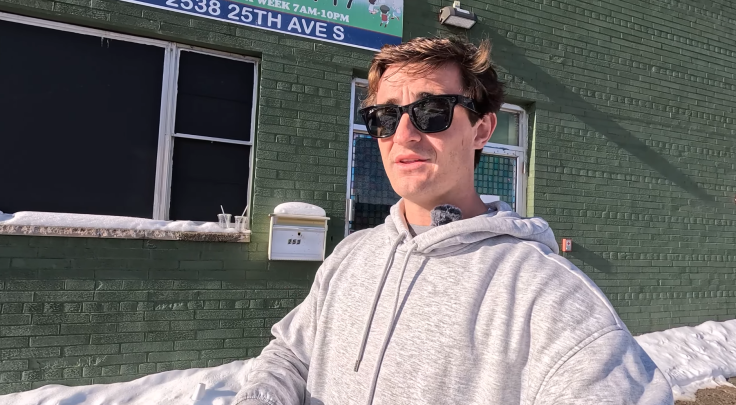
A simple acronym has become a veiled death threat in contemporary America. When Nick Shirley, an independent journalist and YouTuber, went public with allegations of fraud at Minnesota's state-funded daycare centres, he thought he was performing basic investigative journalism.
Instead, he found himself targeted by harassment campaigns invoking the name of Charlie Kirk — the conservative activist assassinated in September 2025 — as a chilling warning of what might happen next. The threats came relentlessly: phone calls to his family, online harassment, and a single, terrifying refrain repeated across platforms: 'You're going to be Kirked. You're the next Charlie Kirk'.
Shirley laid bare the threats during a Dec. 31 appearance on the PBD Podcast, his voice betraying both anger and genuine fear. The YouTuber had released a viral video documenting what he alleged were systemic irregularities at several publicly funded Minnesota childcare facilities — centres that appeared largely empty yet received substantial taxpayer funding, with one location allegedly collecting roughly $4 million.
His investigation was straightforward: follow the money, document the patterns, expose potential fraud. What followed was a campaign of intimidation designed to silence him.
Threats Escalate Following Viral Video
'They are saying, like, "Kirked — you're going to be Kirked. You're going to be Kirked,"' Shirley told host Patrick Bet-David, his composure cracking as he recounted the harassment. 'That's what they're saying — like, you're next. You'll be the next Charlie Kirk'.

The reference was unmistakable and deliberately menacing. Kirk, a prominent figure on the conservative speaking circuit, was shot and killed at Utah Valley University during an event in September 2025. His assassination shocked political America and became a flashpoint for concerns about political violence escalating beyond rhetoric. Now, that tragedy was being weaponised as a threat against a journalist simply documenting financial irregularities.
Shirley appeared visibly shaken as he described the personal toll. His family had become targets of harassment — his sister receiving phone calls, his relatives dragged into a controversy they had nothing to do with.
'I hate what's happening right now. I honestly feel bad for my family, because it's like, yeah, we didn't do anything wrong, and yet you guys are coming after me like I'm some sort of villain,' he said, his voice carrying genuine bewilderment at the ferocity of the backlash.
What tormented Shirley most was the politicisation of his investigation. He had meticulously documented financial data, photographed empty facilities, and traced taxpayer money flowing to centres that appeared to operate far below capacity.
Yet critics had reframed his work through a partisan lens, treating him as a right-wing operative rather than a journalist pursuing accountability. 'I didn't make this a right-or-left issue,' he insisted. 'I just showed you guys that fraud was happening'.
Federal Response and Official Pushback
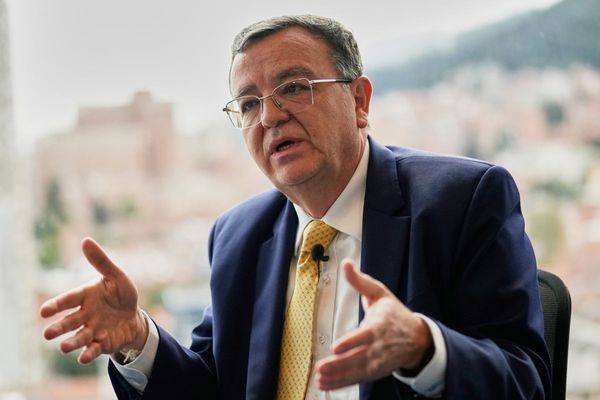
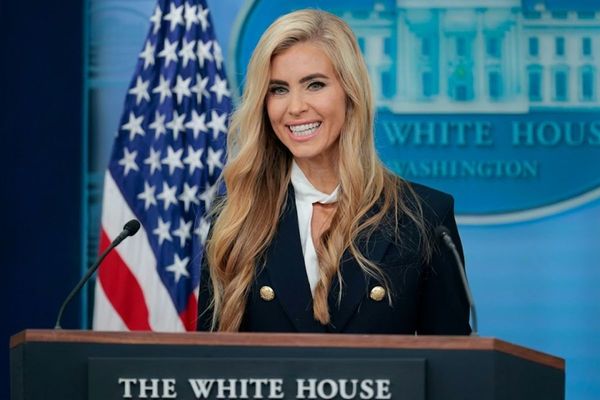
Minnesota's response proved complicated. Tikki Brown, the Minnesota Department of Children, Youth and Families Commissioner, acknowledged the video had 'gained local and national attention' but questioned Shirley's methods. 'While we have questions about some of the methods that were used in the video, we do take the concerns that the video raises about fraud very seriously,' she said during a Dec. 29 news conference.
Yet the U.S. Department of Health and Human Services responded with decisive action, announcing on De. 30 that it would halt childcare payments to Minnesota pending investigation. Shirley's video, whatever its methodological imperfections, had prompted federal intervention.
The journalist now faces an impossible situation: his investigation has yielded tangible results — federal scrutiny of a potential fraud scheme — yet the personal cost has been severe. Death threats invoking a real assassination, harassment of his family, and the psychological toll of living under threat for pursuing financial accountability.
In an America where political violence has become a terrifying reality, Shirley's experience raises urgent questions about whether investigative journalism can survive in an environment where threats of physical harm are used to silence uncomfortable truths.