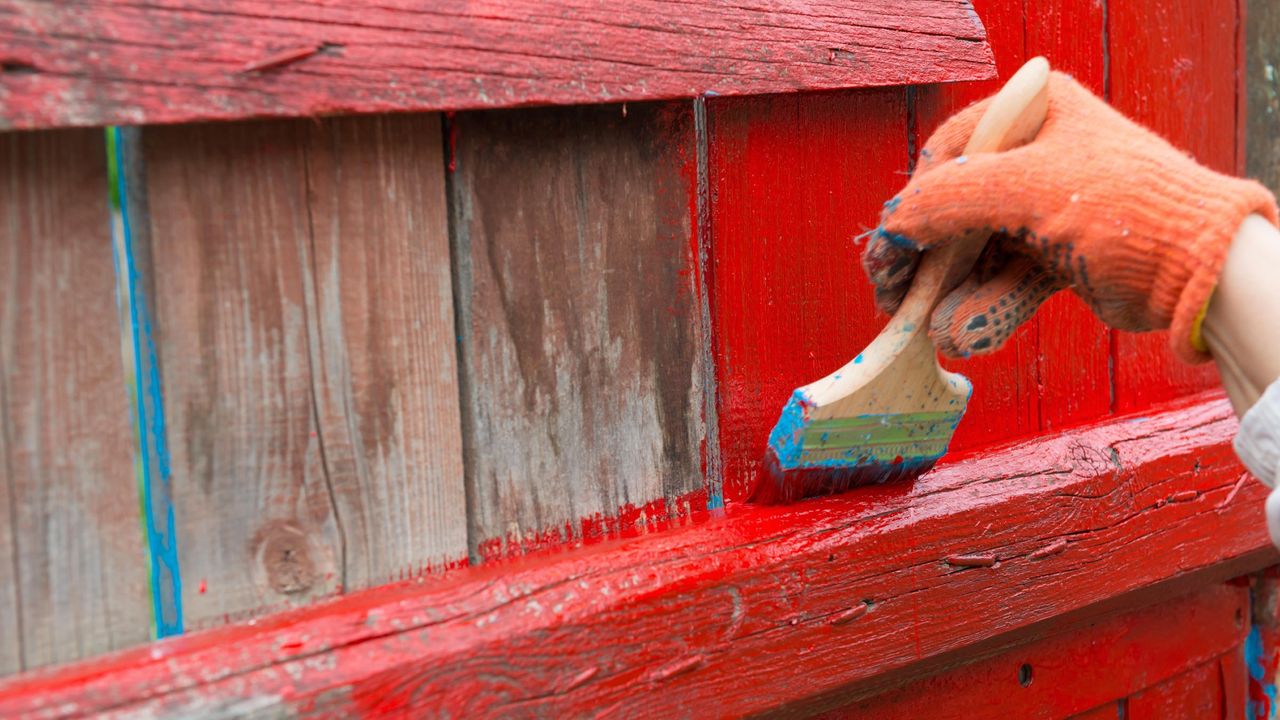
With the clocks about to change and the longer daylight hours that ensue, it’s time to get outside and make a start on refreshing your yard. Apart from power washing your pathways, pruning trees, and sowing seeds in March, you’ll probably want to give your fence(s) a new coat of paint.
After months of wind, frost, rain and snow, your fence can appear faded, patchy and tired. And while most of us instinctively reach for a traditional fence brush to sort it out, one DIY expert says it could be the one thing slowing you down.
According to Omar Stoltzfus, a home improvement expert at Premier Timber Frame Builders, the humble paintbrush could be why so many people dread fence painting in the first place.

Why painting with a fence brush is difficult

“Most people assume a thick fence brush is the only proper way to paint timber panels,” Stoltzfus explains. “But in reality, brushes can be awkward, heavy and surprisingly inefficient, especially on rough or textured wood.”
Most people assume a thick fence brush is the only proper way to paint timber panels. But in reality, brushes can be awkward, heavy and surprisingly inefficient, especially on rough or textured wood.
Omar Stoltzfus, Premium Timber Frame Builders
He says the real problem is how brushes interact with weathered timber. “Fence panels are rarely smooth. They swell and shrink with the seasons, creating grooves, splits and uneven grain. A stiff brush tends to glide over those dips rather than press colour into them. That is why you often end up going over the same patch again and again,” he explains.
Instead, he recommends swapping it to a grocery store staple that costs less than a dollar. So, what is this mystery item that can paint your fence better than a traditional fence brush? The alternative is a basic dish sponge, such as Amazon's Basic Non-Scratch Sponges, available for $3 for a pack of 6 at Amazon.
Use a humble dish sponge instead

So, what qualities make a dish sponge suitable to paint a fence over a traditional fence brush?
“The flexibility and porous structure of a sponge make it ideal for fencing,” says Stoltzfus. “It compresses into ridges and knots in the timber, so you get colour into every indentation without fighting the surface. You are pressing and spreading at the same time, which gives a more even finish.”
Is a dish sponge tough enough?
People often imagine the sponge will shred the moment it touches the wood, but Stoltzfus shares that in most cases, this doesn’t happen. “A standard kitchen sponge is surprisingly durable, especially when it’s damp and saturated with paint or stain. Once it absorbs the product, it glides across the timber rather than scraping against it.
“On a typical garden fence that has weathered naturally, the surface tends to be textured rather than sharp, so the sponge compresses into the grain rather than tearing apart.”
However, the condition of the fence does play a part. “If the wood has splintered sections, loose fibers, or very rough edges, I would always recommend a quick preparation step first. You don’t need to sand every panel perfectly smooth, but running a sheet of medium-grit sandpaper over any particularly rough patches will remove the sharp fibres that could catch the sponge,” he adds.
As an added tip, he suggests using the sponge’s soft side rather than using the abrasive scouring pad to paint your fence. “Apply paint with a pressing and sweeping motion rather than dragging it hard across the surface. The sponge is doing the job of pushing paint into the grain, not scrubbing the wood.”
If you’re concerned that you’ll get through a multi-pack of sponges while painting your fence panels, Stoltzfus has some reassurance: “If one sponge eventually wears out, that’s not really a drawback considering how inexpensive they are. Most people will still cover an entire fence far faster and with less strain than they would using a traditional fence brush.”
Comfort first

However, it’s not just about getting the perfect coverage; it’s about comfort when painting a fence.
“Painting a long run of fencing with a brush means repetitive wrist flicking and constant pressure,” he says. “That repetitive motion is what causes aching forearms and sore shoulders. A sponge allows you to use broader, more natural hand movements. It significantly reduces strain, particularly if you have several panels to cover.”
What’s more, a dish sponge is far cheaper than buying a fence brush, so if you find your old fence brush is past its best and needs replacing, you could swap it for a dish sponge and try this fence painting hack instead.

More from Tom's Guide
- My neighbor's side of the fence is falling down — I ask the experts who should pay for repairs
- The ultimate guide to shared fences: Is it okay to paint your side of your neighbor's fence? — Here’s what the experts say