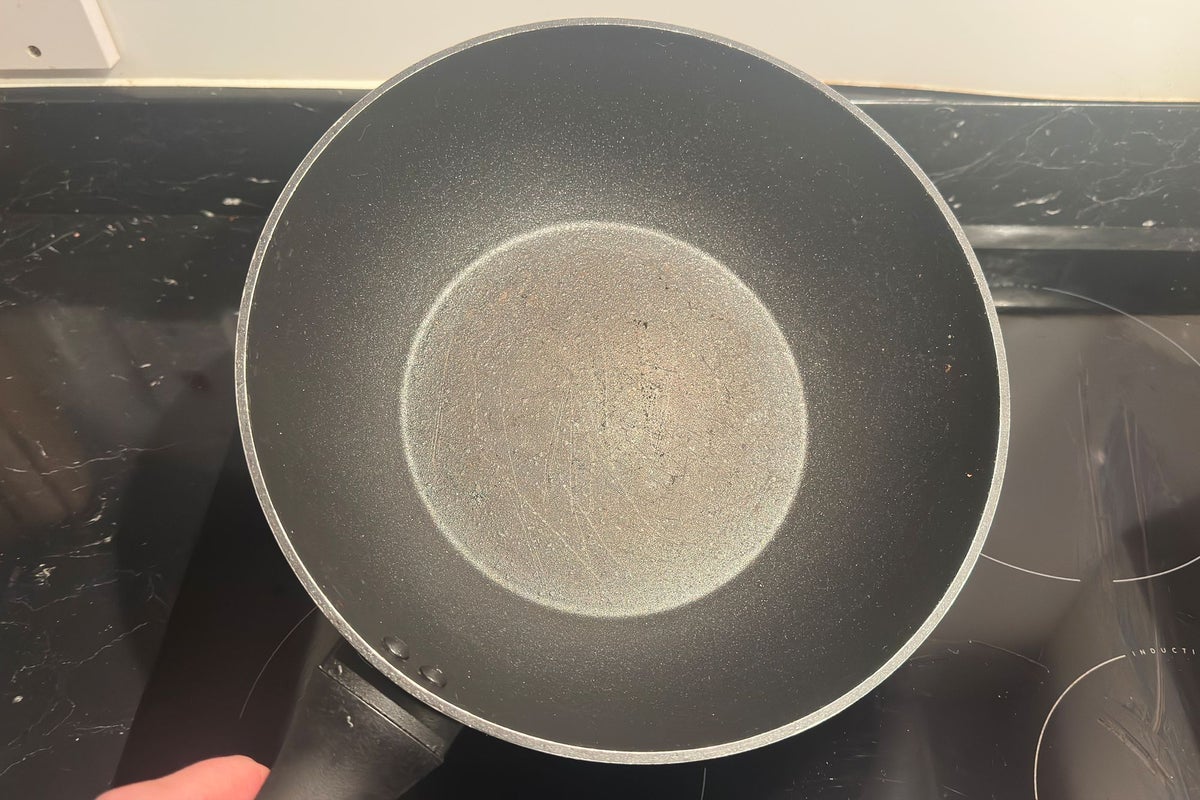
Almost all of us have a non-stick frying pan at home that’s seen better days. Scratches, dull patches and food that doesn’t quite cook as well as it used to are all signs of a well-used pan. But non-stick pans tend to decline slowly, so you may not notice that your pan has had its day until it’s too late.
But it is important you do keep an eye on them. The coating used on the non-stick frying pans is made from polytetrafluoroethylene (PTFE), better known as Teflon. It’s one of the most effective cooking surfaces because it heats up quickly, allows food to move around the pan easily and requires little to no oil.
However, PTFE degrades with high heat and heavy use. Once it starts to break down, fragments of the non-stick coating can end up in your food. Research published in Science of the Total Environment has shown that scratches from non-stick coatings can release microplastics and nanoplastics – a small surface crack could leave behind as many as 9,100 plastic particles and a chipped coating may release up to 2.3 million micro and nanoplastics. While more research into the true effects of microplastics and nanoplastics on the human body is required, some studies suggest that once they enter the body, they can accumulate in vital organs such as the liver, kidneys and even the brain.
A pan that is visibly scratched, peeling or discoloured is no longer doing its job properly, and the longer you leave it, the worse it’ll get. As food writer and author of the inger Pig One Pot, Rebecca Seal puts it: “We don’t really know how safe or unsafe it is to use scratched non-stick pans, but either way, anywhere on a pan where the finish is damaged is bound to be less non-stick, so your food will inevitably attach itself to the pan.”
The good news is that a damaged pan will give you warning signs; you just need to know what to look for. So here are the signs that tell you that it’s time to replace your non-stick pans.
Read more: Best non-stick frying pans, tried and tested
The coating is visibly scratched or chipped
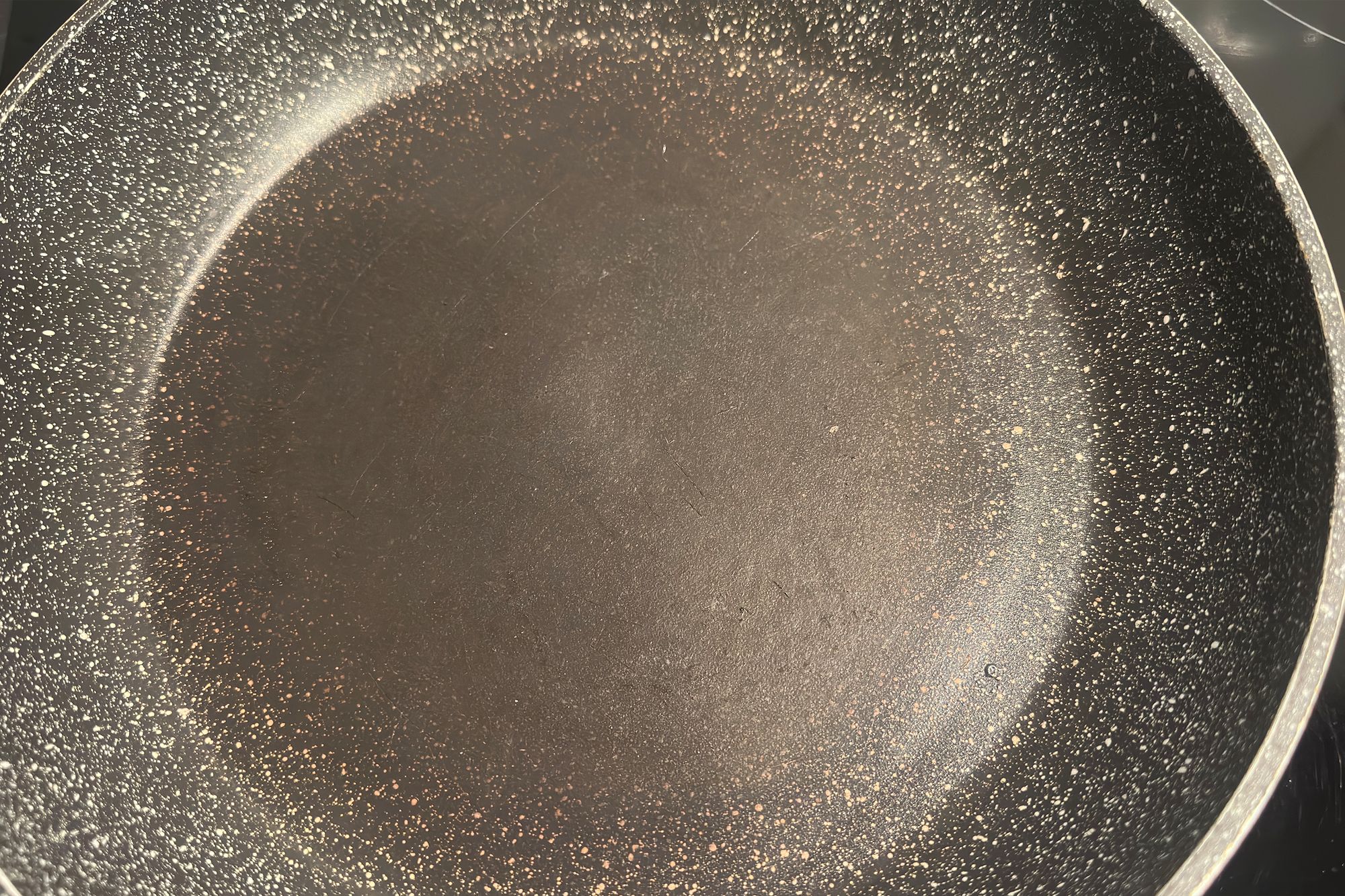
The most obvious sign you need to replace your non-stick pan is when the coating is visibly scratched or chipped. It’s also one of the hardest signs to ignore. Scratches will naturally occur, especially if you’ve used metal utensils, popped your pan in the dishwasher or even used an abrasive sponge. But once you’ve noticed scratches, then the PTFE layer is broken, and it’s time to get yourself a new pan.
Of course, what makes it trickier is that not all scratches are immediately visible. As Rebecca Seal points out, “even though we can’t usually see the scratches as they happen, that doesn’t mean the damage isn’t there”. A pan can look fine on the surface, while the coating beneath has been compromised. By the time you see the scratches, it usually means the pan has been deteriorating for a while and should be immediately replaced.
Chipping also happens with non-stick pans, and this is a more serious sign. While scratches wear the coating, chips mean pieces of the coating are coming away completely and potentially ending up in your food. If your pan has reached the chipping stage, then it needs to go straight into the bin.
Food is sticking despite you using oil or butter
If you’re using more oil than usual and your food is still sticking to the pan, then that’s another sign that your non-stick coating has worn too thin to do its job. This is often the first noticeable sign and usually the one that gets ignored until the visible signs start to appear. But if this is happening, your pan has a problem.
A good non-stick pan will need little or no oil to prevent food from sticking to the surface. As Saifur Rahman, head chef at Tower Tandoori, explained: “A pan that suddenly starts grabbing food even though it is being used correctly with a bit of oil and moderate heat usually means the surface has worn smooth in some areas and rough in others.” In other words, no amount of extra oil will fix your pan once the coating has gone, so has the performance, so it’s time for the bin.
It’s worth noting that no non-stick surfaces last forever. The coating will naturally reduce with use. If yours has reached the stage where it’s no longer sticking, then the only solution is replacement.
The surface is discoloured or stained
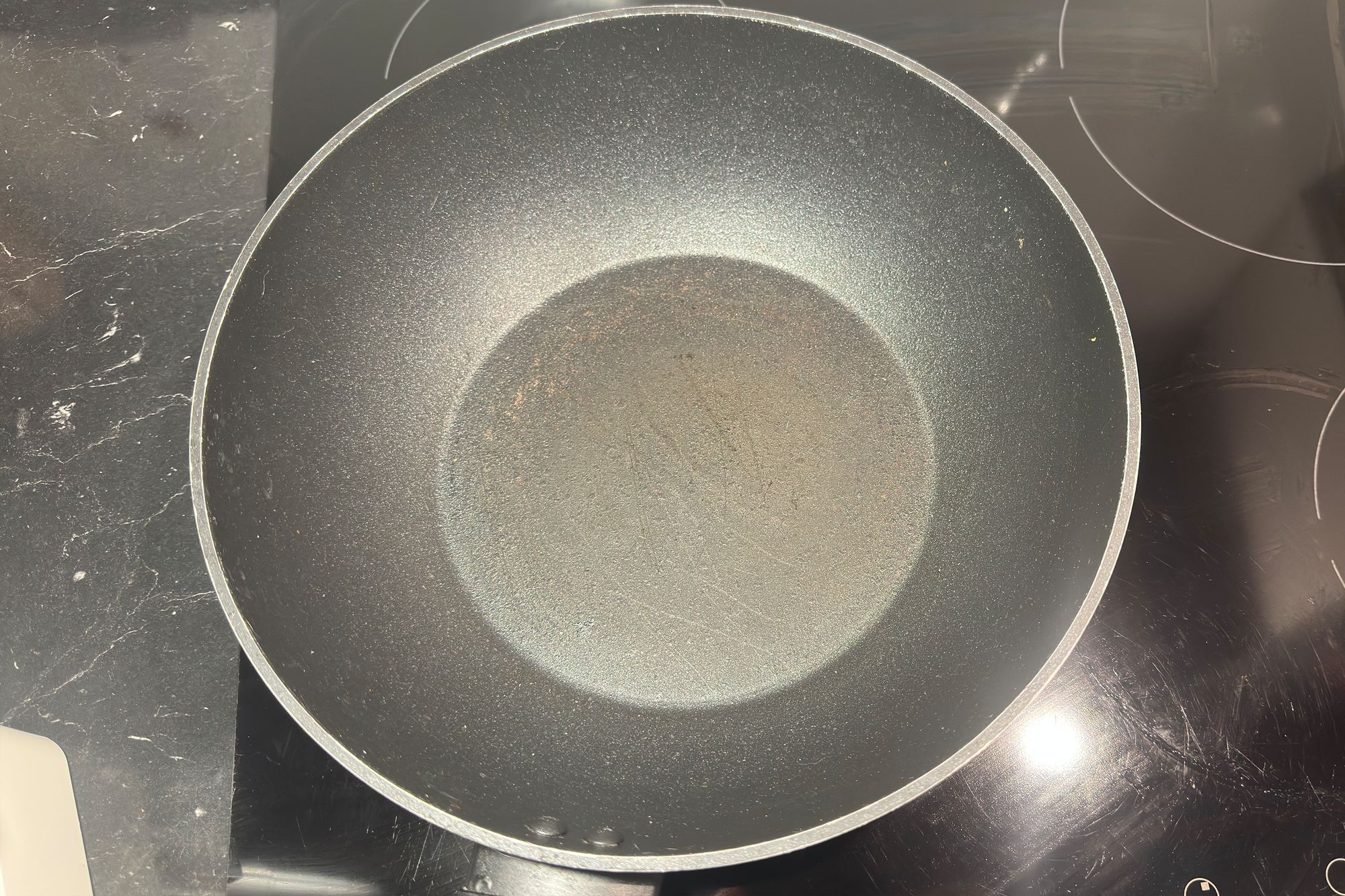
Over time, it’s normal that your pans will start to darken; it’s what’s called patina, which is a thin green or brown layer that forms on surfaces through natural oxidation, ageing or heavy use. This isn’t anything to worry about, but there’s a difference between a pan that’s well used and a pan that’s past its best.
If the dark patches won’t shift, are dull or have an uneven finish, then it’s usually a sign that something more serious is going on. Most discolouration is caused by overheating, cooking spray residue or oil that has burnt on over time. It’s also worth noting that dark stains can be food residue building up – if this is the case, it can usually be removed by using a non-stick-safe cleaning brush and some gentle scrubbing before writing the pan off entirely.
However, if you’ve tried that and the discolouration remains, then it’s a strong indicator that the coating has deteriorated and that it’s time to start looking for a replacement.
The coating is peeling or bubbling
You should stop using your pan immediately if you notice it is peeling or bubbling. Where scratches and discolouration often mean the coating is wearing down, peeling and bubbling mean it’s actively coming away from the metal beneath, which means fragments of the coating will almost certainly end up in your food.
Bubbling is usually caused by repeated overheating or sudden temperature drops. For example, if you plunge your pan into cold water before it’s had time to cool down, this will cause the coating to separate from the base. Once it’s started to do this, there’s no stopping it, and you’ll be unable to reverse the damage. So if you notice any type of peeling or bubbling, then it needs to go straight in the bin and not back on the hob.
Read more: Best non-stick pan sets, tried and tested by a food writer
The pan has a warped base or is uneven
If your pan wobbles when on your hob or kitchen counter, it’s got a warped base. Warped bases are pretty common and usually the result of thermal shock, such as plunging a very hot pan into cold water. It sounds like an easy mistake to avoid, but it’s one of the most common causes of pan damage and the result is permanent.
As Saifur Rahman puts it: “If the base is no longer flat and heat becomes uneven, then it’s time to replace it.” And he’s right. A warped base means that the heat will distribute unevenly across the surface, leading to inconsistent cooking and hot spots, which will also accelerate wear on the coating. If your pan rocks even slightly, it’s time to replace it.
Your pan is more than five years old
No non-stick pan lasts forever. Unlike a scratched or peeling pan, an ageing one won’t give you the obvious visual clues. But over time, no matter how well you’ve treated it, the non-stick coating will thin and degrade.
Dean Harper, chef and founder of Harper Fine Dining, breaks it down: “Lifespan is usually best thought of in bands. Budget pans that cost around £25 to £40 commonly deliver about one to two years of good release if used several times a week. Mid-range pans, costing £50 to £100, often last for roughly two to four years. Premium pans over £100 can reach around three to five years, sometimes longer, but only if heat and cleaning are kept gentle. Frequency matters as much as price, so a pan used daily for quick breakfasts will age faster than one used once a week.”
Saifur Rahman also agrees: “A regularly used home non-stick pan is often sensibly replaced every two to three years. If a pan is used daily, it is worth reassessing it around the 18 to 24 month mark, because performance can drop quickly once the coating starts to thin.”
So even if your pans look great, if they have been in regular use for several years, then it’s time to start looking for an upgrade.
Is a damaged non-stick pan actually dangerous?
It’s a question that anyone who uses non-stick pans has asked themselves. Historically, the main concern of non-stick coatings centered on perfluorooctanoic acid (PFOA) – the chemical used to manufacture it – which has been linked to serious health issues, including cancer and hormonal disruption. PFOA was banned in UK cookware in 2005, with a full global ban coming into force in 2020 under the Stockholm Convention.
So if your pan was bought after 2005, it won’t contain it. Modern non-stick pans are coated in polytetrafluoroethylene (PTFE), more commonly known as Teflon. It is technically part of the broader PFAS family of chemicals, but is widely considered safe to use under normal cooking conditions.
However, emerging studies suggest that scratches on non-stick pans can release microplastics, which are not easily expelled by the body. Research on this is still developing as scientists try to work out the full effects of microplastics, but it’s a good enough reason to replace a heavily scratched pan sooner rather than later. Peeling and bubbling pans, however, is a different matter. This indicates that the coating is actively coming away and the pan should be replaced.
Breast Cancer UK’s director of research and engagement, Dr Hannah Moody, says: “When it comes to microplastics, the concern for human health lies in the fact that not only can microplastics themselves contain potentially harmful chemicals that can leach, but they can also absorb other chemicals and transfer them to the surrounding environment. This includes Endocrine Disrupting Chemicals (EDCS), which may affect our hormone system and have been linked to a potential increase in breast cancer risk.
“Non-stick pans are of particular concern because they may contain PFAS, some of which are EDCs. That's why we recommend avoiding using non-stick pans wherever possible.”
How to make your non-stick pans last longer
While no non-stick pan will last forever, a few simple habits can help to extend the life of your non-stick pan.
- Never use metal utensils; instead, use wooden, silicone or plastic.
- Wash your pans by hand with a soft cloth or sponge; avoid using the dishwasher.
- Never overheat your pan; medium heat is ideal.
- Avoid using aerosol cooking sprays; these can leave behind a residue that will discolour and eventually degrade the surface.
- Store your pans properly. If you stack them, then use a soft cloth or a pan protector in between them to avoid scratches.
- Always allow your pans to cool fully before washing, and never plunge a hot pan into cold water.
What to look for when buying the best non-stick pans
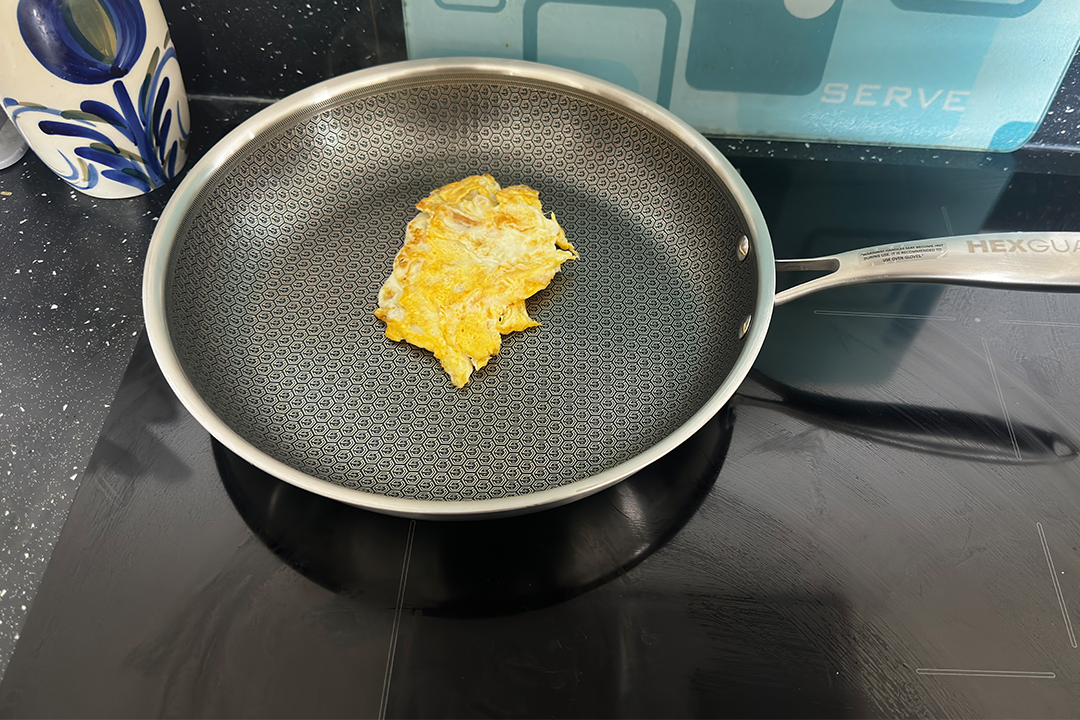
Not all non-stick pans are created equally. Cheaper pans will have a thinner non-stick coating and lightweight construction, which usually means you’ll end up replacing the pan sooner rather than later.
Harper recommends looking for “thick forged aluminium or hard-anodised aluminium for more even heat” and advises that if you use induction, you should “choose a pan with a stainless steel, magnetic base that sits dead flat”. He also flags that a “comfortable riveted handle matters for stability”.
When it comes to coating, Harper is clear that both PTFE and ceramic pans have their merits, but it comes down to your personal cooking preferences. He says: “PTFE typically keeps its non-stick feel for longer, while ceramic is often chosen by people prioritising PFAS-free options, with the trade-off that it may lose slickness sooner depending on use.”
The quick checklist: Does your pan need to be replaced?
Before you cook, here are six points to check to determine whether to replace your non-stick pan:
- Visible scratches or chips
- Food sticking, despite using oil
- Discolouration and staining that won’t shift despite cleaning
- Peeling or bubbling anywhere on the surface
- A warped or uneven base
- If your pan is more than three to five years old and used regularly
Even if you’ve ticked just one of these boxes, it’s time to replace your pans. Non-stick pans aren’t a lifetime investment. A new non-stick pan will cook better and ensure you stay healthy. It’s one of the best upgrades you can make in your kitchen and the next time you fry an egg, you’ll be glad you made the switch.
Read more: Best saucepan sets to buy for your kitchen, tried and tested