
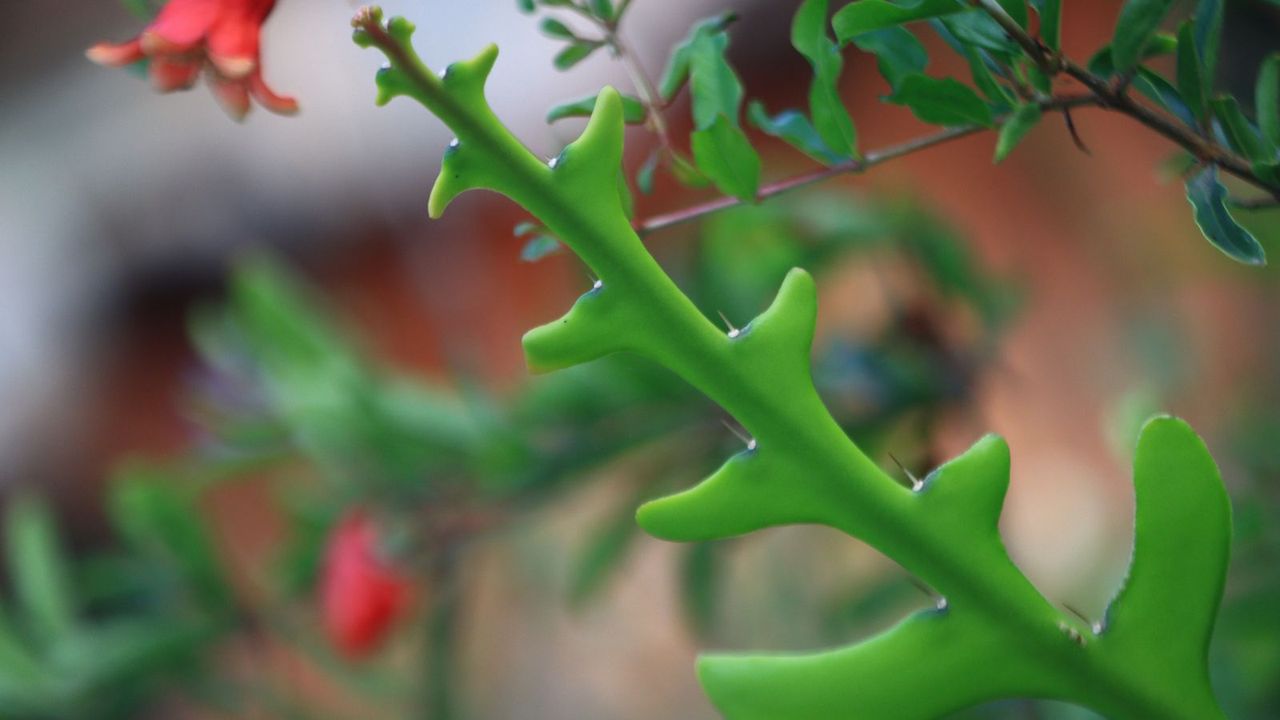
When it comes to houseplants, there's nothing quite as quirky as a cactus – but the fishbone cactus (or Disocactus anguliger) wins the prize for the quirkiest houseplant of all. Also known as a zigzag cactus or a ric rac cactus, this isn't your typical prickly plant; in fact, it doesn't have any spines at all.
Instead, it boasts glossy foliage that starts out as narrow green stems before forming uniquely wavy nodes (which, as you might expect, eventually create a delightful zigzag pattern).

Native to Mexico, this playful and pet-friendly plant thrives in humid conditions, indirect sunlight, and well-draining soil. You can pick up a live fishbone cactus from Walmart, or opt for a fishbone cactus in a hanging basket, like this one from The Home Depot. And if you're curious about how to care for a cactus like this one, we've asked our resident houseplant expert to share the best tips.
5 Tips to Help You Care For a Fishbone Cactus
'The fishbone cactus is one of the most intriguing houseplants to add to your collection,' says Tenielle Jordison, Gardens Content Editor at Homes & Gardens. 'Although technically a cactus, it’s often referred to as a succulent because it doesn’t have spikes and has fleshy foliage similar to succulents.'
While the fishbone cactus isn't a fickle houseplant, it still requires regular watering, plenty of humidity, and a sunny location. Below, Tenielle gives her advice on how to care for this unique species.
1. Select The Right Soil

A particularly interesting fact about the fishbone cactus is that it's an example of an epiphyte – a plant that grows on other plants.
'The fishbone cactus is typically found growing on tree bark,' explains Tenielle. 'And with this in mind, the number one thing that will set your fishbone cactus up for success is its soil.'
The secret? A light, aerated mix – think something like succulent and cactus potting soil (which you can find at Amazon) with added perlite (like this Miracle-Gro perlite from Walmart).
'Just like other epiphytic houseplants, it’s best to avoid a super dense potting soil for these plants,' she states. 'Instead, opt for a loose, well-draining potting medium. You can even use something like orchid bark.' (Organic orchid bark is also easy to find at Amazon.)
2. Prioritize Bright, Indirect Light

While it hails from sunny Mexico, the fishbone cactus is accustomed to bright but dappled sunlight – so this is what you'll want to try and recreate.
'Whenever I’m looking for the perfect spot for a new houseplant, I think about their native growing environment,' reflects Tenielle. 'For a fishbone cactus, this means thinking about the tropical rainforests in Mexico, where it grows in dappled light beneath tree canopies.'
Reproducing these conditions might not seem particularly straightforward, but indirect light is the most crucial consideration.
'I recommend choosing a spot with bright light, but keeping your cactus out of direct afternoon sun,' says Tenielle. 'This may cause leaf scorch and discolor the foliage.'
3. Create Optimal Humidity

Just like other indoor succulents, the fishbone cactus loves humidity – so you'll want to ensure that it receives plenty of moisture from the air.
The easiest way to do this is to place your fishbone cactus in the bathroom: 'This is ideal, as it can soak up extra moisture in the air from shower steam,' says Tenielle. 'However, you can also place moisture-loving houseplants on a pebble humidity tray; I personally find that it works a lot more effectively than a plant mister.'
You can pick up a colorful plant humidifier tray from Etsy, or choose a more understated pebble tray from Amazon.
4. Make Sure to Monitor Moisture Levels

It can be tricky to know how to water a cactus, but it's all about monitoring moisture levels carefully – you can use a soil moisture meter (like this one from Walmart) to help you.
'When it comes to watering your fishbone cactus, treat it the same as other cacti and succulents that store water in their fleshy stems,' advises Tenielle. 'You can allow its soil to dry out almost entirely, though you shouldn’t allow it to sit in a prolonged period of drought.'
The fishbone cactus is a largely low-maintenance indoor plant, but it can require a little more attention than you might expect.
'As it’s a rainforest cactus, rather than a desert cactus, the fishbone cactus likes a little more water than other types you may be growing,' says Tenielle. 'Always avoid your fishbone cactus sitting in soggy conditions, too. This can cause root rot and mushy stems.'
5. Clean it Carefully

While soil, humidity and moisture are all vital considerations, there's one aspect of houseplant maintenance that is often overlooked: cleaning.
Admittedly, you won't need to clean your fishbone cactus as often as you water it, but this simple task can make a huge difference to plant health.
'Cleaning houseplant leaves is key to managing pests and diseases,' says Tenielle. 'The flat, smooth foliage of a fishbone cactus can collect quite a bit of dust over time, which can also block pores and hinder plant processes like photosynthesis.'
All you'll need to do is gently wipe down the leaves of your fishbone cactus every few weeks; you can use a soft microfiber cloth (like this pack from Walmart) or invest in a pair of houseplant cleaning gloves, which you can find on Amazon.
Looking for more cactus tips? Check out our advice on how to care for succulents, or read our guide to the best flowering cacti.
Plus, if you love inspiring garden ideas, outdoor advice, and the latest news, why not sign up for our newsletter and get the latest features delivered straight to your inbox?