Pro cycling is a cruel sport. So many professional athletes are measured by their win-loss ratio. Yet in professional road cycling, where a race can feature up to 200 riders, there can only ever be one winner, and many, many more 'losers'.
The average male pro rides 75 races a year, which would mean 750 races in a 10-year career. In the last two years, 27 top-level pros (male and female) retired after a 10-year career or longer with no wins at pro level (UCI .1 or above) at all. That's possibly a 0-750 win-loss ratio. Considering what they go through at the top level of the sport, it seems harsh.

It’s a team sport, you may say. But it's also a sport where you have to win to get yourself noticed and get a spot in the pro ranks, only to possibly spend your whole career not winning.
So why am I so keen to investigate this? Well, I am lucky in that I get to commentate on some of the world's biggest races for television. Two years ago, I was commentating on the Tour de Wallonie. It was stage 3, and the Belgian Jimmy Janssens was clear in the lead with Norwegian Markus Hulgaard.
Hulgaard was 28 and had won three races so far; Janssens was 34 and had never won a pro race. It struck me when I saw that stat in the final kilometre. The outcome? Janssens came second and retired last year, still winless but with a long career as a faithful team worker to his name.
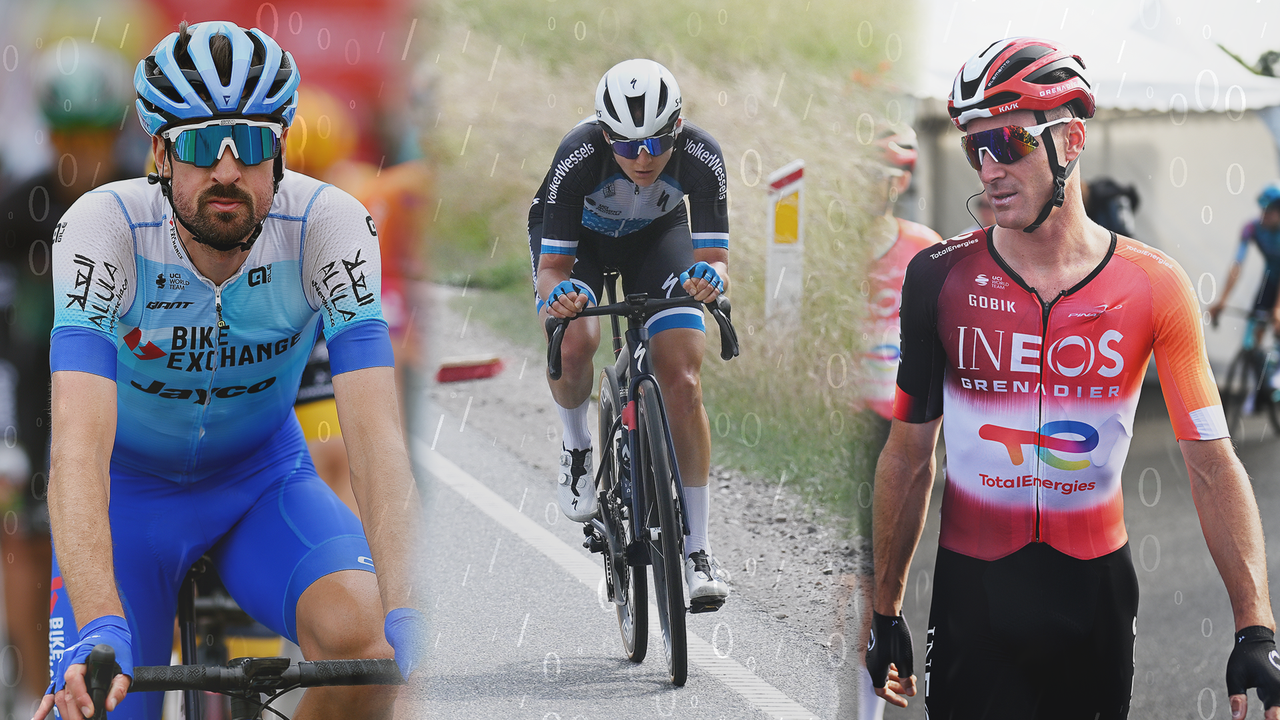
My fascination with the long-running pros who are yet to win had begun. To investigate this all-too-common phenomenon — there are countless riders I could have spoken to — I whittled it down to the six you’ll hear from here. They can all be considered very successful riders with long careers, forming part of wins ranging from Grand Tour team time trials to mountains, sprints and young riders jerseys. But none ever crossed the finish line first to win on their own as a pro.
Many of them have now transitioned into team management and coaching, and I was keen to find out not just how a winless career felt, but also how it influences what wisdom they can pass on to the eager young riders they are now guiding.
A winning start
One thing that knits all the riders I spoke to together is how they fell in love with racing young and seemed to enjoy the simplicity of being quickly better than others at an early age. That’s not to say they were all winning as amateurs, though.
Belgian former pro Valerie Demey retired at 31 in December and is now a DS at Fenix-Premier Tech, having seen out her career with the VolkerWessels team. She remembers the simplicity of her start well.
"I was in a sports school, but we did different kinds of sports, and every year we had to earn some ‘stickers’ with out-of-school activities. One of those activities was a cycling race. I did it, I won, and I liked it," she told Cyclingnews.
Others found that winning took them to the top very quickly. Another Belgian, Stijn Steels, grew up in the considerable shadow of his uncle, Tom, who had won 66 races, including 9 Tour de France stages. Steels had 10 years as a pro, culminating in becoming a key domestique in Patrick Lefevere’s QuickStep team. He is now a sports director with the AG Insurance-Soudal women's team.
"The biggest problem came because when I was [a] junior at national level, I won everything," he said. "At world level, I was also really good. But when I was 18 years old, suddenly they said, ‘Yeah, the only races you are doing will be World Championships, World Cups and European Championships’ and it was all against pro riders. So I was racing Wiggins and Cavendish on the track while I was just an 18-year-old kid. And they were the only races I did. So I always got my ass kicked."
Steels was one of those Flandrien riders alongside, alongside Demey, who came through the Sport Vlaanderen team, a setup well known for its long-term approach to talent development.

New Zealand's Sam Bewley transitioned from being the archetypal team player as a track pursuiter into a long career in the engine room of the various iterations of the Australian GreenEdge team on the road. As a team pursuiter, he embodied the ethos of putting team before self in place from early on. The American team Radioshack saw his work rate potential, and he was able to combine both road and track ambitions up to the 2012 Olympic Games with them. Beyond those games, his own lack of personal victories could, by his own admission, have been the end of his professional career were it not for the vision of Gerry Ryan and his GreenEdge team.
"GreenEdge started, and they wanted to have that DNA of Kiwis and Aussies. So it was a natural fit for me. When I went to that team, it was my first exposure to racing with multiple guys who could win races with Simon Yates, Matt Goss and guys who were winning," he explained.
"GreenEdge developed that team culture where I felt comfortable being able to commit myself to other riders and still know that if I did that well, I would get more contracts. They gave me stability. And they made me feel like, ‘Hey, as long as you do a good job and you do what’s required to deliver our other guys to win, then you’ll have a career in the sport’."
That moment of realisation is perhaps where the joy in others’ success seems to start — and what struck me was how these winless pros revelled in their ability to do things that perhaps the pure winners would have found hard.
Tim Declercq is arguably the best-known of the male peloton 'pace setters' from the past decade, affectionately nicknamed ‘The Tractor’ for his ability to set a relentless, steady-hard pace on the front of the peloton for hours on end.
"I was somebody who was very good at riding a hard, sub-maximal pace, which in the end, turned out to be maximal, but yeah, I could do that without too much fatigue," he told Cyclingnews. "I think in the beginning, I still had a little bit of exclusivity. But because I was doing this job so visibly, my exclusivity went down a lot, and even if I tried to train a bit harder and change things, it didn’t make me any better. However, even at the end of my second-to-last year, I still beat my lifetime five-minute power record."
Finding satisfaction outside of victories
Another moment of realisation and even joy seemed to come from the fact that, in trying to win, you can’t control everything once tactics and the actions of others come into play. What became evident from talking to these riders was how much they seemed to enjoy taking control of the teamwork in an environment that was far more controllable and predictable, away from the split-second heat of the finale. And with that control seems to come humility.

Frenchwoman Eugénie Duval raced as a pro for 11 years and came incredibly close to the big one when she survived to sprint for the win at Paris-Roubaix Femmes in 2023, which was won by Canadian Alison Jackson.
"I’ve never won a race, not even in the younger category," she told Cyclingnews – a real rarity to have never won at all, even before her pro career. "I got into cycling because my brother did it. I tried it, and I liked it. I think I experienced what I needed to experience. I didn’t have a victory, but I shared many with my leaders who were exceptional."
That isn’t to say that everyone accepted their position as a winless team worker so lightly. Steels openly admits that in the early days, not winning became a debilitating frustration.
"At the beginning of my career, I often had opportunities. I won kermesses and .2 UCI races as well as classifications in stage races. I came close to pro victories a few times. However, I wasn’t the most pleasant person to be around as I was always in a bad mood because of missed opportunities. Then I suffered a serious injury and infection that almost ended my career.
"At the time, it seemed that the only way for me to reach the absolute top was as a 100 per cent domestique. So I went to Verandas Willems to help Wout van Aert and Tim Merlier find their way. I got a lot of satisfaction from that and was also much happier and never thought about my own chances again."
Of course, when you race as often as these riders do, sometimes the dice-rolling nature of road racing tactics means that the chance of a victory can suddenly present itself, as Declercq recalled.
"I think it was Le Samyn in 2019. I remember this moment so well that I was thinking, ‘I’m gonna win. I’m going to win!'," he said. "And then it really came to my legs, and I was freezing a bit. I couldn’t push more than 400 watts anymore. Unfortunately, I needed 500 or 600 at that moment, and I just couldn’t push anymore. So then I realised that some guys, when they go in the final and see that finish line, it’s like they can rise above themselves. For me, it was the opposite, and from then on I knew I was made for a life as a domestique. That was my moment of realisation. I realised what my place was."

Declercq’s work was most evident on the flat or rolling roads in Classics races. For Italian team worker Salvatore Puccio, who spent his whole career with one team (Sky and Ineos Grenadiers), the ruthless selective process of climbing meant that the chance to win kept showing itself.
"I came very close to victory. I finished second in stages at races such as the Giro d’Italia, the Vuelta a España, and Tirreno-Adriatico. My dream was always to win a stage in one of the Grand Tours, especially the Giro d’Italia, but looking back, I am truly happy with what I achieved in my career, and if I had the chance, I would do everything the same," he said.
Sharing the success of others
Puccio played a key part in the Tour de France victories of Chris Froome and Geraint Thomas and the Giro d’Italia victories of Tao Geoghegan Hart and Egan Bernal. Basking in Grand Tour or team success also became addictive to Sam Bewley as he found his own climbing legs:
"That day in the 2018 Giro when Simon Yates [his team leader] lost the jersey to Froome on Finestre — it kind of defined me a bit," the New Zealander recalled.
"It was probably the best form I ever had, and I played a big part in all the success that the team and Simon had had up until that point. And then it all went wrong on stage 19, and Simon was obviously devastated. And I just remember Simon apologising to us all. I said to him, ‘No! Don’t apologise. You have no idea what you’ve done for us. You’ve exposed me, you’ve exposed your teammates to our abilities.’ And that was the first and only year in my whole career where I actually had other teams offer me contracts because of the way I performed at the Giro. That was thanks to Simon."

With all that experience gleaned from keeping the wheels of a team turning from within, it's no great surprise to see so many of them now working in team management. But there was also a topic hinted at by a number of them: how much things have changed in pro cycling, with young riders now expected to win early. Bewley issued a cautious note.
"You need to have some results, because that’s how you get seen and how you get recognised. It’s very hard to turn pro if you’re riding for an amateur team anywhere in the world, and you call up a team manager and say, ‘hey, I want to turn pro, and I’m an awesome domestique and I’ve delivered this guy to 12 wins this year’ — because it doesn’t really work that well, even in the pro ranks. The reason good domestiques stay in the same team for so long is that they’re really only recognised by their team, because the team sees what they do."
Puccio concurred: "When I joined the professional ranks, cycling was completely different," he said. "At that time, it was normal for young riders to support the more experienced riders on the team, especially in my case, as the team was full of strong leaders."
Encouraging the riders to look back on their careers certainly revealed how long those ‘what if’ moments live in the memory, even after the decision to retire without a victory to their name.
"Roubaix always suited me the best. In 2022, the big dusty edition, I was there, and I was for a long time in the leading group. And I was feeling like, wow, this is my race. This is my race," Demey recounted.
"I remember I was driving home afterwards, calling my girlfriend, and I said, 'I think if there is still one race I can win' — even though I was already convinced I would never win a race – 'If there is one race I could win, it’s Roubaix.' Then you see it the year after, with the leading group, Alison Jackson wins, my teammate came second."

Demey never did win a race, Roubaix or otherwise, but found a calling in the team car – a career where the number of wins is certainly not the main quality that determines success or suitability.
"At the end of 2024, I had an injury on my knee, so I was quite some time out and had a lot of time to think. My DS at the time called me and said, 'I really see a good DS in you.' " Demey said. "And I remember after that call, I dropped my phone and I thought, this is something I really see for myself."
I was intrigued to find out how these riders, now as sports directors, share their ‘winless but priceless’ career experience with the riders they now mentor and direct.
"I tell my riders now, even to our domestiques, if you do your job, in the end, you will always have, once or twice a year maybe, a situation where you can go, where you can take your own chance. Don't be scared to take them," Steels said. "And that, for me – not being scared – is the key. You will always do the work for others but when you have the chances, you must grab them."
And in reflecting on how to encourage his young riders at NSN Cycling this season, Bewley sounded just as encouraging.
"You know, learning to win is something that really does exist. And as time passes under the bridge where you don't put your hands in the air, you start to forget how to do it," he said.
"So it's really important that with the young guys now that you identify their talents and if they are capable of winning races, that you give them those opportunities to do that throughout the season as well as making them understand that at times, they need to work for somebody who may be better at the moment. But then you also get the young guys who are good bike riders, but they probably won't become prolific winners. They may even sit in that area that I sat in, where you do a whole career and you don't win."
The reassuring thing that hasn’t changed is the number of riders that can cross the line first in any one race: one. In a team sport with constant behind-the-scenes work being done by the faithful domestiques to serve their team leaders, some seen, some unseen, there will, year on year, be pro riders reaching that moment of realisation and finding their place in the sport — winning through others.
And we should celebrate them, perhaps even more.