
Get all your news in one place.
100's of premium titles.
One app.
Start reading
Woman & Home
Woman & Home
Lifestyle
Kat Storr

You can tell ‘a lot’ from your grip strength - including mortality risk, studies reveal

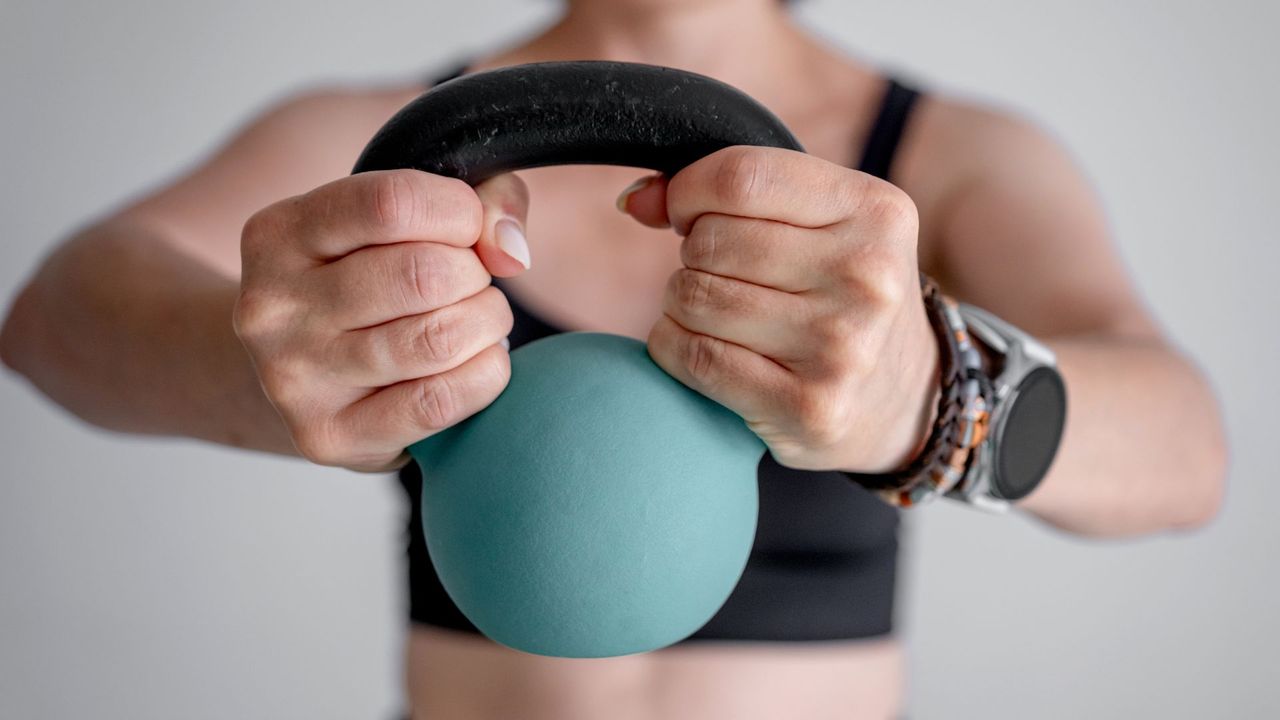
Woman holding kettlebell in front of herself wearing sports bra and watch to represent how to build grip strength.

Muscle mass and strength will naturally decline as we age and many of us in midlife are working hard to mitigate against this by doing regular strength training. However, it's not how much weight you can squat that longevity experts are interested in. Grip strength is the easy-to-measure indicator of our long-term health and function that experts have been looking at recently.

The term ‘grip’ might make you think this measurement is purely a reflection of our ability to grasp things and the strength of our hands. However, your grip strength can be an indicator of how good your overall health is and your risk of serious illness.

"It offers a quick snapshot of overall muscle quality and neuromuscular function across the body, and individuals who maintain it are better able to resist injury, move efficiently, and preserve independence as they age," says Mo Agoro, a personal trainer with a Master's degree in strength and conditioning, working with PureGym Leeds.

Why is grip strength important?

"Grip strength is about more than the hands - it reflects forearm muscle mass, nervous system efficiency and the body’s ability to generate and control force. It often mirrors overall muscle quality and total body strength capacity," says Melissa Drake, personal trainer at PureGym Chiswick, says.

If you have low grip strength, it can affect your ability to do functional activities like carrying shopping, lifting and getting up from the floor. It could also be an indicator of age-related muscle loss, or sarcopenia, which can cause weakness, an increased risk of falls and loss of mobility. A study in the European Journal of Clinical Nutrition found that grip strength scores of less than 25.5kg for men and 18kg for women indicated a greater risk of sarcopenia.

Another study, published in The Lancet, looked at nearly 140,000 adults from 17 countries and found that grip strength is linked to increased mortality risk and cardiovascular diseases, such as stroke and heart disease. The team found that it was a stronger predictor of death than looking at our systolic blood pressure, proving that doctors could use it to screen high-risk patients for serious health problems.

A few years ago, research in the BMC Geriatrics journal found evidence that “maximum grip strength may have value in predicting brain health” and cognitive decline, while research published in The Journal of Clinical Endocrinology and Metabolism last year found that higher grip strength is significantly linked to lower mortality risk in people with obesity.

How to build grip strength

There’s no need to panic if your grip strength isn’t as strong as it should be. You can start exercising to improve it at any age. Both Melissa and Mo agree that adding some specific weighted exercises with a dumbbell, barbell, kettlebell, or resistance band, to your workout routine will make a difference to your grip strength.

They suggest doing these exercises below two to three times a week:

  • Dead Hangs: Hold onto a bar for as long as you can with your feet off the floor. This exercise improves passive grip endurance, shoulder stability, and connective tissue resilience. If you've never done one before, you can use a resistance band to support yourself.
  • Barbell Deadlift: This move develops full-body strength while forcing the hands and forearms to stabilise a heavy load.
  • Dumbbell Rows: This weighted exercise challenges grip dynamically while building upper back strength and postural control.
  • Farmer’s Carry Finisher: Carrying a heavy weight while doing this exercise will reinforce your grip endurance under fatigue and build your everyday carrying capacity, core stability and total-body resilience.
  • Improve your general physical strength: Training all muscles can also lead to improvements in your grip strength as your muscle mass and bone mass density increase with strain, adding to your overall body strength, which is key.
Sign up to read this article
Read news from 100's of titles, curated specifically for you.
Already a member? Sign in here
Related Stories
Top stories on inkl right now
One subscription that gives you access to news from hundreds of sites
Already a member? Sign in here
Our Picks
Fourteen days free
Download the app
One app. One membership.
100+ trusted global sources.