Get all your news in one place.
100's of premium titles.
One app.
Start reading
The Economic Times
The Economic Times
Trending Desk

Yellow bellied sea snake found at California beach: Is it poisonous? What you should do if you encounter the rare snake nearby

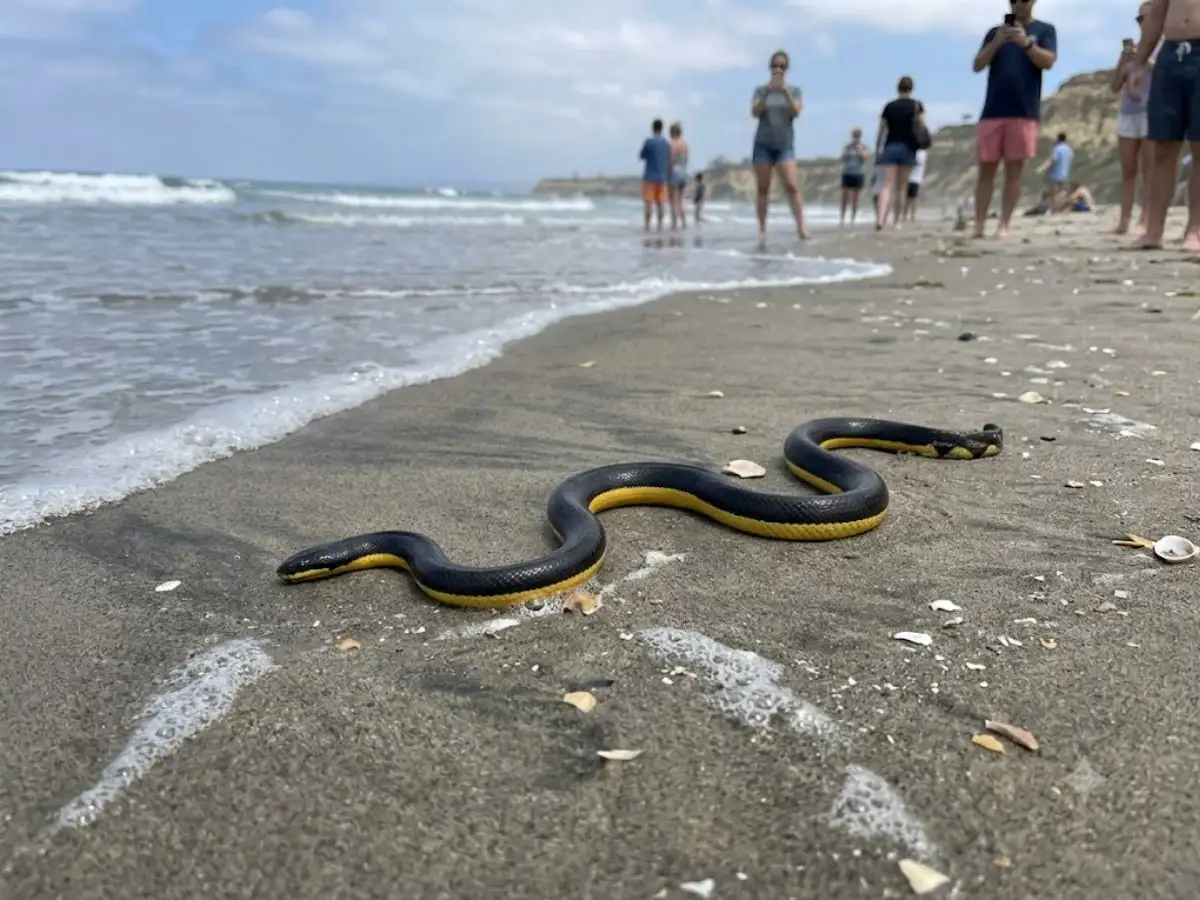
A rare sea snake has turned up on a Southern California beach, giving beachgoers an unusual wildlife encounter and raising an obvious question: how dangerous is it? The snake was spotted at Crystal Cove State Beach in Orange County last week. Video from the encounter showed the animal moving slowly along the beach while people tried to help it back into the water. Experts said the animal strongly resembles a yellow-bellied sea snake, a species known for its potent venom. Officials have not formally confirmed the identification, however.

The sighting is particularly unusual because yellow-bellied sea snakes normally live in warmer tropical waters farther south.

Is the yellow-bellied sea snake poisonous?

Technically, the snake is venomous, not poisonous. A poisonous animal harms you when you eat or otherwise ingest its toxins. A venomous animal delivers toxins through a bite or sting. Yellow-bellied sea snakes have venom that they use to subdue their prey, mainly small fish.

The species' venom can be extremely potent. Sea snake bites can cause neurological symptoms, muscle damage, paralysis and breathing problems, according to the CDC. That sounds frightening. But there is an important distinction between being highly venomous and being a major threat to beachgoers.

Experts say yellow-bellied sea snakes generally are not aggressive toward people. Their small mouths and behavior make bites uncommon, with handling being a major risk.

Why was a tropical sea snake found in California?

Yellow-bellied sea snakes are adapted to warm ocean waters and have a wide distribution across tropical parts of the Pacific and Indian oceans. Southern California is far outside the species' usual range, which makes the recent sighting notable.

Experts have linked previous California appearances to unusually warm ocean conditions, including El Niño events. Five of the six documented California sightings mentioned by experts have occurred during previous El Niño periods, according to reporting on the latest sighting.

The current year has also brought unusually warm-water marine visitors to Southern California. Experts pointed to the possibility of El Niño and warmer ocean conditions behind the unusual sightings. This is not the first time California has seen one. The species has been documented in the state several times since 1972, although sightings remain very rare.

What should you do if you see one?

The most important rule is simple: do not touch it. Even if the snake appears sluggish, injured or stranded, avoid picking it up or attempting to push it into the ocean. A snake that looks harmless can still bite if it feels threatened.

Experts recommend keeping a safe distance and contacting local wildlife authorities or beach officials rather than handling the animal yourself. If it is safe to do so, you can take photographs or video from a distance. Details about the location and appearance can help wildlife experts document rare sightings. Do not surround the snake, poke it with a stick or try to move it with your hands.

What happens if a sea snake bites you?

A bite from a venomous sea snake should be treated as a medical emergency, even if the bite initially appears minor. Sea snake bites can sometimes cause little pain at first, while serious symptoms may develop later. Possible effects include muscle pain or damage, difficulty swallowing or breathing, muscle spasms and paralysis. Anyone who believes they have been bitten should seek emergency medical attention immediately rather than waiting for symptoms to appear.

Are California beaches unsafe because of the snake?

One rare sighting does not mean California beaches are suddenly filled with sea snakes. The yellow-bellied sea snake is an unusual visitor to Southern California, and experts say the animals are generally reluctant to bite people unless handled. Previous sightings have also been extremely limited. For beachgoers, the practical advice remains straightforward: look, don't touch. The latest encounter is more of a wildlife curiosity than a reason to panic. But because the species carries potent venom, curiosity should stop well short of picking one up.

Sign up to read this article
Read news from 100's of titles, curated specifically for you.
Already a member? Sign in here
Related Stories
Top stories on inkl right now
One subscription that gives you access to news from hundreds of sites
Already a member? Sign in here
Our Picks
Fourteen days free
Download the app
One app. One membership.
100+ trusted global sources.