
Get all your news in one place.
100's of premium titles.
One app.
Start reading
The Economic Times
The Economic Times

Yayoi Kusama once sold 1,500 mirrored balls for $2 each at the 1966 Venice Biennale without an official invitation; decades later one of her artworks sold for $10.5 million

Japanese avant-garde artist Yayoi Kusama, known for her polka dots, mirrored installations and pumpkin sculptures, died on August 14, 2026, at the age of 97, according to the Yayoi Kusama Museum. Reuters reported her death on August 27, 2026.

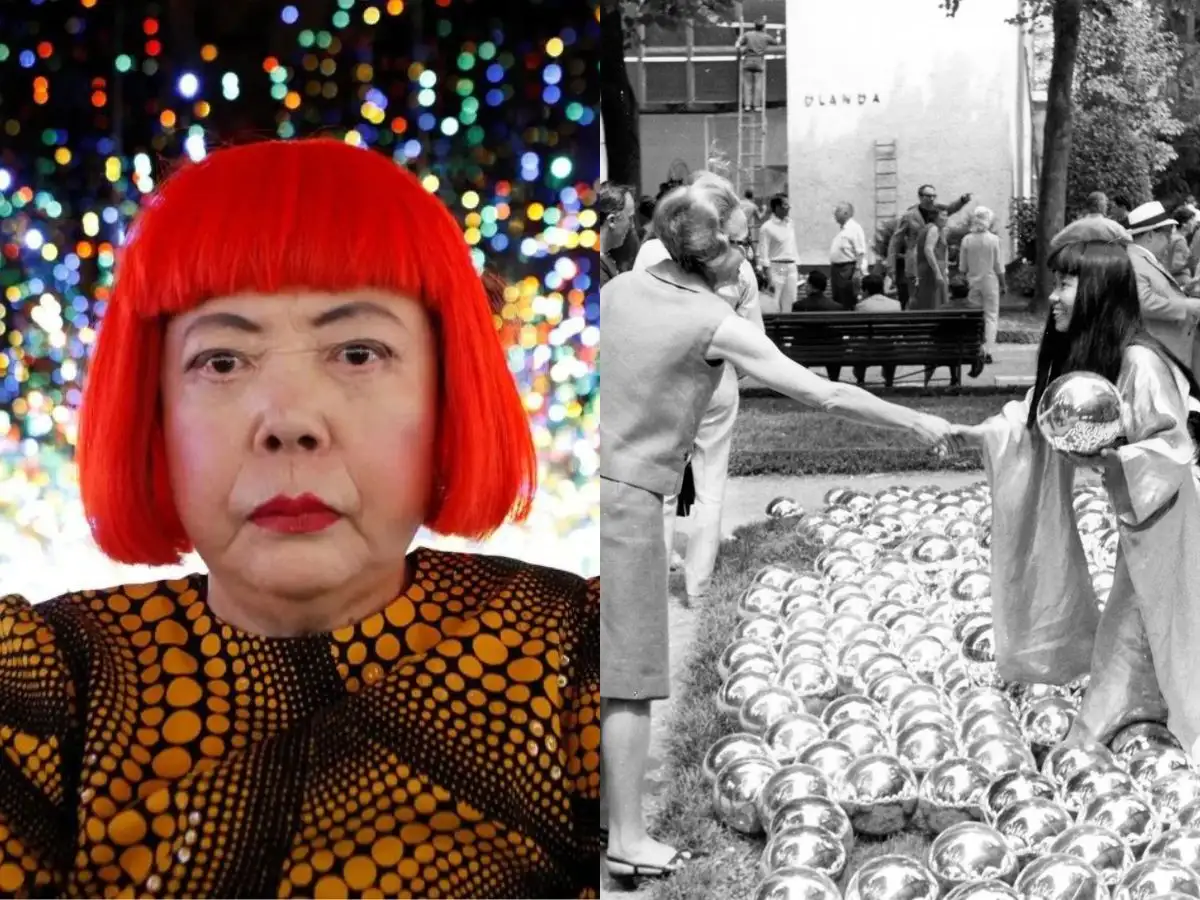
Decades before Kusama became a globally recognised artist whose works commanded millions of dollars, she staged an unusual art sale at the Venice Biennale. In 1966, she installed 1,500 mirrored plastic balls outside the Italian Pavilion at the 33rd Venice Biennale, despite not receiving an official invitation to exhibit.

READ ALSO: Yayoi Kusama saw dots everywhere: Japanese artist returned from US in 1973, lived voluntarily in a psychiatric hospital from 1977 until her death

Kusama sold the mirrored balls for about $2

Kusama called the installation Narcissus Garden . She stood among the reflective balls wearing a gold kimono and put up signs reading “Narcissus Garden, Kusama” and “Your Narcissism for Sale”.

She then offered the balls to visitors for 1,200 Italian lire, or about $2 each. The action turned the installation into a combination of artwork, performance and direct sale.

The mirrored surfaces reflected visitors, the surrounding buildings and the landscape. The work's title referred to the Greek myth of Narcissus, who became obsessed with his own reflection. Kusama used that idea to make viewers repeatedly confront their own images.

Why did Kusama sell them?

The sale also challenged the commercial side of the art world. By putting an individual price on parts of an installation displayed at one of the world's major art events, Kusama questioned how the art world assigned value to creative work.

Biennale officials eventually stopped her from selling the balls. However, the installation remained and attracted international press attention. Art historians have since viewed the 1966 work as both a form of self-promotion and a criticism of the commercialisation of contemporary art.

The contrast with Kusama's later career became striking. The artist who once sold individual pieces of an installation for about $2 eventually saw her paintings reach multimillion-dollar prices.

From $2 mirrored balls to a $10.5 million painting

Reuters, in its report on Kusama's death, noted that her 1959 painting Untitled (Nets) sold for $10.5 million in 2022. The figure highlights the dramatic change in the value attached to Kusama's work over the course of her career.

Kusama also eventually returned to the Venice Biennale in a very different position. In 1993, she officially represented Japan at the event, nearly three decades after her unofficial Narcissus Garden intervention.

Her 1966 installation has also continued to live on. Later versions of Narcissus Garden have been displayed around the world, with newer iterations using stainless-steel spheres instead of the original plastic balls.

The story of the $2 mirrored balls therefore offers a striking glimpse into Kusama's early career: an artist without an official Biennale invitation turned a field of 1,500 reflective spheres into an unconventional critique of the art market. Decades later, her name had become powerful enough for a single Nets painting to fetch $10.5 million at auction.

READ ALSO: Who was Yayoi Kusama? Japanese 'Polka-Dot Queen' who challenged art with nude happenings dies at 97; Her painting 'Untitled (Nets)' fetched nearly $10.5 million at auction

Who was Yayoi Kusama?

Yayoi Kusama was a Japanese avant-garde artist born in Matsumoto in 1929. She became known worldwide for her polka-dot paintings, pumpkin sculptures, infinity mirror rooms and immersive installations. Reuters reported that Kusama moved to New York in 1957, where she gained recognition for conceptual art, soft sculptures, body-painting events and anti-war activism.

Kusama drew heavily on hallucinations she experienced throughout her life, transforming recurring images of dots, lights and flowers into art. She returned to Japan in 1973 and continued creating art while living voluntarily in a psychiatric hospital, where she maintained a daily painting practice.

Her career eventually turned her into one of the world's best-known contemporary artists, with her works attracting major international attention and multimillion-dollar auction prices.

Sign up to read this article
Read news from 100's of titles, curated specifically for you.
Already a member? Sign in here
Related Stories
Top stories on inkl right now
One subscription that gives you access to news from hundreds of sites
Already a member? Sign in here
Our Picks
Fourteen days free
Download the app
One app. One membership.
100+ trusted global sources.







