Get all your news in one place.
100's of premium titles.
One app.
Start reading
International Business Times UK
World
Audrey Liza M. Nolasco

'Worrisome': US Homeland Security Chief Raises Alarm Over Iranian Nationals Linked to IRGC Crossing Canada Border

US Homeland Security raises alarm over alleged Iranian nationals with IRGC links crossing the Canada border, sparking a ‘worrisome’ security warning. (Credit: WIKICOMMONS)

A fresh wave of controversy has emerged after claims from the US Department of Homeland Security intensified fears around Iranian nationals' IRGC US border allegations, with officials suggesting that some individuals linked to Iran's Islamic Revolutionary Guard Corps may be attempting to enter the United States through Canada.

The issue gained traction after Homeland Security Secretary Markwayne Mullin raised concerns during an interview on Fox News Sunday Morning Futures, pointing to what he described as an unusual rise in Iranian nationals attempting to cross the northern border.
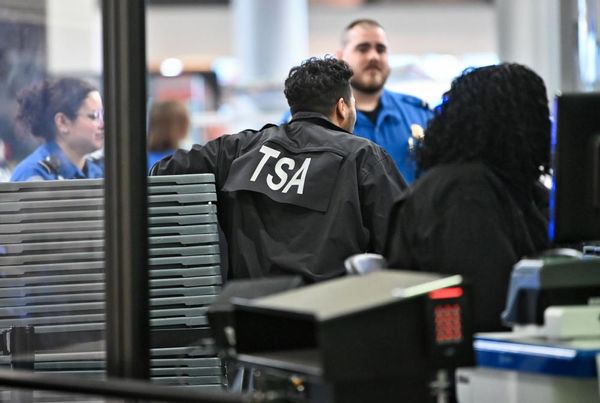
What makes the allegation particularly sensitive is its timing, with global attention already turning toward major international sporting travel, including World Cup-related movement, which officials say can complicate screening and enforcement efforts.

Northern Border Arrests And Rising Claims

According to Mullin, US Homeland Security northern border arrests involving Iranian nationals have been increasing daily, a shift he linked to tighter enforcement at the southern border.

He also emphasised cooperation with Canadian authorities, framing Canada-US border security cooperation as a key factor in intercepting individuals flagged during attempted crossings.

However, while the claim points to a rising operational trend, officials have not publicly released detailed breakdowns showing how many of those arrested are directly linked to Iranian nationality versus broader immigration enforcement categories.

IRGC Allegations And Evidence Questions

The most explosive element of the remarks centers on alleged connections to the Islamic Revolutionary Guard Corps, or IRGC, an Iranian military organization long designated by the US as a security concern.

Mullin described some individuals as having links to what he called a highly ideological structure, but did not provide publicly available documentation or case-level evidence supporting those assertions.

This lack of transparency has fueled scrutiny around IRGC-linked individuals, the United States claims, especially among analysts who argue that without clearer verification, it is difficult to separate confirmed intelligence findings from broader risk-based screening.

The conversation escalated further after Mullin referenced a specific travel-related incident involving a person allegedly prevented from boarding a flight, with claims of ties to Iran's football leadership structure. However, key identifying details have not been independently confirmed or publicly released by authorities.

Iran Rejects Claims

In direct response, the Football Federation of the Islamic Republic of Iran issued a forceful denial, rejecting the allegations outright and describing them as a 'blatant and undeniable lie.'

The federation also challenged the credibility of the narrative involving football administration and travel restrictions, insisting there is no factual basis for suggestions that Iranian sports officials were involved in any such attempted entry scenario.

This sharp denial has intensified diplomatic tension and placed the dispute squarely within the broader Iran Football Federation denial statement context, where competing narratives are now circulating without shared evidentiary agreement.

Data Surge Raises Fresh Questions

Adding another layer to the debate, US Customs and Border Protection data has been cited showing a rise in arrests involving individuals flagged for potential terror-related concerns, reportedly increasing from 4,011 in fiscal year 2025 to 8,121 in fiscal year 2026.

While these figures are central to US border terror-related arrests statistics discussions, they also raise interpretive questions. Authorities have not fully clarified what qualifies as a 'terror tie,' leaving open whether these cases reflect confirmed security threats, preliminary screenings, or broader administrative flagging systems.

This ambiguity has become a key friction point in public understanding, particularly as the numbers are now being used to support broader policy arguments about border security effectiveness.

What It All Means

At the center of the debate is a widening gap between official claims and publicly available verification. On one side, US officials point to rising interception trends and heightened vigilance at the northern border. On the other hand, critics and foreign counterparts argue that key allegations remain insufficiently substantiated in public disclosures.

The situation is further complicated by the symbolic weight of the World Cup security concerns in the United States narrative, where global mobility, high-profile travel, and security screening intersect under intense international scrutiny.

For now, the story sits in a familiar but volatile space, where national security concerns, geopolitical rivalry, and public messaging converge, often without the same level of evidentiary clarity.

Sign up to read this article
Read news from 100's of titles, curated specifically for you.
Already a member? Sign in here
Related Stories
Top stories on inkl right now
One subscription that gives you access to news from hundreds of sites
Already a member? Sign in here
Our Picks
Fourteen days free
Download the app
One app. One membership.
100+ trusted global sources.