Get all your news in one place.
100’s of premium titles.
One app.
Start reading
International Business Times UK
World
Maybelyn B. Paden

World War 3 Fears: Kremlin Demands Firm Response As UK Spy Planes Help Seize Vessel

World War 3 Fears: Kremlin Demands Firm Response As UK Spy Planes Help Seize Vessel (Credit: Wikimedia Commons)

Kremlin rhetoric has surged to dangerous new levels after US forces, supported by British reconnaissance aircraft, seized a Russian-flagged oil tanker in the Atlantic.

Within hours, senior Russian lawmakers were openly invoking nuclear doctrine and calling for attacks on Western vessels.
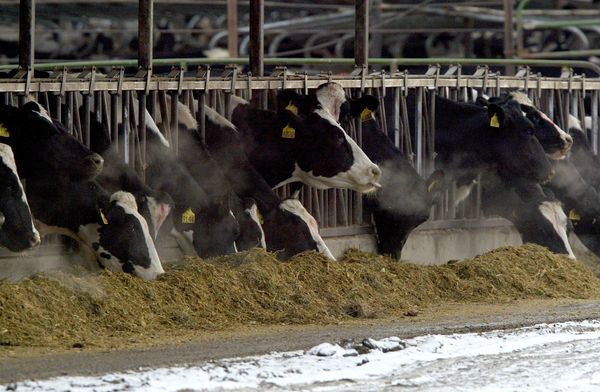
As Moscow lashes out and Ukraine endures renewed blackouts under winter skies, the incident has sharpened fears in London and Washington that a regional confrontation could tip into something far more severe.

Hardline Russian lawmaker Alexei Zhuravlev has demanded that President Vladimir Putin direct 'attack with torpedoes' and 'sink a couple of American Coast Guard boats' in response to the Marinera operation, dismissing the joint US-UK seizure as 'outright piracy'.

More provocatively, he argued that Russia's military doctrine explicitly permits nuclear weapons use in such circumstances.

'There is no doubt that the response must be firm and swift,' he declared, his words carrying the unmistakable weight of someone speaking from the corridors of power', Express UK reported.

US Special Forces Seize Rogue Oil Tanker In Dramatic Mid-Atlantic Operation (Credit: Image: X)

The tanker interception, carried out with British reconnaissance support, represented a direct affront to Moscow's shadow fleet operations—the informal network through which Russia circumvents international sanctions on its oil exports.

It was precisely the kind of humiliation that Putin has repeatedly warned the United States against. Yet as the Russian leader retreated from public view, his subordinates seemed determined to make their voices heard, each competing to articulate the most extreme response imaginable.

Russia Attacks Ukrainian Cities

What followed the Kremlin's threats was a brutal reminder of Russia's asymmetrical power. Unable to directly confront Western naval forces, Putin's military unleashed a devastating campaign against Ukrainian energy infrastructure, plunging entire regions into darkness in the depths of winter. The Dnipropetrovsk and Zaporizhzhia regions were left almost completely without electricity, with critical infrastructure forced to rely on backup systems as temperatures hovered just above freezing.

The human toll was immediate and catastrophic. More than one million people in Dnipropetrovsk woke to darkness, whilst hospitals operated on generators and trains ground to a halt.

In Kryvyi Rih, the birthplace of President Volodymyr Zelensky, a massive drone strike wounded at least eight civilians. The imagery of blackened cities and shuttered streets became Russia's answer to American audacity—a message sent not through diplomatic channels but through the suffering of five million ordinary Ukrainians huddling in the cold.

World War 3 Fears Mount As Hardline MPs Favour Escalation

Yet the Kremlin's violent response appeared to embolden rather than satisfy Russia's hardline faction.

Lieutenant General Andrey Gurulev, a reserve commander and deputy chairman of parliament's defence committee, went further still. He suggested imposing sanctions on all ships heading to Black Sea ports, including seizing and potentially sinking Western vessels.

More alarmingly, he proposed targeting Western military manufacturers directly using nuclear-capable systems, singling out German arms maker Rheinmetall for potential strikes—an escalation that would effectively drag NATO into direct conflict.

Dmitry Medvedev, the former Kremlin president and current deputy head of the security council, issued a thinly veiled warning to the Trump administration: 'Don't play games with Russia'.

Even channels normally aligned with Kremlin narratives openly mocked Putin's apparent paralysis, with some milbloggers suggesting he had lost the political will to respond adequately.

What remains unclear is how the West intends to respond to these nuclear threats. Putin's silence—broken only by the screams of missiles and the cries of freezing civilians—suggests a calculation far deeper than mere anger.

The question haunting policymakers in Washington, London and beyond is whether Russia's threats are merely sabre-rattling or a genuine prelude to the unthinkable.

Sign up to read this article
Read news from 100’s of titles, curated specifically for you.
Already a member? Sign in here
Related Stories
Top stories on inkl right now
One subscription that gives you access to news from hundreds of sites
Already a member? Sign in here
Our Picks
Fourteen days free
Download the app
One app. One membership.
100+ trusted global sources.