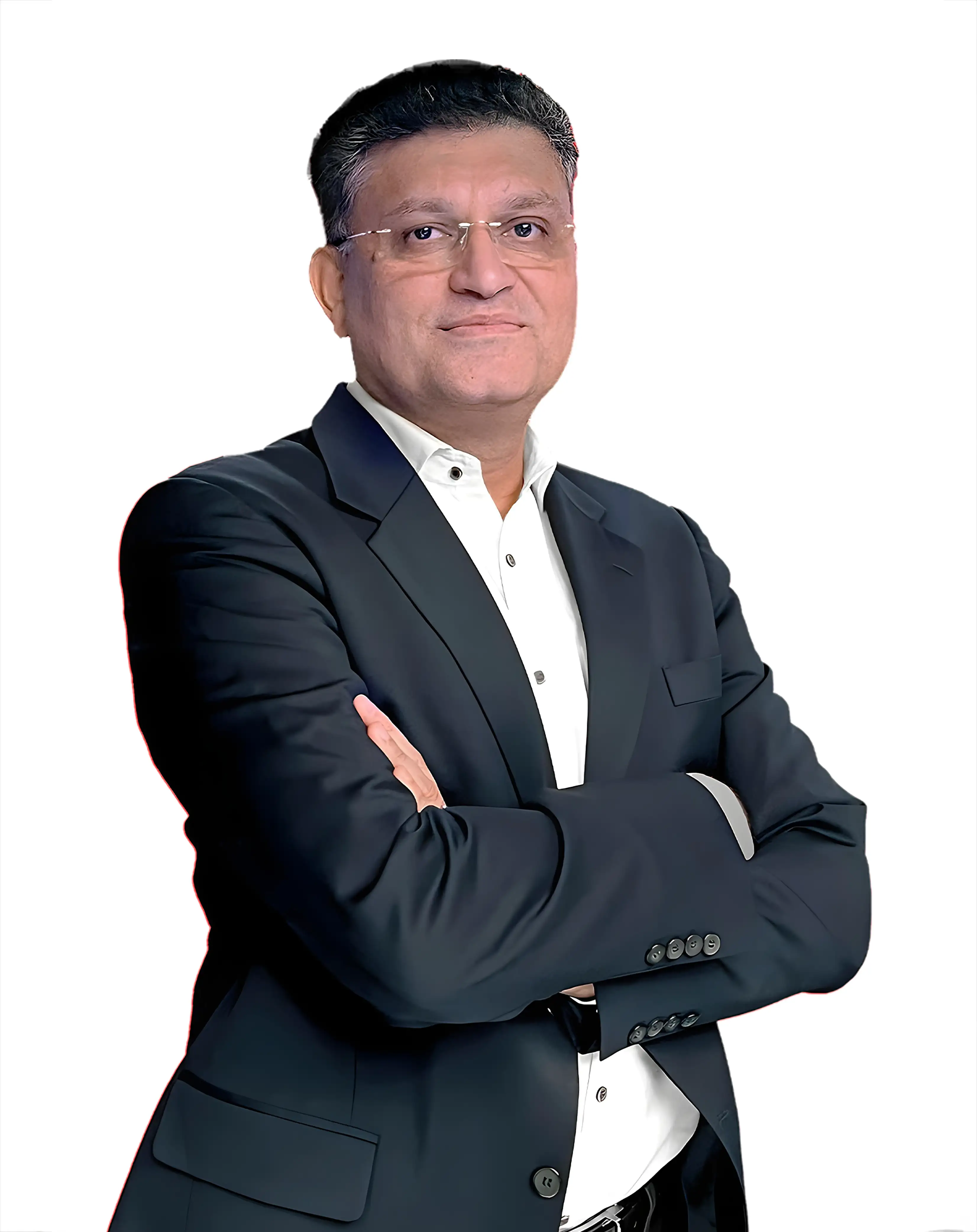
India’s logistics industry serves as a key enabler for micro, small, and medium enterprises (MSMEs) in the country. Ahead of the World MSME Day 2026, The Economic Times Digital engaged in a conversation with Ketan Kulkarni, Managing Director & CEO of Allcargo Logistics, a multinational logistics conglomerate, regarding the opportunities and challenges shaping MSMEs in India. Kulkarni discussed how evolving logistics infrastructure, digitalisation, and integrated supply chains are transforming MSME competitiveness while also sharing insights into Allcargo’s strategy, technology investments, and expansion across India’s industrial clusters. Edited excerpts:
ET: Despite their significant contribution to India’s gross domestic product (GDP) and exports, MSMEs continue to face fragmented supply chains and limited market access. What are the biggest logistics challenges that could affect their competitiveness over the next five years, and how should they address them?

Ketan Kulkarni (KK): MSMEs are central to India's ambition of becoming a global manufacturing hub, contributing over 30% of GDP and nearly 49% of the country’s merchandise exports. To sustain this momentum over the next five years, a few fundamental logistics challenges must be addressed.
The first challenge is supply-chain fragmentation. Many MSMEs continue to rely on multiple service providers for transportation, warehousing, and distribution—often leading to higher costs, operational inefficiencies, and inconsistent service levels.
The second is gaining access to wider markets. As businesses seek to expand beyond their regional footprint, they require reliable logistics partners that can deliver consistent service across geographies.
The third challenge is balancing growth with cost efficiency. Businesses must optimise inventory levels, reduce logistics inefficiencies, and improve working capital utilisation to remain competitive amid evolving customer expectations.
At the same time, the opportunity is substantial. As logistics infrastructure improves and organisations expand deeper into industrial clusters, MSMEs will be better positioned to access larger markets, improve operational efficiency, and participate more effectively in both domestic and global value chains.
ET: As manufacturing expands beyond metro cities and initiatives such as PM Gati Shakti, the National Logistics Policy, ONDC, and logistics parks gain momentum, how do you see India’s logistics ecosystem evolving to support the next phase of MSME growth?
KK: India’s logistics ecosystem is undergoing a significant transformation, driven by infrastructure development, policy reforms, and digital enablement. While economic activity was once concentrated around a few metropolitan centres, manufacturing is now expanding into Tier II and Tier III cities. Government initiatives like PM Gati Shakti, the National Logistics Policy, Dedicated Freight Corridors, multimodal logistics parks and ONDC are laying the foundation for an integrated and efficient logistics network.
A particularly encouraging development is the steady improvement in logistics efficiency, which is enhancing India’s competitiveness and creating new opportunities for MSMEs. The emergence of multimodal transportation corridors and logistics parks will strengthen connectivity between production centres, consumption markets and export gateways, while reducing transit time and logistics costs.
Digital platforms will also play a critical role. For example, ONDC has the potential to democratise market access for smaller businesses by enabling them to connect with customers beyond their traditional geographies. As manufacturing becomes more geographically distributed, logistics will play an increasingly important role in enabling economic growth. Businesses will increasingly seek partners that can provide reliable connectivity, operational consistency and nationwide reach, helping them scale efficiently in a rapidly evolving market environment.
ET: How is growing connectivity to Tier II and Tier III markets changing the opportunities available to MSMEs across India?
KK: One of the most significant shifts underway in India is the emergence of Tier II and Tier III markets as both manufacturing and consumption hubs. For MSMEs in these regions, the primary challenge has been access to markets, rather than manufacturing capability. This is where connectivity can become a powerful growth enabler. Through Allcargo’s Extended Reach (AER) network, which covers 100% of India’s PIN codes, businesses can connect with customers, suppliers, and markets across the country without having to invest heavily in their own distribution infrastructure.
As economic activity continues to deepen beyond the metros, dependable logistics networks will play a critical role in supporting entrepreneurship, regional development, and MSME growth. For many businesses, connectivity today is no longer just an operational requirement; it is a key driver of competitiveness and market expansion.
ET: What is driving the increasing adoption of integrated supply-chain solutions among MSMEs and mid-sized businesses, and how are their logistics requirements evolving?
KK : What we are witnessing reflects the evolving nature of MSMEs and mid-sized enterprises as they expand across geographies and customer segments. Once viewed primarily as a transportation function, logistics is now increasingly being recognised as a strategic lever for business growth, customer service, and operational efficiency.
Historically, many businesses managed warehousing, transportation and inventory planning through multiple service providers. However, today’s rising business complexity, geographic expansion and the need for better inventory management are driving demand for integrated supply-chain solutions. Companies are looking for a single logistics partner that can offer warehousing, transportation, distribution, inventory management and value-added services under one roof. Such integrated models help improve operational efficiency, optimise inventory levels, reduce costs and enhance service consistency.
We are also seeing growing demand for technology-enabled supply chains. The growing demand for real-time visibility, data-driven insights, and faster decision-making capabilities is driving improvements in supply chain planning and responsiveness. As supply chains become more sophisticated, technology is emerging as a key differentiator.
ET: With Allcargo Logistics’ initiatives in MSME clusters, such as Varanasi and Ahmedabad, what changes are you seeing in the way local businesses approach market expansion, speed-to-market, and customer expectations?
KK: The mindset of local businesses has evolved significantly over the past few years. Earlier, many MSMEs were focused primarily on regional markets, as national expansion often came with challenges related to distribution, inventory management, and transit reliability. Today, stronger logistics infrastructure and improved connectivity are enabling businesses to pursue growth opportunities across the country. In clusters such as Varanasi, Ahmedabad, and several other emerging manufacturing hubs, businesses are actively exploring new markets while seeking to maintain consistent service standards. As a result, speed-to-market has become an increasingly important competitive differentiator.
We are also seeing businesses leveraging faster logistics networks to enter higher-value supply chains with critical delivery timelines, particularly in sectors such as engineering components, healthcare products, electronics and specialised manufacturing. Today, businesses recognise that reliable deliveries and service consistency can be powerful competitive differentiators. Increasingly, companies from smaller cities are competing not only on product quality or price, but also on their ability to serve customers efficiently across geographies.
ET: As Allcargo continues to strengthen its domestic logistics network and technology capabilities, where do you see the biggest opportunities emerging for India’s MSMEs and what will define the next phase of their growth journey?
KK: The past decade has been transformative for the Indian MSME sector, driven by manufacturing growth, infrastructure investments, digitalisation and policy initiatives, such as Make in India. Together, these developments are creating opportunities that would have been difficult to imagine a decade ago.
One of the biggest opportunities is in enabling deeper MSME participation in both national and global supply chains. Improved logistics networks and connectivity have enabled businesses that were previously constrained by geography to access broader markets. Industries such as engineering, chemicals, consumer products, healthcare, electronics and specialised manufacturing are particularly well positioned to benefit from this shift.
The next phase of growth will be defined by resilience, global competitiveness, and deeper integration into larger value chains. As supply chains become increasingly interconnected, companies will need to consistently meet quality, delivery, and compliance requirements while remaining agile in a rapidly evolving market. We believe that the future belongs to those who combine manufacturing excellence with strong, agile supply chains. Our aim is to create an integrated logistics ecosystem that enables MSMEs to scale efficiently, access new markets, and unlock opportunities within India and internationally.