Get all your news in one place.
100's of premium titles.
One app.
Start reading
The Economic Times
The Economic Times

World Bank names Nobel laureate Michael Kremer as next chief economist

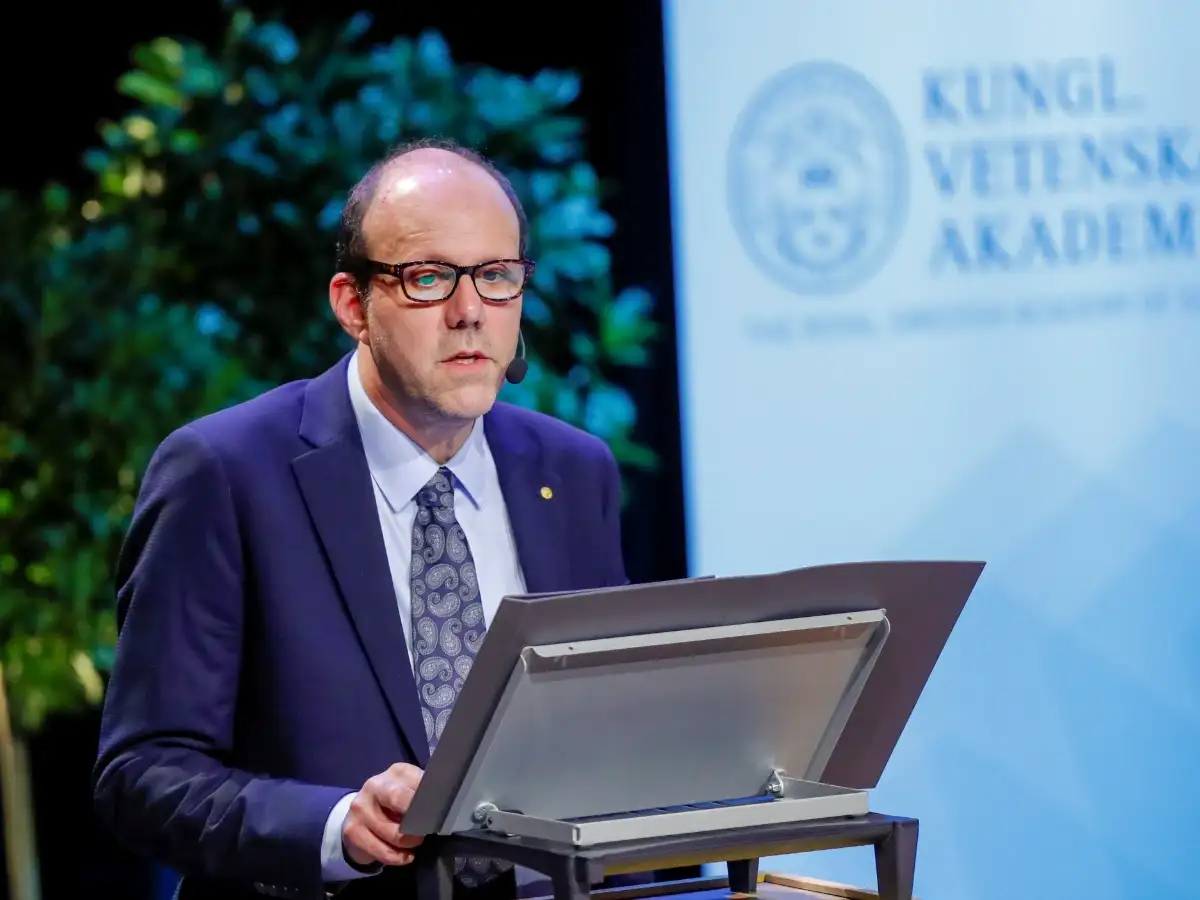
The World Bank has appointed Nobel Prize-winning economist Michael Kremer as its next chief economist, bringing one of the world's leading development economists into the role as emerging economies contend with higher borrowing and energy costs and declining development assistance.

Kremer, 61, will take charge on October 1, succeeding Indermit Gill, who retired last month. His appointment comes shortly before the annual meetings of the World Bank and International Monetary Fund in Bangkok, Thailand.

Also Read: Indian economy growing faster than it looks? World Bank’s Neelkanth Mishra pushes back on doubts over 7.8% growth

A professor at the University of Chicago, Kremer shared the 2019 Nobel Prize in Economic Sciences with Esther Duflo and Abhijit Banerjee for their experimental approach to alleviating global poverty.

"Michael has spent his career not just identifying what works in development, but proving it at scale - and that is exactly the kind of thinking we need," World Bank President Ajay Banga said in a statement, reported Reuters.

"He joins us at a time when the world needs bold solutions to its most urgent development challenges, including creating jobs that meet the aspirations of more than 1.2 billion young people reaching working age in the coming decade."

Kremer takes over amid development challenges

Kremer will join the World Bank at a difficult time for developing economies, which are dealing with rising interest rates and higher energy prices following the US war against Iran.

Development financing has also come under pressure. Official development assistance fell 23% in 2025, the steepest decline on record, with the US accounting for the largest share of the reduction, as per the Reuters report.

Kremer will become the first economist to enter the World Bank's chief economist position having already won a Nobel Prize. Former chief economists Joseph Stiglitz and Paul Romer received the award after serving at the institution.

Kremer currently directs the Development Innovation Lab at the University of Chicago, where his work spans education, health, water, finance and agriculture in developing economies. He previously taught economics at Harvard University.

"The World Bank Group has tremendous research capacity to develop and test innovative solutions to development problems-and the operational reach to scale them up and improve people's lives," Kremer said in a statement.

He also said that while the world faces enormous challenges, emerging technologies offer opportunities to accelerate economic growth.

Also Read: BRICS 2026 calls for bigger emerging-market voice in IMF, World Bank; criticises unilateral tariffs

From poverty research to vaccines and agriculture

Much of Kremer's career has focused on testing whether development interventions work in practice and finding ways to deploy successful programmes at scale.

His research on deworming schoolchildren found a sharp reduction in absenteeism and helped spur governments across Africa and South Asia to provide 2 billion treatments since 2014.

Kremer and British economist Rachel Glennerster, his wife, also pioneered the use of Advance Market Commitments. These are binding donor commitments designed to encourage pharmaceutical companies to research, develop and manufacture medicines for lower-income countries. The approach contributed to the development of a vaccine targeting the leading cause of pneumonia globally.

His work has also extended to artificial intelligence-based agricultural weather forecasting. Kremer co-founded Precision Development, which uses digital technology to help smallholder farmers improve productivity and incomes.

In 2010, Kremer co-founded Development Innovation Ventures, a fund administered by the US Agency for International Development. The programme was shut down by US President Donald Trump after he returned to the White House last year.

Earlier World Bank engagement

Kremer has previously argued for changes in how development institutions support innovation. In a 2024 keynote at a World Bank event titled "The Great Incoherence: Growth and Human Development in an Era of Stagnation," he called for reforms to help countries achieve ambitious development goals.

His proposals included financing innovative pilot projects and creating incentives for research into new technologies, themes that Banga has also emphasised since becoming World Bank president in 2023.

Kremer received a MacArthur "genius grant" in 1997 and is a member of the National Academy of Sciences and a fellow of the American Academy of Arts and Sciences.

In the early 2000s, he also proposed a framework aimed at preventing authoritarian rulers from extracting wealth from their countries while leaving future generations responsible for illegitimate or "odious" debt.

Kremer and Glennerster joined Giving What We Can when the nonprofit was launched in 2009. Members of the organisation pledge to donate 10% of their income to effective charities. Glennerster, who has previously worked for the UK government and the International Monetary Fund, became president of the Center for Global Development in Washington in September 2024.

Sign up to read this article
Read news from 100's of titles, curated specifically for you.
Already a member? Sign in here
Related Stories
Top stories on inkl right now
One subscription that gives you access to news from hundreds of sites
Already a member? Sign in here
Our Picks
Fourteen days free
Download the app
One app. One membership.
100+ trusted global sources.