Get all your news in one place.
100's of premium titles.
One app.
Start reading
The Conversation
The Conversation
Alison McAfee, Postdoctoral Fellow, Applied Ecology, University of British Columbia; North Carolina State University

Worker honey bees can sense infections in their queen, leading to revolt

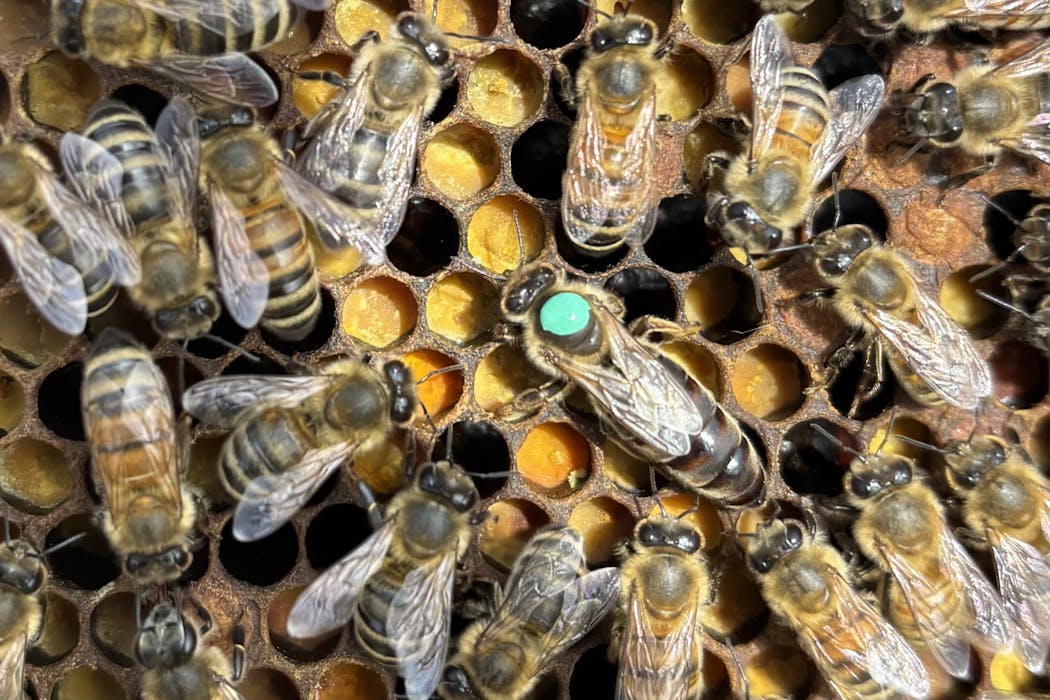
A queen honey bee (marked blue) surrounded by her workers. A typical queen bee lays thousands of eggs a day to keep the hive going. (Abigail Chapman)

When the results of the Canada’s national honey bee colony loss survey were published in July 2025, they came as no surprise. According to the Canadian Association of Professional Apiculturists, an estimated 36 per cent of Canada’s 830,000 honey bee colonies had perished over the winter.

These figures used to make headlines. But after almost two decades of the same story ― colonies dying in the winter, beekeepers struggling to rebuild, somewhat succeeding, rinse and repeat ― the sad statistics are no longer news, and we are still working out why the cycle persists.

Sign up to read this article
Read news from 100's of titles, curated specifically for you.
Already a member? Sign in here
Related Stories
Top stories on inkl right now
One subscription that gives you access to news from hundreds of sites
Already a member? Sign in here
Our Picks
Fourteen days free
Download the app
One app. One membership.
100+ trusted global sources.