Get all your news in one place.
100's of premium titles.
One app.
Start reading
AAP
AAP
Politics
Maeve Bannister

Women seek brighter way forward for equality at summit

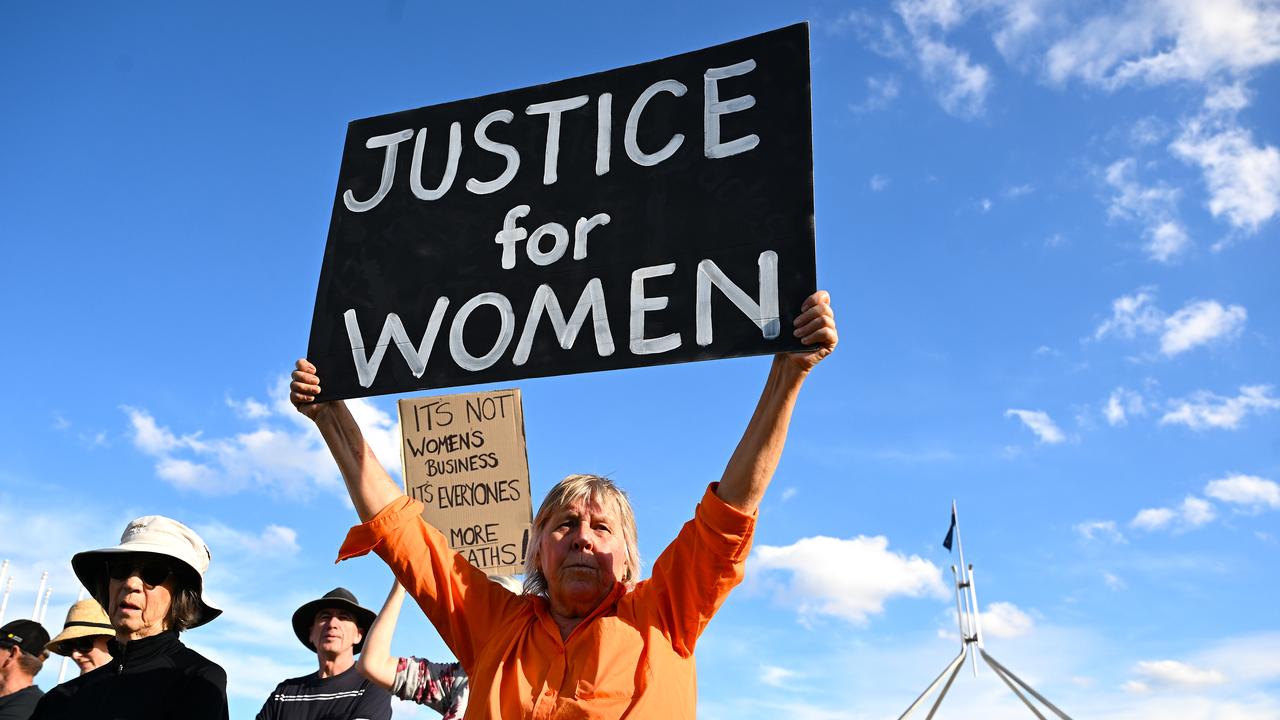
Women's rights campaigners say now is the time for optimism, despite the global challenges. (Lukas Coch/AAP PHOTOS)

Thousands of feminists - among them former political leaders, current policymakers, advocates and grassroots organisers - will gather for a major gender-equality conference to discuss priorities, plans and challenges for the future of the movement. 

Women Deliver, a global organisation advocating for gender equality, will host its 2026 conference in Melbourne this week, the first time the event is being held in the Oceanic Pacific region. 

More than 5000 delegates from 185 countries are signed up to attend conference, which was last held in Rwanda in 2023. 

The organisation was founded in 2007, but Women Deliver president Maliha Khan told AAP there has never been a more timely convening than in 2026.

"If there's ever a time for people who believe in equality, in justice, in peace, security and resolving conflict, in democracy and who believe that the climate crisis is the biggest crisis that's facing humanity, it is now," she said. 

"This is the time for everybody to get together to say that we are not going to be pessimistic ... we actually believe there is an optimistic future.

"The only way we're going to achieve that is for like-minded people who agree on these issues to come together and chart a new way forward."

The conference comes at a time when the rights of women and girls are under threat around the globe, while gender-equality organisations have had their funding rolled back.

In 2025, the United Nations reported that nearly half of all organisations aiding women in crises faced closure within six months, and 90 per cent of those surveyed had reached "breaking point".

The five-day Women Deliver schedule is packed with notable speakers from the political sphere including three former prime ministers - Australia's Julia Gillard, New Zealand's Jacinda Ardern, and Canada's Justin Trudeau. 

gender
Julia Gillard's "misogyny speech" in 2012 became famous around the globe among gender activists. (Lukas Coch/AAP PHOTOS)

Attendees will also have the chance to hear from other global leaders and advocates for gender equality including eSafety Commissioner Julie Inman Grant, United Nations deputy secretary-general Amina J. Mohammed, and Olympic gold medallist Emma McKeon. 

Topics like climate justice, gender-based violence, increasing representation in leadership and advancing women's health will be tackled across hundreds of pre-conference, plenary and side sessions. 

Coinciding with the conference, an open letter calling for immediate action to end gender-based violence has been released, signed by global leaders across politics, civil society, philanthropy, culture and sport.

Signatories include Me Too founder Tarana Burke, United Kingdom Special Envoy for Women and Girls Harriet Harman, and former New Zealand cricket captain Ross Taylor. 

The letter was facilitated by All In, an organisation that unites leaders to accelerate progress on ending gender-based violence.

"At Women Deliver, where global leaders gather to shape the future of gender equality, we face a defining test: whether we will match decades of evidence and advocacy with the scale of action required to forge a future free of gender-based violence," the letter said.

women
It will be the first time the event is being held in the Oceanic Pacific region. (Joel Carrett/AAP PHOTOS)

"With sustained leadership and investment, we know that violence can be prevented.

"And yet, the global response continues to fall dramatically short … accountability is weak, efforts are fragmented, and survivors are too often left out of decision-making processes that impact their daily lives." 

The letter calls for Women Deliver to set concrete actions for policymakers around the world to change the trajectory of gender-based violence.

"There is no neutral position, we either contribute to systems that enable violence, or we help build those that prevent it," the letter said.

The conference will also focus on the next generation of gender-equality advocates, spotlighting young people working in the sector to improve the lives of young women and girls.

While there are strong and positive commitments globally to protect the rights of adolescent girls, too many of those had not been delivered, Women Deliver Collective Action director Julia Fan said.

"We've seen progress on issues like girls' education in the last 10 or 15 years, but in other areas like adolescent pregnancy, it still remains a really critical issue," she said.

The conference would help launch a manifesto calling for a new narrative for adolescent girls globally, Ms Fan said. 

"Girls are leaders, they're rights holders, they are a diverse constituency and they need to be in positions of power to really set the direction and to advocate for themselves," Ms Fan said.

"When we have these strategic moments to convene, it allows us to accelerate the pace and progress of our work and to be more effective.

"The scale and scope of the challenges we face are not something that any one organisation can address on their own, we have to work collectively." 

According to Dr Khan, each speaker and attendee would bring their own perspectives and solutions to gender-equality challenges faced around the world. 

"It's more important than ever that all of us come together, have solidarity, have disagreements, talk through those disagreements and then forge a new way forward," she said.

maliha
Maliha Khan says the women's movement needs to progress through discussions on contentious issues. (AAP PHOTOS)

The final day of the conference will launch the Women Deliver declaration, which will aim to provide a unifying road map towards gender equality that is rooted in care, solidarity and intersectional justice.

The declaration will be the result of more than 650 consultations with people from every continent in the lead up to Women Deliver, along with hundreds of additional conversations during the conference itself. 

"One of the outcomes I would like to emerge from Women Deliver and I would consider it a success is if we no longer allow people to have the same conversations they had five years ago," Dr Khan said.

"This (declaration) will be one of the deep, contentious discussions that we should be having as a movement before we can decide where we move forward to."

Sign up to read this article
Read news from 100's of titles, curated specifically for you.
Already a member? Sign in here
Related Stories
Top stories on inkl right now
Our Picks
Fourteen days free
Download the app
One app. One membership.
100+ trusted global sources.