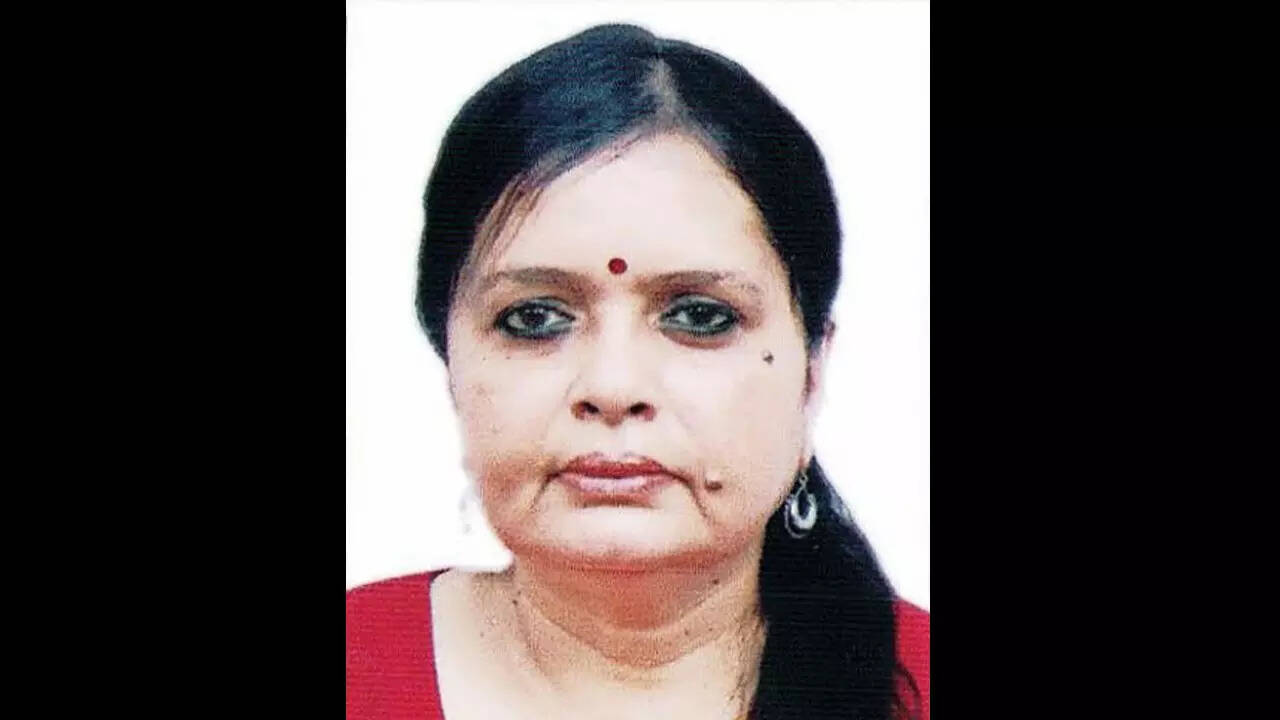
By: Radhika Ramaseshan
The early eighties were when I began journalism in Mumbai. With the benefit of hindsight, I can say that the “urbs prima in Indis” was not ideal territory for a journalist interested in political reporting, and a woman at that, although the city was gender receptive in most other aspects. On the whole, English journalism was not amenable to women reporting on politics, despite the fact that Indian politics was already packed with strong female leaders and ahead of the curve.
The presence of so many powerful women would have guaranteed better access to female journalists and a comfort level that men could not have had. For a woman in pursuit of serious journalism, “development” and feminism opened up windows. However, there was no attempt to locate these subjects in a broader perspective because “development” (which I saw as people-centered and not the sole domain of policy-framers and executors) and women’s issues were embedded in politics. The policies were drafted and framed by the political executive of the day, the laws were debated and passed by Parliament and implemented on the ground by the administration. Three arms were dominated and controlled by the male order.
Bombay and Maharashtra demarcated the range and scope of political journalism. Politics meant writing about the ruling and opposition families from the rural belt and it centered around statecraft involved in manipulating the powerful sugar cooperatives. Language -that is one’s inability to speak and understand Marathi --was cited by editors as a barrier to doing political reporting although most Maharashtra politicians were conversant with Hindi. Truth be told, English language editors in Mumbai had little appetite for Maharashtra’s politics. Bombay was insular and asked for stories on food, fun and fashion with slums and the underworld thrown in for a change-and as entertainment and conscience-salver.
Assam, where I moved to after marriage, was another planet. Politics was ubiquitous, it permeated every sphere one stepped into. In 1985, Assam was in the throes of one of the most significant popular agitations witnessed in Independent India. The ramifications of the “movement” calling for the identification and deportation of “illegal” migrants (read Bengalispeaking, Muslim Bangladeshis) , spearheaded by the All Assam Students’ Union or AASU, are felt even today. The “movement” shaped Assam’s politics for time to come.
My first serious encounter with religious and ethnic bigotry took place in Assam and, indeed, the other NorthEast states I covered. Sure, Mumbai had its communal underbelly -the 1984 BombayBhiwandi riots and the attacks on Sikhs in Maharashtra’s smaller towns the same year after Indira Gandhi’s assassination were manifestations-which ruptured every now and then. But in the ‘80s at least, the faith divide apparently did not tear society and polity asunder to the extent it did 10 years later. Mumbai had a way of subsuming hatred and alienation in a larger mainstream that allowed space for business as usual and a working relationship between communities.
Assam was a different kettle of fish. The media was divided along religious and ethnic lines. One derived a different picture of an episode of violence from the Assamese-owned English media and a qualitatively different one from the Bengali owned media. It didn’t make sense to put two contradictory versions together and get the big picture, so the best course was to travel to the trouble spots and assess things.
Using my maiden Tamil surname helped. Every community opened up because I was slotted as a “neutral” journalist. However, when the word spread in Dispur and Guwahati that my spouse is Bengali, I noted a perceptible change in attitudes. It was an early lesson that truth is far more complex than what we are used to seeing on first glance. It was a challenge to overcome the reservations and doubts manifested by civilians and politicians, convince them of one’s credentials and turn out a story that was rounded. It was tough at times and imparted valuable lessons and precepts.
From Guwahati to Lucknow, our next posting, meant entry into another world that blooded me fully in politics, with another set of lessons to learn, often the hard way. I found Uttar Pradesh’s politicians fascinating, each for a different reason. When we arrived in Lucknow in 1989, ND Tiwari was about to demit office as the chief minister of the last government the Congress has had since. He was smooth and suave like most of his Brahmin peers. Caste was as critical a determinant of UP politics as religion and class. Tiwari’s successor, Mulayam Singh Yadav, was rough hewn to start with but represented a very important strand of heartland politics which the BJP grasped and used to its full advantage.
My UP stint lasted from 1989 to 1994 which I regard as the most turbulent years of its politics, marked by religious and caste tensions, bigotry and a partisan language media but a non-BJP spectrum that was aggressive in its approach towards the BJP. There was none of the defensiveness that marked the non-BJP parties’ attitude towards Muslims in those years. However, those years in UP strengthened my resolve to stick to political journalism.
Delhi was our ?nal port of call in the voyage. Political coverage was principally about figuring out the games played by leaders and the movers and shakers to rise and stay afloat in the jungle of realpolitik. Delhi’s political journalism has its strengths and weaknesses.
It enlarges one’s perspective on politicians and events and drives home the deceptiveness of perceptions because things have a smoke-and-mirror feel to them. The backroom manipulations are more decisive. The limitation is that Delhi cuts one off from the ground that ultimately matters in seating and unseating parties in an election. That’s why outstation trips are important. It’s no good having a tunnel vision in journalism.
(Radhika Ramaseshan is consulting editor, Business Standard, and columnist with The Tribune and TOI Plus)