
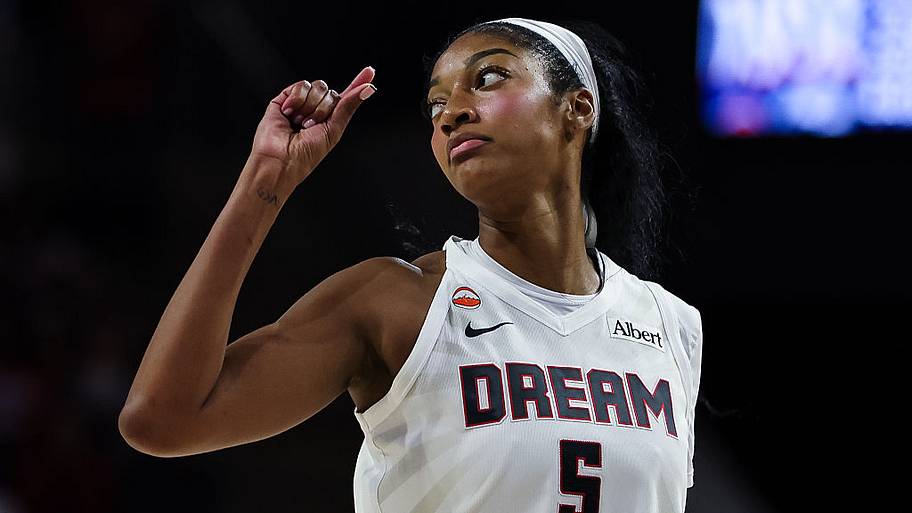
Some of the decisions were easy. Olivia Miles was essentially declared Rookie of the Year before the first month of the season was over. And it didn’t take very long for A’ja Wilson to show that she was seemingly on track to win a fifth(!) MVP award. Even the advanced stats showed just how valuable Wilson was this year.
But not every award was resolved so simply. For some of them, including Most Improved and Sixth Player of the Year, there were several worthy candidates. So as awards continue to roll out this week, our voters decided it was time to reveal their ballots.
Sports Illustrated’s Clare Brennan and Dan Falkenheim walk us through their picks and explain some of the tougher choices they had to make.
Most Valuable Player
| Clare Brennan | Dan Falkenheim |
|---|---|
| 1. A’ja Wilson, Aces | 1. A’ja Wilson |
| 2. Olivia Miles, Lynx | 2. Olivia Miles, Lynx |
| 3. Kelsey Mitchell, Fever | 3. Kelsey Mitchell, Fever |
| 4. Caitlin Clark, Fever | 4. Breanna Stewart, Liberty |
| 5. Breanna Stewart, Liberty | 5. Paige Bueckers, Wings |
Clare Brennan: What is left to say about Wilson? Her excellence is unprecedented and hard to put into words. It’s tempting to rattle off a litany of stats to contextualize her singularity, but somehow that still doesn’t manage to do her justice. We are witnessing an almost unfathomable talent, yet Wilson somehow continues to raise the bar each season. Of all the tricks in her bag, Wilson’s consistent progression to new heights may be the most impressive.
I included both Mitchell and Clark in my MVP rankings, which, to some, flies in the face of the award’s definition. Can two players from the same team be considered indisputably valuable to their team? Does most valuable mean you should choose only one player from a team? I understand some interpret the award that way. I felt as though Mitchell and Clark were special cases this year. It’s hard to untangle their success from one another, so I had a difficult time choosing one over the other. To me, MVP also serves as a shortlist of the league’s best players, and both Mitchell and Clark fit that bill.
Dan Falkenheim: Let me make the MVP conversation simple: No player did more for their team on both the offensive and defensive ends of the floor than Wilson did. She averaged more points than Mitchell and was still an All-Defense first-team selection in my view.
The more interesting question, for me, was how to sort the MVP ballot after ranking Wilson first and Miles second. Clare’s arguments are valid, and I think it’s fair to include both Clark and Mitchell. But … I felt sympathetic to the idea that two players shouldn’t both be on the MVP ballot, especially when their team finished as the sixth seed. I wound up picking Mitchell because, first, she had one of the wildest scoring seasons from a guard we’ve ever seen and, second, she was asked to do more on the defensive end than Clark was. There are arguments for Clark over Mitchell: Clark carries a tremendous playmaking burden and creates opportunities for her teammates in a way that Mitchell doesn’t. (Clark’s playmaking does come with a turnover cost, though.) She, too, was an efficient scorer: Clark was one of four guards to average at least 22.0 points per game on 60% or better true shooting in a single season. Cynthia Cooper, Diana Taurasi and Mitchell are the others. It was a tough call.
For the last two spots, I gave the nod to Breanna Stewart and Paige Bueckers because of how integral they were to their respective team’s success. Stewie carried the load on both ends of the floor while the Liberty’s lineup was often in flux, and Bueckers was sensational for the Wings. Speaking of turnovers, here’s every player in WNBA history to average at least 20.0 points on 60% true shooting while maintaining an assist-to-turnover ratio above 2.5: Paige Bueckers. That’s the list.
Rookie of the Year, All-Rookie Team
| Brennan | Falkenheim | |
|---|---|---|
| Rookie of the Year | Olivia Miles, Lynx | Olivia Miles, Lynx |
| All-Rookie Team | Olivia Miles, Lynx | Olivia Miles, Lynx |
| Azzi Fudd, Wings | Sydney Taylor, Sky | |
| Flau’jae Johnson, Storm | Azzi Fudd, Wings | |
| Sydney Taylor, Sky | Kiki Rice, Tempo | |
| Pauline Astier, Liberty | Flau’jae Johnson, Storm |
Brennan: We may never see a rookie season quite like Miles’s again, with the point guard taking the keys to the Lynx’s offense and leading Minnesota to the No. 1 seed.
Another first-year star worth mentioning is Taylor, who had a surprise breakout campaign for the Sky. The undrafted rookie came up clutch for Chicago in key moments, starting in 26 games while averaging 13.6 points per game this season.
My last slot came down to Kiki Rice and Pauline Astier, but I went with the Liberty guard. She played 16 more games than Rice, starting in 39, and helped keep New York’s middling season on track. Astier also got points for competing on a playoff team, while Rice’s case may have been hindered by the Tempo’s late-season slide to 13th in the standings.
Falkenheim: For me, Miles, Azzi Fudd and Taylor were easy picks. Flau’jae Johnson felt straightforward too, even though her shooting efficiency and turnover rate weren’t top-notch. Like Clare, my last choice also came down to Rice and Astier. Where I differ from Clare is that I didn’t ding Rice for her availability, and I thought Rice’s season was slightly more impressive than Astier’s after accounting for their surroundings. There are good arguments for Astier. She’s an elite driver. She brought playmaking off those drives and was an active defender, too. Why Rice over Astier, then? I felt that Rice carried the heavier creation burden when she was on the floor. Rice was also the higher-end scorer and was quietly one of the league’s best transition players. It was close; Astier and Rice were both worthy.
All-WNBA Teams
| Brennan | Falkenheim | |
|---|---|---|
| All-WNBA First Team | A’ja Wilson, Aces | A’ja Wilson, Aces |
| Olivia Miles, Lynx | Olivia Miles, Lynx | |
| Breanna Stewart, Liberty | Kelsey Mitchell, Fever | |
| Kelsey Mitchell, Fever | Breanna Stewart, Liberty | |
| Caitlin Clark, Fever | Paige Bueckers, Wings | |
| All-WNBA Second Team | Angel Reese, Dream | Caitlin Clark, Fever |
| Rhyne Howard, Dream | Jackie Young, Aces | |
| Paige Bueckers, Wings | Rhyne Howard, Dream | |
| Gabby Williams, Valkyries | Kayla McBride, Lynx | |
| Jackie Young, Aces | Veronica Burton, Valkyries |
Brennan: My first-team selection mirrored my MVP ranking, with Wilson, Miles, Stewart, Mitchell and Clark all making the cut. Bueckers headlined my second-team selection, and I agonized over how to get her onto my first team. But who would I swap out for her? Wilson, Miles and Stewart were locks for me, all foundational to their respective teams’ success. Then, I ran into the same issue regarding Clark and Mitchell as I did with MVP. Mitchell’s uncanny offensive output and Clark’s elite playmaking (leading the league in assists) both deserved recognition, even if they are on the same team. I certainly agree with the argument for Bueckers, though, as she lifted the Wings from pretender to contender, contributing in tangible ways and in areas not easily captured on the stat sheet. However, Clark and Mitchell’s outsized roles in the league’s top-rated offense gave them a slight edge in my eyes.
Falkenheim: My first-team also matched my MVP rankings. On to the second team: Clark was an easy choice, and it’s fair to say I should have had her on my first team. Jackie Young was another simple decision—she had the second-most efficient shooting season of her career and was rock solid for the Aces. For the final three, I again prioritized two-way impact. Rhyne Howard, Kayla McBride and Veronica Burton all provided that in spades.
Defensive Player of the Year, All-Defensive Teams
Chart of both DPOY and all-defense
| Brennan | Falkenheim | |
|---|---|---|
| DPOY | Angel Reese, Dream | Angel Reese, Dream |
| All-Defensive First Team | Angel Reese, Dream | Angel Reese, Dream |
| Gabby Williams, Valkyries | Gabby Williams, Valkyries | |
| Shakira Austin, Mystics | A’ja Wilson, Aces | |
| Rhyne Howard, Dream | Breanna Stewart, Liberty | |
| A’ja Wilson, Aces | Shakira Austin, Mystics | |
| All-Defensive First Team | Sonia Citron, Mystics | Rhyne Howard, Dream |
| Veronica Burton, Valkyries | Veronica Burton, Valkyries | |
| Kiah Stokes, Valkyries | Kiah Stokes, Valkyries | |
| Kayla Thornton, Valkyries | Aliyah Boston, Fever | |
| Jordin Canada, Dream | Azzi Fudd, Wings |
Brennan: This award came down to Angel Reese and Gabby Williams, for me. The case for Williams: She anchored the league’s best defense, with the Valkyries holding opponents to an average of 75.9 points per game. Often tasked with the toughest defensive assignments, Williams suffocated ballhandlers, while keeping Golden State’s unit in sync.
It was a tough decision, but I ultimately voted for Reese. She’s obviously a menace on the boards, ranking fourth in the league in defensive rebounds per game (7.3), but her impact goes far beyond the glass. She spurred turnovers, ranked third in steals per game (1.8) and was top 10 in blocks, too, averaging 0.7 per game. Reese led the league in defensive win shares (3.39) and is a big reason the Dream had the second-best defense in the league this season. A Swiss Army knife of a defender, Reese can guard a range of players, both on the ball and in space.
Falkenheim: Clare and I often joke that she goes off vibes and I’m the numbers geek, but we switched roles here. For DPOY and the All-Defense teams, I decided to try and not look at numbers. I don’t feel that metrics capture the full picture of how well an individual player performs on defense. Still, I arrived at the same conclusion as Clare. After going back and watching the film for Reese, Williams and Shakira Austin, I came away believing Reese was the best defensive player this season. A Swiss Army knife of a defender, as Clare said, is a fantastic way to describe Reese. She’s athletic enough to stand her ground on isolations from the perimeter. She’s savvy enough to know when to poke balls free from her opponent. She’s instinctual enough to anticipate where her matchup wants to go. Her motor never quits. She did a lot on the defensive end for the Dream this year, and she’s more than deserving of her DPOY nod.
Eight players—Reese, Williams, Wilson, Austin, Stewart, Kiah Stokes, Burton and Howard—became locks for me to place somewhere among the two teams. That left two spots for the final two members on the second team, which was the decision I agonized over the most. I went back and forth on whether to vote for Aliyah Boston, Sonia Citron, Fudd, Natasha Howard and McBride for days. I ultimately picked nits and selected Boston over Howard, giving Boston a slight edge for her rim protection. Then, I had to choose between Citron, Fudd and McBride. All three took on difficult matchups. All three made life difficult for offenses. McBride hounded her opponents. Citron and Fudd were sticky perimeter defenders. The decision was tough! Long story short, I went with Fudd. I appreciated her on-ball defense and her ability to recover and intercept passes in pick-and-roll situations. It’s fair to say that Citron may have been more consistent and that I should’ve been harsher on Fudd for the time that she missed.
I’ll end with one stat. There were only three players this season who averaged at least 2.5 stocks (steals plus blocks) per game and no more than 2.5 fouls per game. The names? A’ja Wilson, Breanna Stewart, and Azzi Fudd. That feat has only been accomplished four times (including Fudd’s season) by guards in the last decade.
Coach of the Year, Most Improved Player, Sixth Player, Sportsmanship
| Brennan | Falkenheim | |
|---|---|---|
| Coach of the Year | Cheryl Reeve, Lynx | Cheryl Reeve, Lynx |
| Most Improved Player | Shakira Austin, Mystics | Carla Leite, Fire |
| Sixth Player of the Year | Janelle Salaün, Valkyries | Janelle Salaün, Valkyries |
| Sportsmanship Award | Nneka Ogwumike, Sparks | Nneka Ogwumike, Sparks |
Chart of everything else since it’s just one name each
Brennan: Dan and I agreed on the Sixth Player of the Year, both voting for Janelle Salaün. She led all bench players in scoring, averaging 12.9 points per game, while setting a WNBA record for the most points scored by a reserve player in a single season (509). The Frenchwoman could be a starter on most WNBA teams, but has been electric for the Valkyries, averaging 22.1 minutes across 40 games this season.
Where Dan and I differed was on Most Improved Player. While I think Carla Leite and Jessica Shepard are both great choices, I voted for Austin. She earned the edge over Shepard for me mostly because of how I interpret the award. Shepard is in a much different role with Wings than she was last season with the Lynx, and while she did the most with the opportunity given to her, I view the award as honoring someone who took a step forward, controlling for other variables.
Austin improved in almost every statistical category, averaging 17 points (up from 12.7), 9.5 rebounds (up from 4.9), and 2.6 assists (up from 1.8) per game, and started 13 more games for the Mystics than last year. She was also more efficient this season, improving her field-goal percentage by 1.8% to 46.5% and making a huge jump from the three-point line from 13.3% to 31.5%. Steering the league’s youngest team, Austin also stepped further into a leadership role, helping guide a rookie-heavy roster to the playoffs.
Falkenheim: Austin was one of the three candidates I considered for Most Improved Player—Leite and Marina Mabrey were the others. To me, I thought Austin’s year was more about putting together a fully healthy season and showing everyone what she has always been capable of. Either way, she was a worthy choice.
I voted for Leite because she improved not once but twice. Her assist-to-turnover ratio improved from 1.32 in 2025 to 1.70 in her first 19 games in ’26, before improving again to 2.06 over her final 20 games. Simply put, she cut down on her turnovers and became a more efficient playmaker. That coincided with a growing comfort in Alex Sarama’s system and better shooting from beyond the arc, too. Leite was also one of the Fire’s most trusted players in clutch situations and became a true floor general. To do all of that after not being protected in the expansion draft—that’s improvement.
MORE WNBA FROM SPORTS ILLUSTRATED
- The Blunt Reason Why Aces’ Becky Hammon Brushed Off Postgame Question About Caitlin Clark, Fever
- The Sun Has Set: How Connecticut's Lone Major Pro Sports Team Left Its Mark on the WNBA
- SI:AM | Caitlin Clark’s Bitter Season Ends in Blood and Grievances
- The Aces Got Away With a Dangerous Foul in Game 3 vs. Fever. They Still Won Fair and Square.
- Arike Ogunbowale’s Historic Night Helps Wings Stave Off Playoff Elimination