
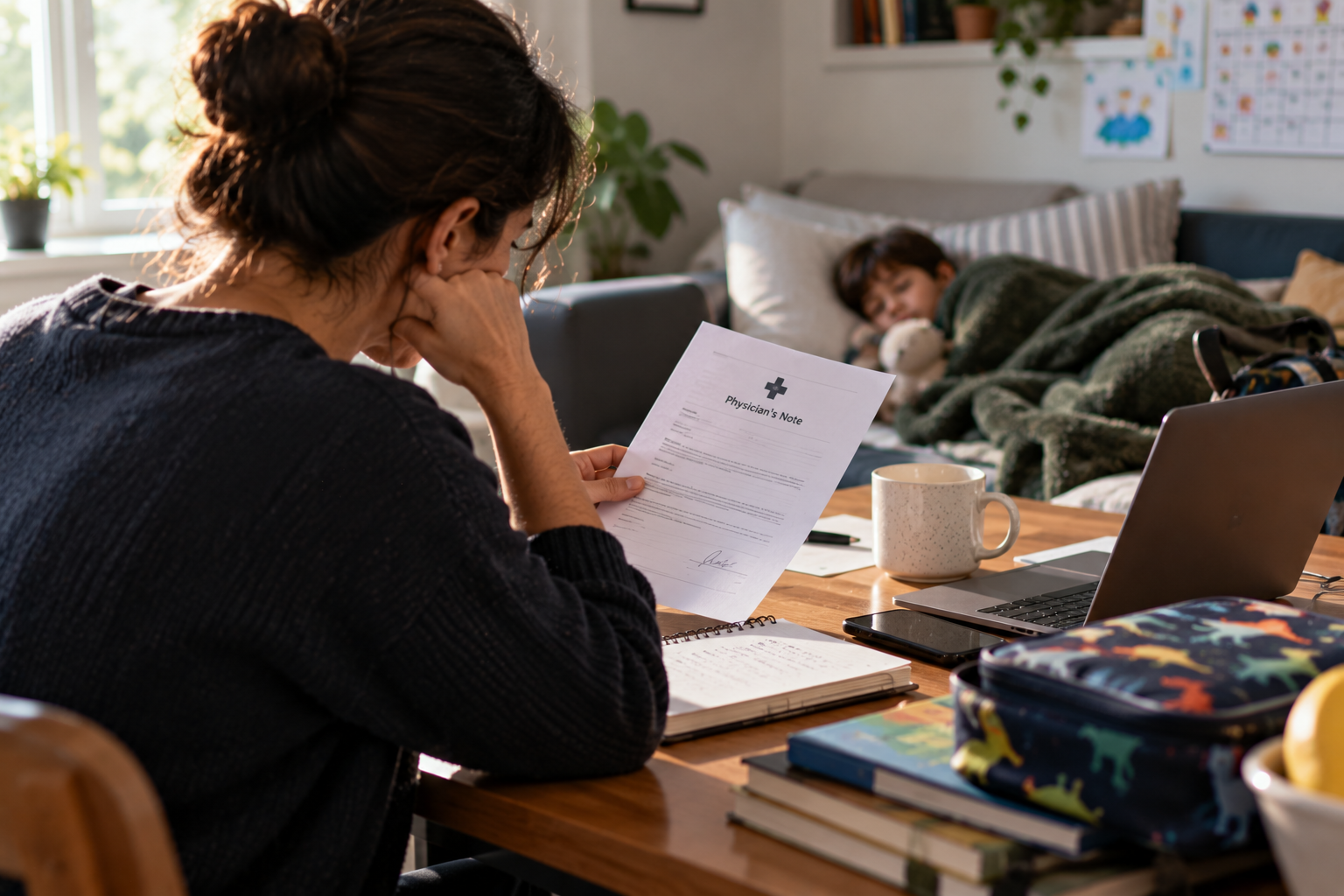
Image source: Artificial Intelligence
For many families, a child's fever now brings a second worry. After the thermometer and the call to the attendance office comes a new question: will the day be excused, and what will the school want as proof?
That question carries more weight than it used to. Schools are still trying to bring attendance back to prepandemic levels, and sick days sit at the center of the problem.
A RAND Corporation analysis published in August 2025 estimated that roughly 22 percent of K-12 students, about 10.8 million children, were chronically absent in the 2024-25 school year, meaning they missed at least 10 percent of school days. That is down from 28 percent in 2021-22 but well above the prepandemic rate of about 15 percent. When RAND asked young people why they missed school, the most common answer was sickness.
Urban districts are hit hardest. In roughly half of them, more than 30 percent of students were chronically absent, according to RAND. In New York City, one in three students was chronically absent in 2025-26, a rate unchanged from the year before, Chalkbeat reported in September. The city overhauled its attendance policies in June.
The rules vary by district
As districts work to raise attendance, many have also tightened what counts as an excused absence. Policies are set locally and differ widely, but a common pattern pairs a limit on parent notes with a medical note requirement for longer illnesses. In Prosper ISD in Texas, for example, families can use up to four parent notes per student each semester, and a student who misses more than three consecutive days because of illness must bring a statement from a doctor or health clinic. Without one, the absence may be treated as unexcused.
Excused does not mean erased, though. Last year the Lawrence County School System in Tennessee reversed a policy that had stopped accepting doctors' notes, after nearly 3,000 people signed a petition. Notes now excuse absences for truancy purposes, but the days still count toward chronic absenteeism. "A doctor's note will excuse truancy, but it does not excuse chronic absenteeism," board chairman John Daniel said.
Where telehealth fits
That leaves parents with a practical problem. Most colds and stomach bugs don't call for an office visit, but the paperwork often does, and same-day pediatric appointments can be hard to find in the middle of respiratory virus season.
Telehealth has become one way to close that gap. A parent completes an online intake about the child's symptoms, a licensed physician reviews it, and when it's medically appropriate, the physician issues a signed note. Services such as SickSlip, which provides a physician-signed doctor's note for school after a licensed physician reviews the request, include the physician's name and license details along with a document ID the school can check online. That kind of verification helps attendance staff who receive notes from providers they don't know.
When a note isn't the answer
A note is no substitute for care when a child is seriously ill. The CDC's list of warning signs that call for medical attention right away includes fast or labored breathing, bluish lips or face, dehydration such as no urine for eight hours, a fever above 104 degrees that medicine doesn't bring down, and any fever in a baby younger than 12 weeks. Symptoms that improve and then return or get worse are another reason to be seen.
Acceptance varies, too. Some schools want notes on their own forms or from particular providers, so it is worth reading the handbook before relying on any service.
For routine cases, CDC guidance for schools says children can return once their symptoms have been improving overall for at least 24 hours and they have gone 24 hours without a fever, without using fever-reducing medicine.
Know the rules before the next fever
A few minutes with the student handbook can prevent a scramble later. Parents can look for three things: how many parent notes the school accepts, how many days of illness trigger a medical note, and how soon after the child returns the paperwork is due. Keeping copies of every note and calling the attendance office early helps keep an honest sick day from becoming an attendance problem.














