
Get all your news in one place.
100’s of premium titles.
One app.
Start reading
Windows Central
Windows Central
Technology
Mauro Huculak

Windows 11 won’t even let some users uninstall KB5074109 — error 0x800f0905 is blocking the rollback. Try these tips to fix.

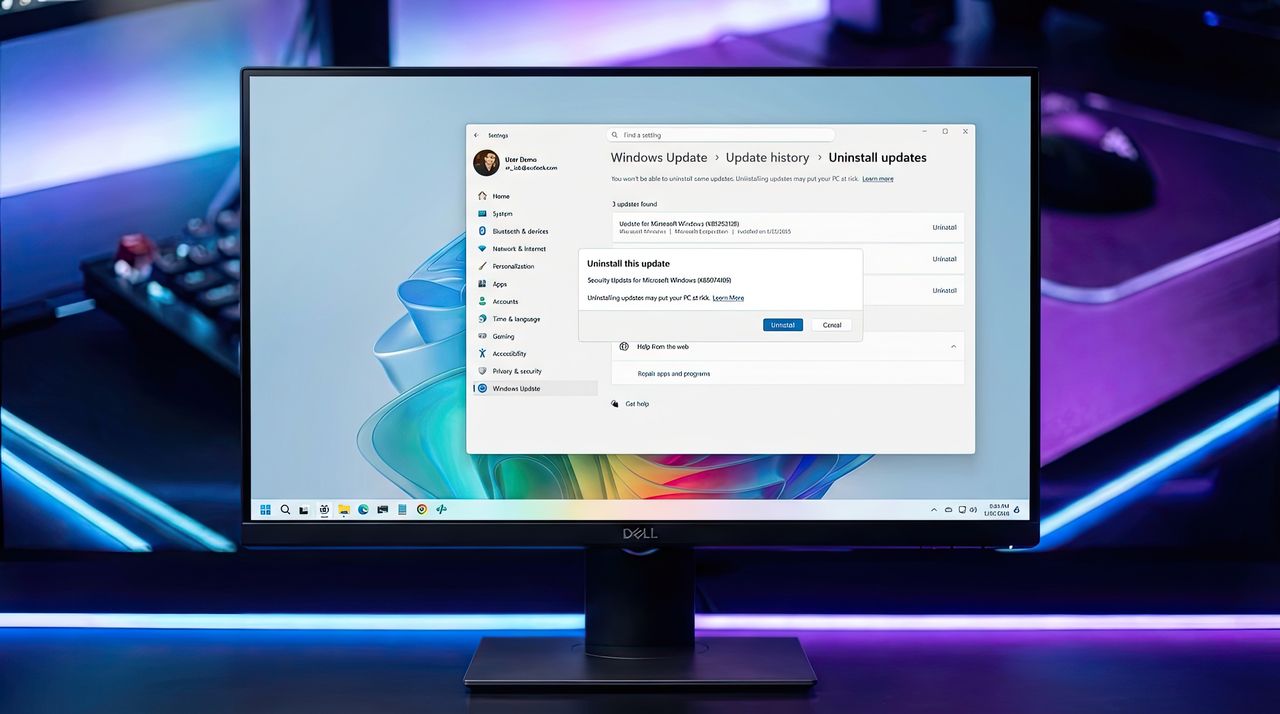
Mockup of Windows 11 error 0x800f0905 on a desktop monitor.

Windows 11 users trying to escape the buggy KB5074109 update are running into a new problem: the uninstall process itself is failing with error 0x800f0905. Instead of rolling back cleanly, Windows throws another roadblock, leaving people stuck between a broken update and a broken uninstall tool. If you’re hitting the same dead end, there are a few troubleshooting steps that can actually get the rollback moving again.

To refresh, on Windows 11, the January 2026 Security Update (KB5074109) has been causing tons of issues, from performance issues to broken features, and even after Microsoft openly told people to uninstall the update, some users are now even noticing the 0x800F0905 error when trying to remove the buggy update.

If you opted to uninstall the "2026-01 Security Update (KB5074109) (26200.7623)" and you're seeing the 0x800F0905 error, it usually points to a servicing stack or component store issue.

Although you can try a number of troubleshooting steps, among the best options is using the System Restore feature to undo the update and revert to a previous, working state. Alternatively, even though it's not practical, you could try the Reinstall through Windows Update option to let the system resolve the issue, then uninstall the update again.

In this how-to guide, I'll outline two possible fixes for the 0x800F0905 error to allow you uninstall the KB5074109 update.

Warning: While these options are not destructive, it's recommended that you create a full backup of your computer before proceeding. You have been warned.

How to rollback to a previous working state using System Restore

This option will only work if System Restore was previously enabled on the computer and you created a restore point, either manually or automatically.

To rollback and remove the KB5074109 update from Windows 11 using System Restore, use these steps:

  1. Open Start.
  2. Search for Create a restore point, and click the top result to open the System Properties page.
  3. Click the System Restore button.
(Image credit: Mauro Huculak)
  1. Click the Next button.
  2. Select the restore point dated before KB5074109 was installed on the computer.
(Image credit: Mauro Huculak)
  1. (Optional) Click the "Scan for affected programs" button to view the apps that will be removed through this process.
  2. Click the Next button.
  3. Click the Finish button.

Once you complete the steps, the restore point will apply, returning the device to the previous good working state before the update was installed. If one or more apps are affected, you will have to reinstall them manually.

If this method worked, it's a good idea to disable Windows Update at least temporarily.

How to repair current setup using Windows Update on Windows 11

Alternatively, you can perform a system repair using the "Fix problems using Windows Update" feature. This option will reinstall the operating system while keeping your apps, files, and settings. Once the reinstallation is complete, give it some time, then try uninstalling the buggy update again.

To repair the Windows 11 setup to resolve the 0x800F0905 error, use these steps:

  1. Open Settings.
  2. Click on System.
  3. Click the Recovery page on the right side.
  4. Click the Reinstall now button for the "Fix problems using Windows Update" setting.
(Image credit: Mauro Huculak)
  1. Check the "Automatically restart my PC 15 minutes after installation" option.
  2. Click the OK button.
(Image credit: Mauro Huculak)

After you complete the steps, Windows 11 will be reinstalled with the same version already installed on the computer, and you can now proceed to remove the buggy update.

Until Microsoft issues a proper fix, these workarounds are the best shot at removing KB5074109 without hitting error 0x800f0905. Windows Update issues aren’t new, but when even the uninstall path breaks, it’s especially frustrating.

If you’ve found a different method that worked for you, sharing it in the comments could help others dealing with the same update headache.

More resources

For more helpful articles, coverage, and answers to common questions about Windows 10 and Windows 11, visit the following resources:

Follow Windows Central on Google News to keep our latest news, insights, and features at the top of your feeds!

Sign up to read this article
Read news from 100’s of titles, curated specifically for you.
Already a member? Sign in here
Related Stories
Top stories on inkl right now
One subscription that gives you access to news from hundreds of sites
Already a member? Sign in here
Our Picks
Fourteen days free
Download the app
One app. One membership.
100+ trusted global sources.