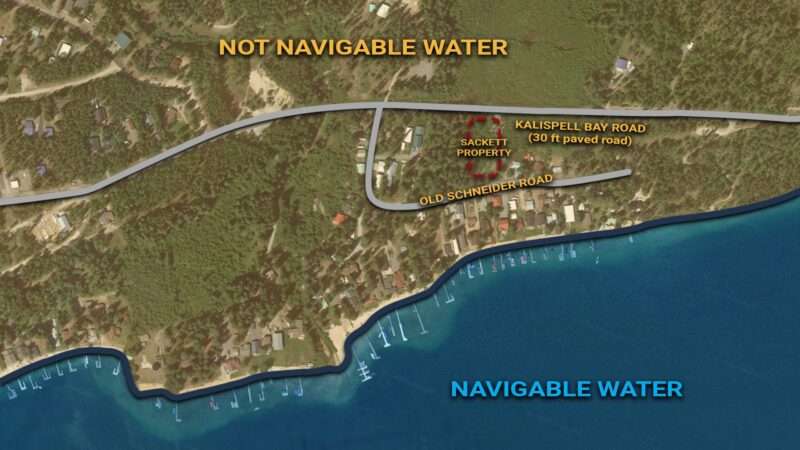
On Monday, the first day of the new Supreme Court term, the justices will hear oral argument in Sackett v. Environmental Protection Agency, in which the Sacketts are challenging the EPA's authority to regulate the use of their land under the Clean Water Act. Specifically, the Court will consider how courts should determine whether a given parcel is subject to regulation under the Clean Water Act (CWA) as a part of the "waters of the United States." The resulting decision could have dramatic implications for the scope of federal wetland regulation.
If the case name Sackett v. EPA sounds familiar, that is because it should. Ten years ago, the Supreme Court heard another case with that same name, involving the same litigants, and the same Idaho property. In the first Sackett case, the issue was whether the landowners could obtain judicial review of an EPA administrative compliance order, directing them to restore their property or face ruinous financial penalties. The Court ruled unanimously for the Sacketts, recognizing the profoundly unjust nature of the EPA's position. This time around, the question is whether the EPA has authority to regulate the Sacketts at all.