Get all your news in one place.
100's of premium titles.
One app.
Start reading
The Conversation
The Conversation
Environment
Justine Law, Associate Professor of Ecology and Environmental Studies, Sonoma State University

Wild ginseng is declining, but small-scale ‘diggers’ aren’t the main threat to this native plant − and they can help save it

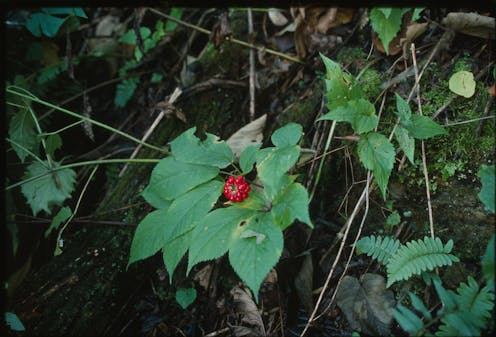
Ginseng plant with berries in fall, Whitesville, W.Va. Lyntha Scott Eller/Library of Congress, CC BY-ND

Across Appalachia, September marks the start of ginseng season, when thousands of people roam the hills searching for hard-to-reach patches of this highly prized plant.

Many people know ginseng as an ingredient in vitamin supplements or herbal tea. That ginseng is grown commercially on farms in Wisconsin and Ontario, Canada. In contrast, wild American ginseng is an understory plant that can live for decades in the forests of the Appalachian Mountains. The plant’s taproot grows throughout its life and sells for hundreds of dollars per pound, primarily to East Asian customers who consume it for health reasons.

Sign up to read this article
Read news from 100's of titles, curated specifically for you.
Already a member? Sign in here
Related Stories
Top stories on inkl right now
One subscription that gives you access to news from hundreds of sites
Already a member? Sign in here
Our Picks
Fourteen days free
Download the app
One app. One membership.
100+ trusted global sources.