Every family has its own way of balancing personalities, but sometimes people’s differences are just too great for compromise.
One American woman on Reddit claims her Cuban mother-in-law turned hostile because she set clear rules around her children, going from eager involvement to cold distance.
After years of ignored birthdays and skipped dinners, the woman says she finally got a chance to confront her about dishonesty, but things didn’t go as planned, and now the tension between them has reached a boiling point.
Mothers- and daughters-in-law can have complicated relationships

Image credits: Getty Images (not the actual photo)
But these two haven’t even been talking












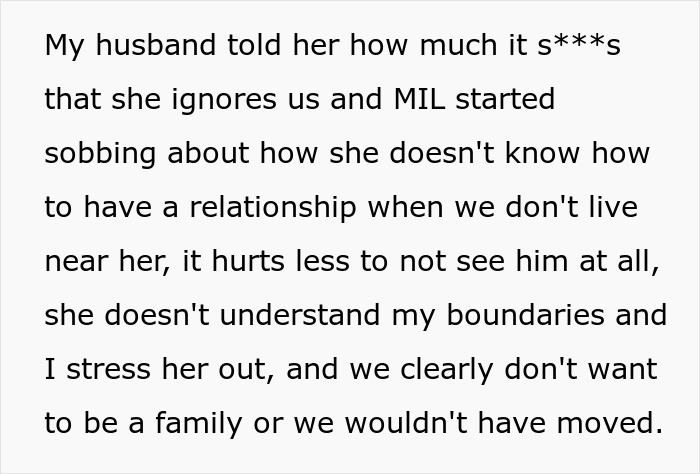



Image credits: Getty Images (not the actual photo)

Image source: anonymus
Nobody wins in this situation
A large YouGov survey finds that 38% of American adults report being estranged from at least one close family member — including parents (16%), siblings (24%), children (10%), or grandparents (9%) — showing that estrangement is quite common in American families.
However, Geoffrey Greif, co-author of In-Law Relationships: Mothers, Daughters, Fathers, and Sons, interviewed more than 1,500 people for the book and discovered that only about 15% of mothers- and daughters-in-law had a seriously troubled relationship. More than half said they felt good about their bond, while the rest described it as neutral.
The findings also revealed that:
- 33% of mothers-in-law strongly agreed they were close with their daughters-in-law, compared with just 18% of DILs.
- 42% of MILs strongly agreed they admired their daughter-in-law, while only 23% of younger women felt the same way about their husband’s mother.
- 37% of mothers-in-law strongly agreed they enjoyed spending time together, compared with 22% of younger women.
- 50% of mothers-in-law strongly agreed they trusted their daughter-in-law, but just 23% of younger women said they trusted their mother-in-law.
“A lot of it is wishful thinking on the part of the mother-in-law,” says Greif, a professor at the University of Maryland School of Social Work, calling it a helpful approach.
“You go into this relationship assuming the best and not assuming the worst — that’s a form of wishful thinking… I think that’s a really good and positive thing. Mothers-in-law really want to make this work.”
If the family wants to normalize the women’s relationship to the point where they can at least tolerate each other, it’s likely that one particular person must focus his efforts—the man who connects the two women: the husband and son.
“There’s essentially an emotional maturity that most daughters-in-law realize — ‘I’m going to try and make this work for the betterment of my family,’” Greif adds.
“Our research shows that when the daughter-in-law and mother-in-law are able to talk about things directly, those are signs that the relationship is a better relationship.”
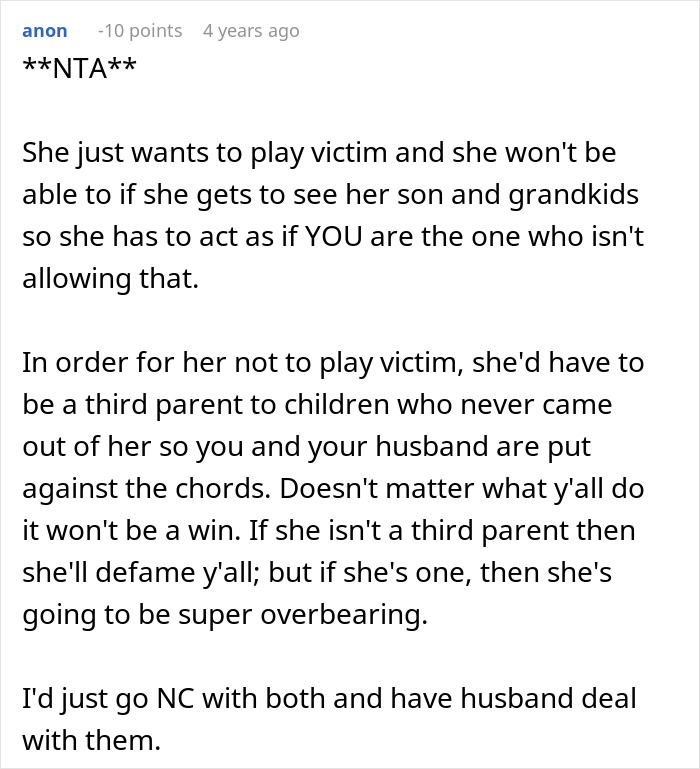
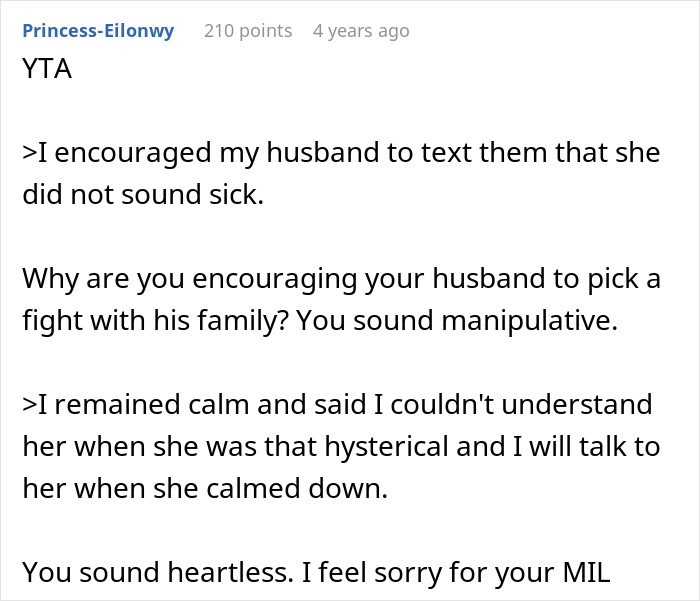
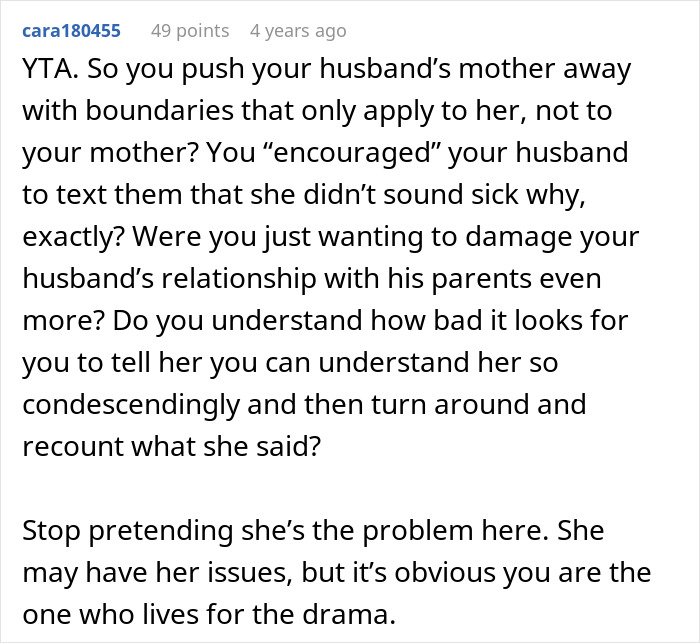
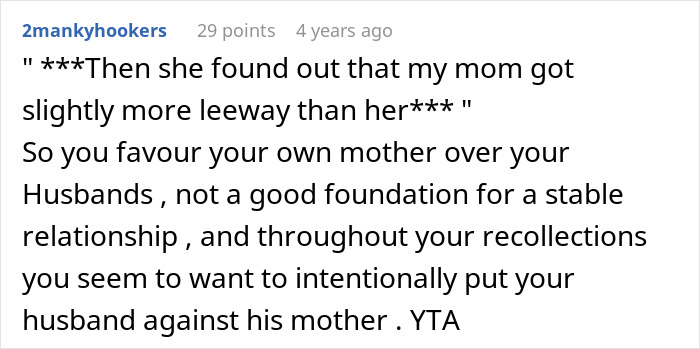
People who read the woman’s story believe she may have omitted certain important details

And many feel that everyone in the family could do a better job of communicating
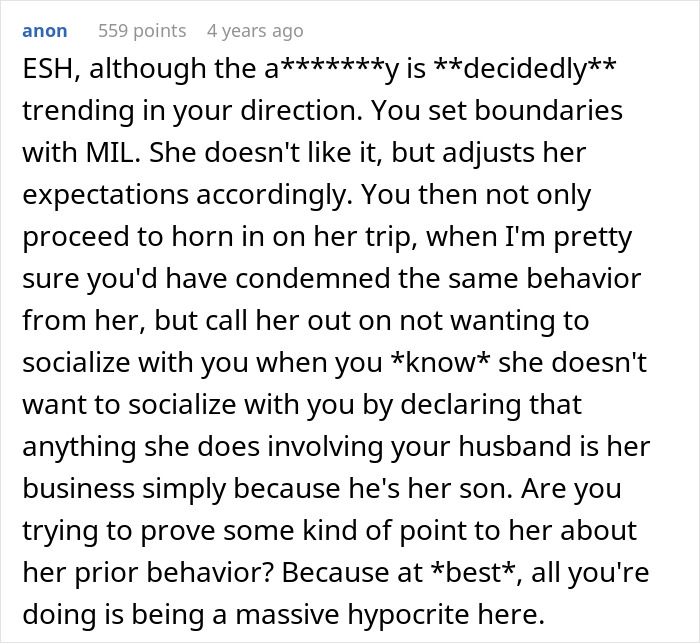

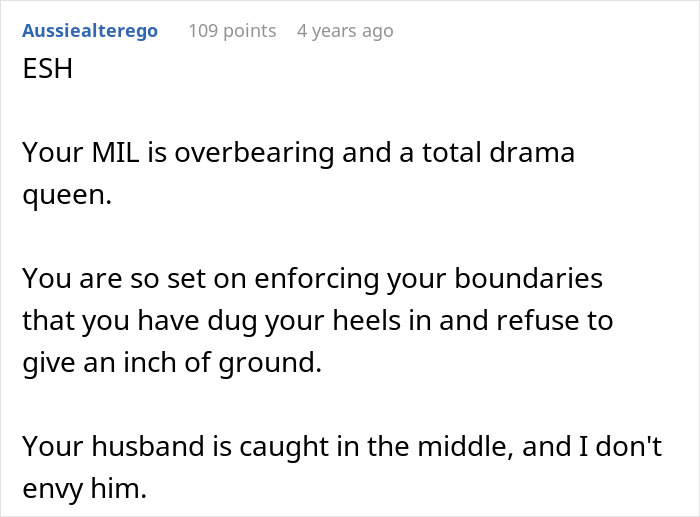

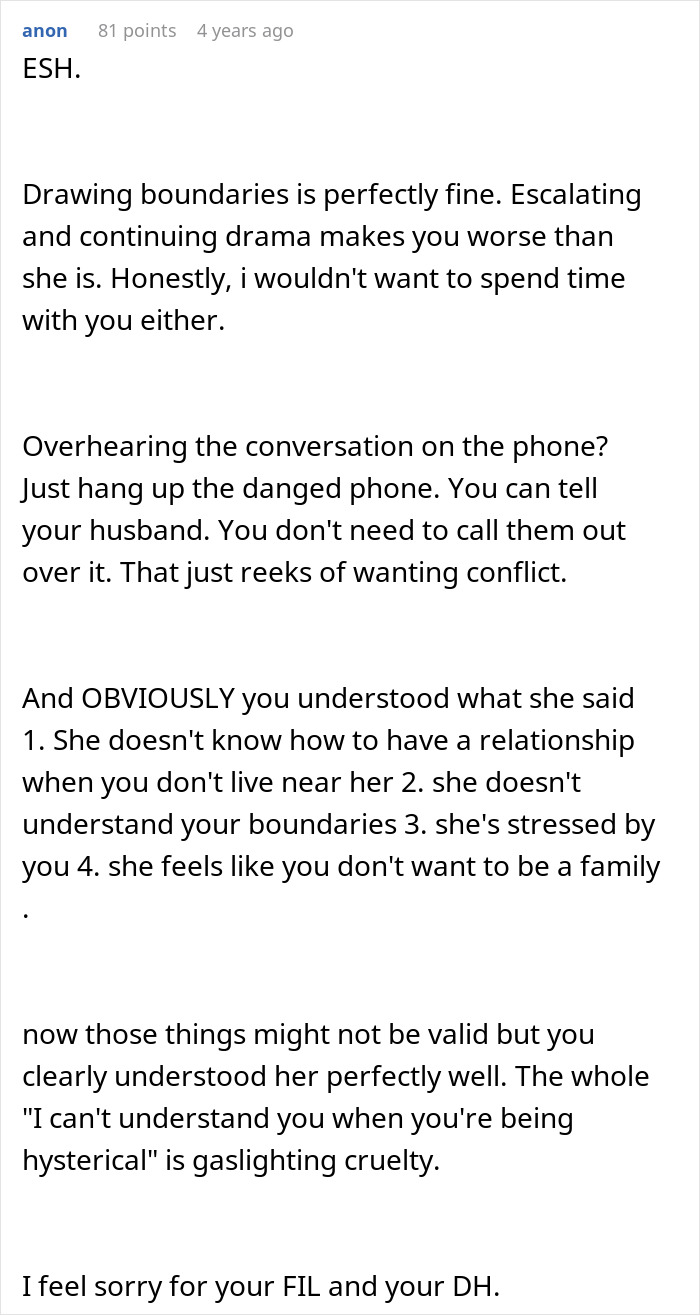



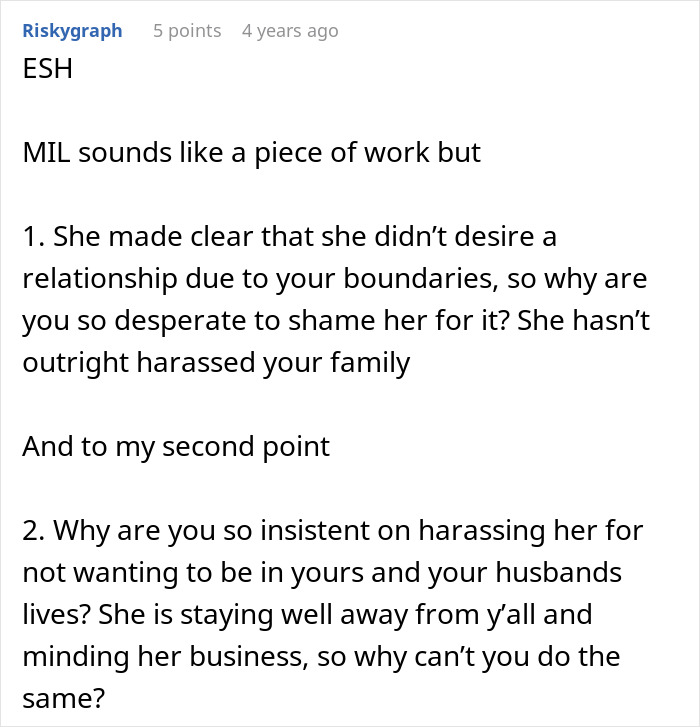



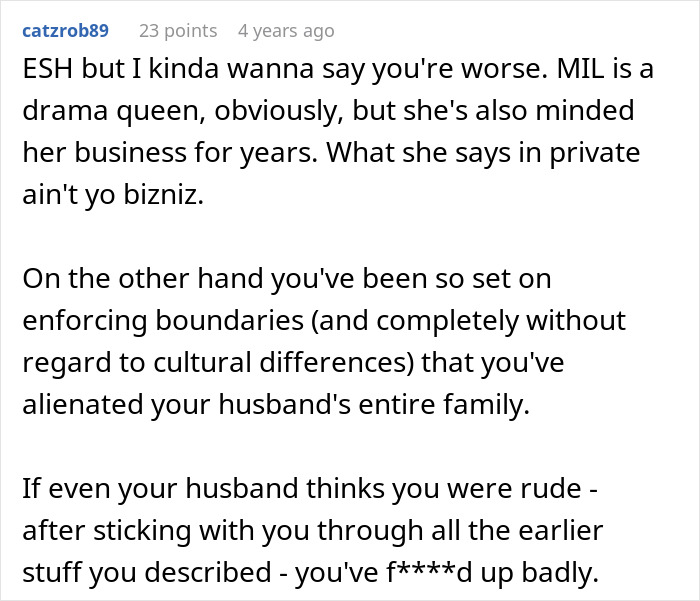



Some, however, say the woman is the one stirring up the drama









And a few place the blame on the mother-in-law