
What Is Actually Killing Your Perfume
Perfume is a chemical structure. The top notes, heart notes, and base notes you smell are volatile organic compounds held in suspension by alcohol. When that structure meets heat, UV light, or humidity, the compounds oxidise, they react with oxygen and break down into something flatter, sharper, or simply sour. This is not a quality problem with the bottle you bought. It is a storage problem.India makes this harder than most climates. Summer temperatures in cities like Nagpur or Jodhpur routinely exceed 42°C. Even in coastal cities, the combination of heat and humidity through the monsoon months creates the exact conditions that accelerate oxidation. A fragrance that would last three years in a cool European apartment can turn in under six months on a Mumbai dressing table.The three enemies, in order of damage: heat, light, humidity. Remove any one of them and you extend the life of the bottle significantly. Remove all three and the perfume keeps its original character for two years or more.

Where Not to Keep It in an Indian Home
The bathroom is the single worst place. Every shower raises the ambient temperature and floods the air with moisture. The bottle sits through hundreds of those cycles. The alcohol base absorbs humidity, the cap seal loosens over time, and the fragrance compounds degrade faster than almost any other storage condition you could create.The windowsill is the second mistake. Direct sunlight is UV radiation, and UV radiation breaks the aromatic molecules in a perfume within weeks. A clear glass bottle on a sunny windowsill is essentially a slow-cooking experiment.The dressing table near a window is only marginally better. Indirect light still carries UV. If you can read a book by the light falling on your dressing table, that light is reaching your perfume bottles.The top of a wardrobe in a room without air conditioning is also a problem. Heat rises. In a closed room through May and June, the air near the ceiling can be 4 to 6 degrees hotter than at floor level.
Where to Actually Keep It
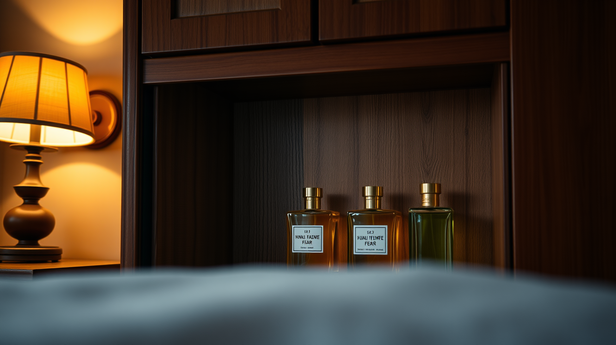
The inside of a wardrobe, specifically the lower shelf, is the best option in most Indian homes. Wardrobes block light entirely. The lower shelf stays cooler than the upper ones. If the wardrobe is in an air-conditioned bedroom, you have near-ideal conditions.A drawer works equally well. Darkness, stable temperature, no humidity exposure. Keep the bottle upright so the cap seal is not under constant pressure from the liquid.For those with a large collection, a small dedicated box kept in an air-conditioned room is worth the effort. Line it with a soft cloth to prevent bottles from knocking against each other. The box does not need to be airtight, perfume does not need a sealed environment, just a dark and cool one.If you do not have air conditioning in the room where you store perfume, a clay pot cooler or even a cool corner of the home, north-facing rooms tend to be cooler in Indian summers, is measurably better than a south-facing dressing table.
Bottle and Cap Habits That Extend Scent Life
Always replace the cap immediately after spraying. Every second the bottle is open, alcohol evaporates and oxygen enters. Over months, this changes the ratio of compounds in the bottle and the scent shifts.Do not decant perfume into decorative bottles unless those bottles have an airtight seal. Decorative bottles are often wider-mouthed than the original, which increases the surface area exposed to air and accelerates evaporation.Keep the original box. Cardboard blocks light and provides an insulating layer. If you have thrown away the box, a small opaque pouch works. The goal is simply to prevent light from reaching the glass.For attars, the traditional Indian concentrated perfumes sold in small glass dabbas, the storage rules are slightly more forgiving because they are oil-based rather than alcohol-based. Oil does not evaporate as readily. But heat still degrades the aromatic compounds, so the wardrobe rule applies.
How to Tell If Your Perfume Has Already Turned
The top notes go first. If a perfume that used to open with citrus or green freshness now smells immediately of the heavier base, oud, musk, amber, without that first bright burst, oxidation has already begun.A vinegary or sharp chemical smell is the clearest sign. The alcohol has reacted with the fragrance compounds and produced acetic acid or similar byproducts. The scent is not just weaker; it is chemically different.Colour change is a secondary indicator. Many perfumes are pale gold or clear when fresh. If the liquid has darkened significantly to amber or brown, the compounds have oxidised. This does not always mean the scent is unwearable, but it is a signal that the bottle has been stored badly.A perfume that smells fine in the bottle but fades within an hour on skin, when it previously lasted four or five hours, has lost its fixatives. The base notes that anchor the scent to your skin have broken down.The average Indian home, with its swings between 45°C summer heat and 90% monsoon humidity, is genuinely hostile to fragrance preservation. Treating perfume like a bathroom accessory and a bedroom decoration simultaneously is what turns a six-month-old bottle into something unrecognisable. The fix is not complicated: dark, cool, dry, capped. The wardrobe shelf that holds your folded clothes is already doing the right job for fabric, it will do the same for scent.






